Living in a warm climate does not mean you have to skip out on canine companionship, provided you choose a breed built to thrive when temperatures rise.
Dogs do not sweat through their skin like humans do; instead, they rely on panting, sweat glands in their paw pads, and specialized physical traits to release trapped body heat.
Select dog breeds excel in hot weather thanks to short single coats, long muzzles, large ears, and lean frames that maximize heat dissipation.
Understanding which breeds possess these natural thermoregulation advantages allows you to select a healthy, happy companion for sun-drenched environments while avoiding high-risk, heat-sensitive dogs.
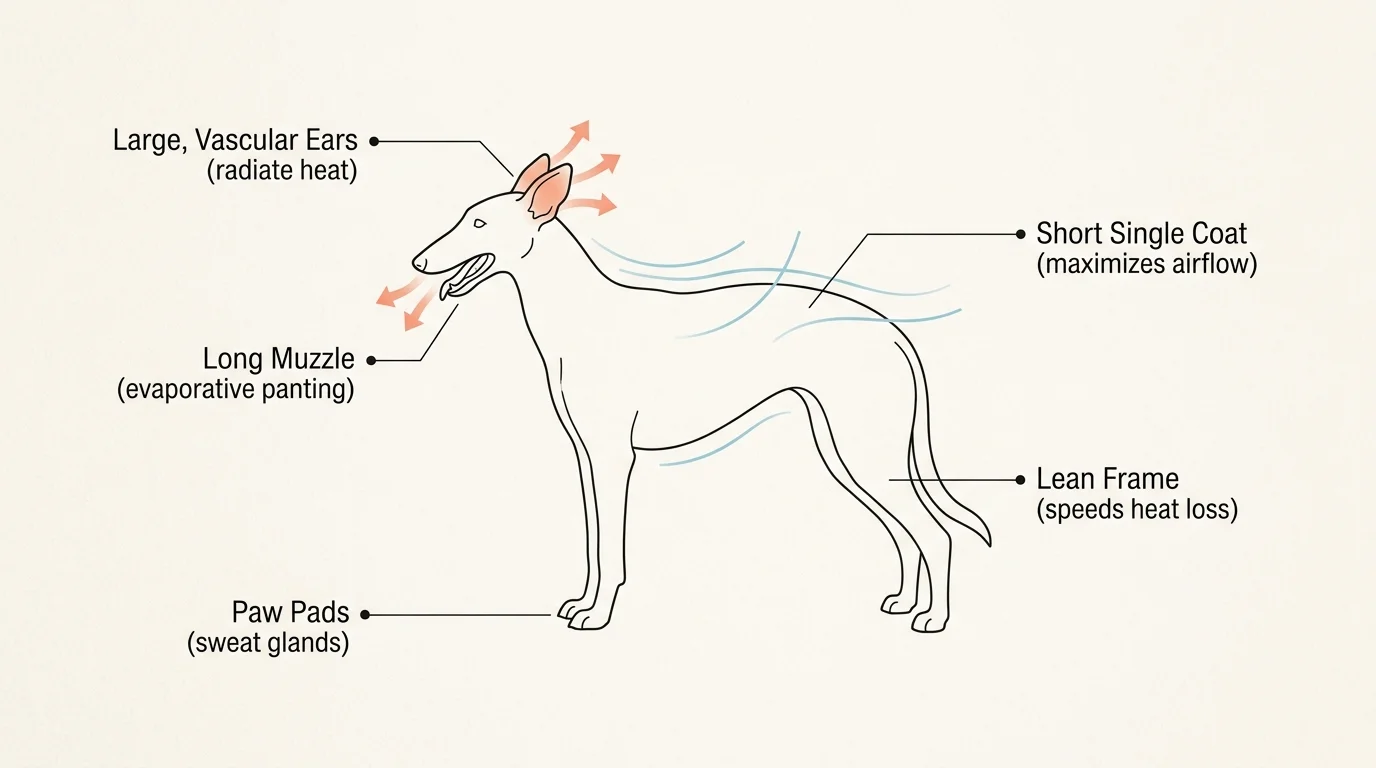
Anatomy of Canine Thermoregulation: How Dogs Stay Cool
Before exploring specific breeds, you should understand how canine anatomy handles heat. Unlike humans who cool down through eccrine sweat glands spread across their skin, dogs rely primarily on respiratory evaporative cooling—better known as panting.
When a dog pants, air passes rapidly over the moist tissue inside its tongue, mouth, and nasal passages, evaporating moisture and cooling the blood vessels underneath.
The structural design of a dog’s head plays a massive role in this cooling efficiency. Long-nosed (dolichocephalic) breeds have far more internal surface area within their nasal passages than short-nosed (brachycephalic) breeds like Bulldogs or Pugs.
According to clinical resources from VCA Animal Hospitals, short-faced dogs face significant anatomical airflow restrictions that drastically limit their panting efficiency, making high temperatures hazardous for them.
Other physical characteristics contribute directly to thermal tolerance:
- Ear Size and Vascularity: Large, thin, erect ears act as natural heat radiators. Blood vessels near the surface of thin ear leather release heat into circulating air.
- Coat Density and Length: Single coats with minimal undercoat allow airflow directly to the skin. Additionally, smooth short fur traps almost no ambient heat.
- Coat Coloration: Lighter coat shades reflect direct sun rays, whereas dark coats absorb radiation and heat up quickly on the surface.
- Body Surface Area to Mass Ratio: Slender, lean dogs lose internal body heat faster than heavy, bulky breeds with thick layers of subcutaneous body fat.
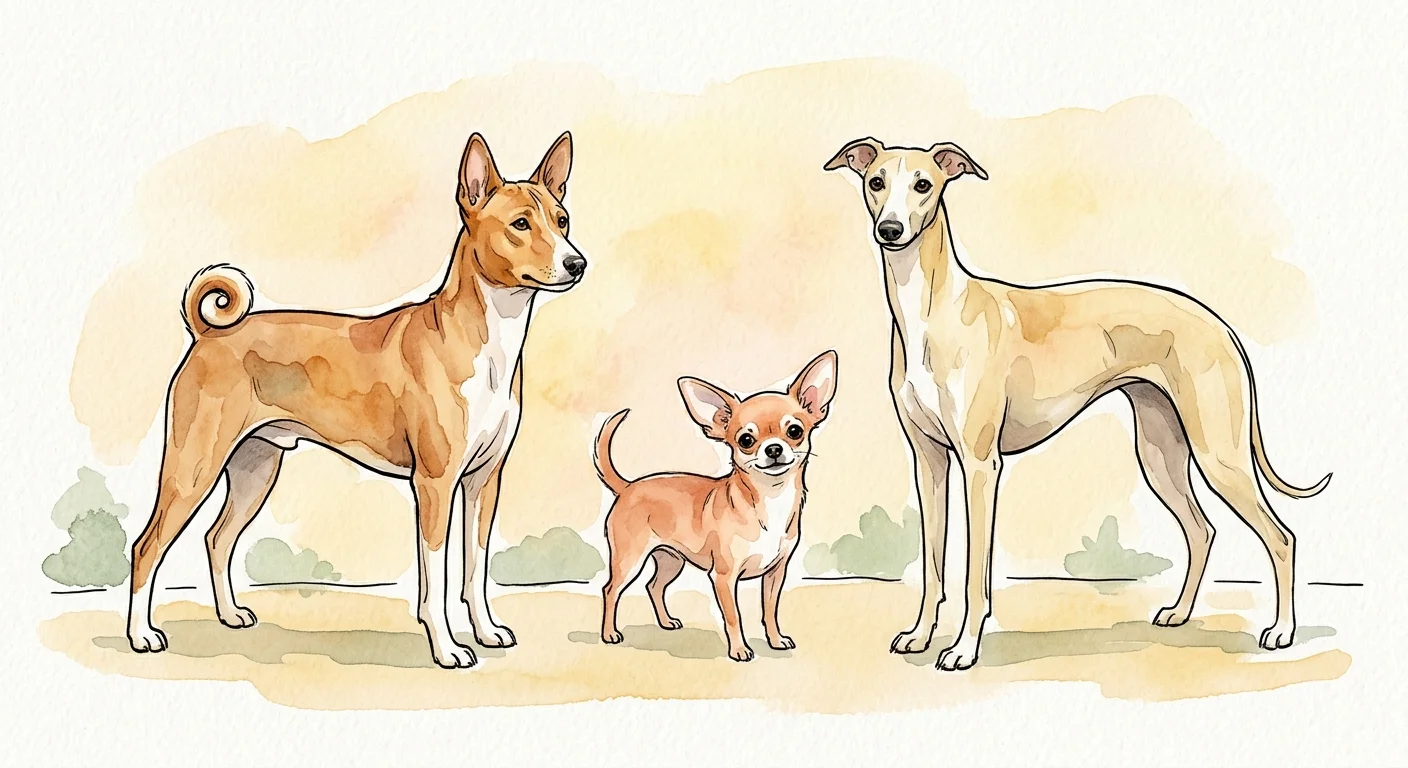
9 Heat Tolerant Dog Breeds Built for Warm Climates
If you live in a region with high temperatures, desert conditions, or intense summer sunshine, these warm weather dog breeds possess the genetic history and anatomical features necessary to handle warmer conditions comfortably.
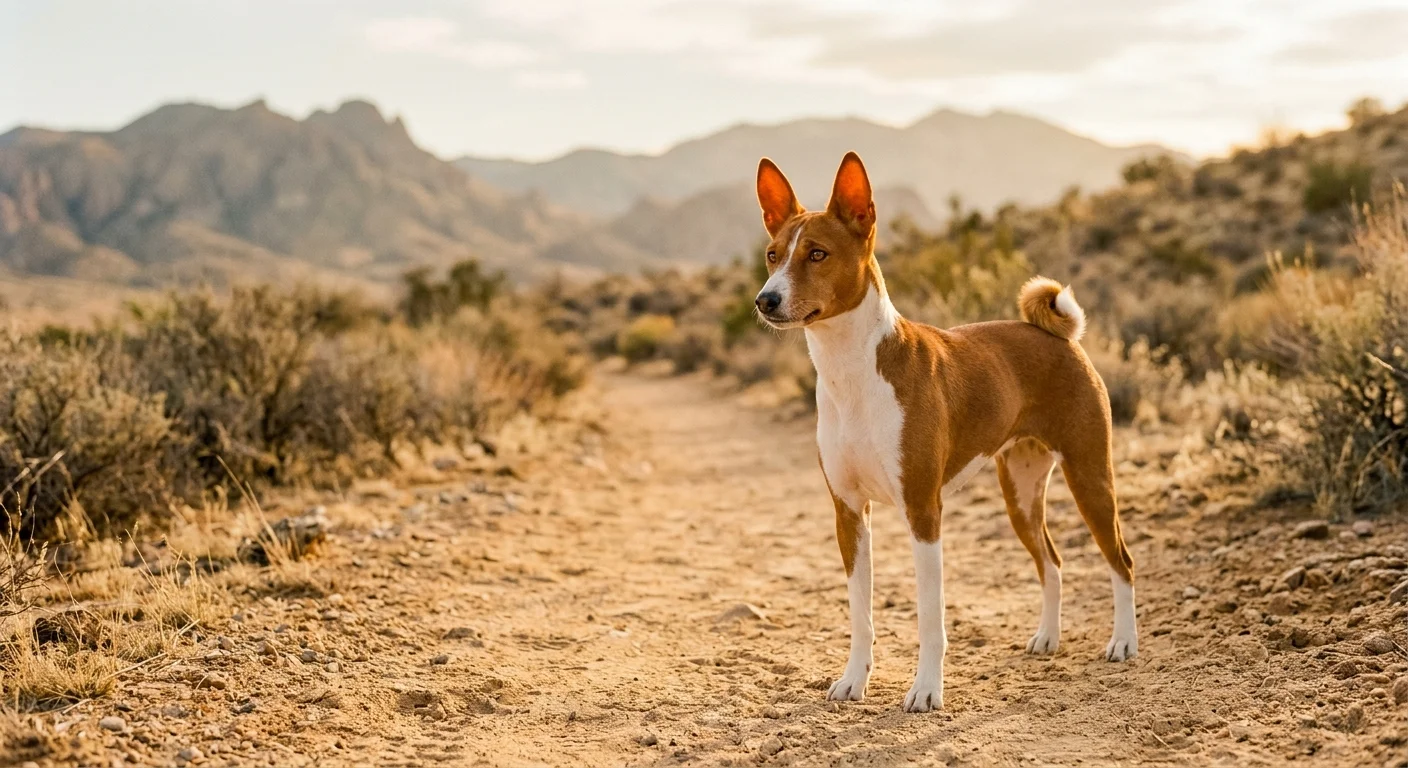
1. Basenji
Originating in the equatorial regions of Central Africa, the Basenji was bred to hunt in dense foliage and extreme tropical heat. Weighing between 20 and 24 pounds, this small, muscular hound features a extremely short, fine coat that traps virtually no heat.
Their oversized, erect ears sit high on their heads, acting as efficient cooling fins that radiate excess warmth away from their bloodstream.
Beyond physical adaptations, Basenjis exhibit behaviors tailored for hot climates. They groom themselves meticulously like cats, keeping their short coats free of debris that could hinder skin ventilation.
Because they possess boundless energy, they suit active households; however, you should always schedule outdoor playtime during cooler morning hours.
2. Chihuahua
Do not let their tiny stature fool you—Chihuahuas are among the best dog breeds for hot weather. Hailing from the hot, arid desert state of Chihuahua in Mexico, these tiny dogs carry an exceptionally high surface-area-to-body-mass ratio.
This anatomical structure allows internal heat to dissipate into the air almost instantly.
Chihuahuas have large, flared ears relative to their body size, which aid in thermoregulation. The smooth-coat Chihuahua variety performs exceptionally well in warm weather, as their sleek fur reflects sunlight without storing thermal energy.
While they love basking in sunbeams, you must monitor them to prevent sunstroke and ensure they have continuous access to fresh water.
3. Rhodesian Ridgeback
Developed in Southern Africa by crossing native Khoikhoi ridge-backed dogs with European hunting breeds, the Rhodesian Ridgeback was built to withstand the punishing sun of the African veldt.
These powerful, 70- to 85-pound dogs sport a short, dense single coat that ranges from light wheaten to red wheaten. Their lighter coat color reflects solar energy rather than soaking it up.
Rhodesian Ridgebacks possess remarkable physical stamina and tough skin, making them rugged outdoor partners for hot climate activities.
According to breed history documented by the American Kennel Club, their ancestor breeds were required to track large game across rugged terrain for miles without tiring in intense heat. Despite their size, their sleek single coat keeps them surprisingly cool during warm weather outings.
4. Saluki
The Saluki is one of the oldest known dog breeds in the world, refined over thousands of years by desert nomadic tribes across the Middle East.
Bred to course gazelles across burning desert sands, the Saluki features an extraordinarily deep chest, long nasal passages, and a narrow, aerodynamic body frame.
Salukis carry almost no body fat, which prevents them from trapping internal heat during high-speed runs. Their long, dolichocephalic muzzles give them optimal surface area for evaporative cooling through panting.
Whether you choose the smooth coat variety or the feathered variety, their silky coat remains lightweight and airy, shedding heat efficiently.
5. Vizsla
Hailing from the plains of Hungary, the Vizsla is a medium-sized sporting dog known for its striking golden-rust single coat.
Because Vizslas lack an insulating undercoat entirely, air flows directly against their skin, allowing sweat glands on their paws and heat dissipation through vasodilation to work without thermal barriers.
Vizslas are intense, high-energy athletes that thrive on vigorous outdoor movement. They handle heat very well compared to other hunting breeds, but their energetic temperament can cause them to overexert themselves.
You must keep a close watch on your Vizsla during warm workouts, as their high drive often masks early fatigue.
6. Ibizan Hound
Bred on the sun-baked Balearic Islands off the coast of Spain, the Ibizan Hound excels in hot, Mediterranean weather. These lithe, elegant sighthounds possess unusually large, upright ears that serve as outstanding biological radiators.
When blood flows through the fine capillaries in their ear leather, heat transfers directly into ambient air breezes.
Ibizan Hounds sport short, clean coats in either smooth or wire textures. Their light amber eyes, flesh-colored noses, and pale white-and-red coats give them an ideal color palette for reflecting radiant heat.
They are calm indoors but delight in brief sprints when given secure outdoor space.
7. Whippet
With their streamlined build and ultra-short coat, Whippets are fantastic dogs for hot climates. Their bodies are optimized for heat dissipation: high muscle-to-fat ratios, long slender legs, and thin skin that allows superficial blood vessels to vent thermal energy quickly after exertion.
Because Whippets possess almost zero subcutaneous fat layers, they struggle significantly in freezing cold weather but flourish in warm weather. Their short coat requires minimal grooming and absorbs very little heat.
Keep in mind that their thin skin makes them slightly more vulnerable to sunburn, so provide shady resting spots when spending extended hours outdoors.
8. Dalmatian
Historically utilized as carriage dogs tasked with trotting alongside horse-drawn vehicles for tens of miles, the Dalmatian boasts impressive athletic endurance and heat tolerance.
Their bright white base coat reflects direct sunlight effectively, keeping their skin underneath cooler than dogs with black or dark brown fur coats.
Dalmatians have a short, sleek coat that continuously sheds to maintain a light, dense barrier against solar rays. Their long, deep-chested build provides ample lung capacity, allowing for deep, rapid panting during exercise.
While their white coat offers heat benefits, exposed pink skin on their noses and ears requires protection from UV overexposure.
9. Australian Cattle Dog
Also known as the Blue Heeler or Red Heeler, the Australian Cattle Dog was purpose-bred to handle cattle across the punishing heat of the Australian Outback.
Unlike many of the single-coated dogs on this list, the Australian Cattle Dog possesses a weather-resistant double coat consisting of short outer guard hairs and a light, dense undercoat.
This coat structure acts as natural insulation against ambient ambient heat. Just as a cooler keeps ice cold in summer, a natural double coat creates an air buffer that prevents external ambient temperatures from reaching the dog’s skin.
Their extreme working resilience makes them one of the most durable heat tolerant dog breeds available.
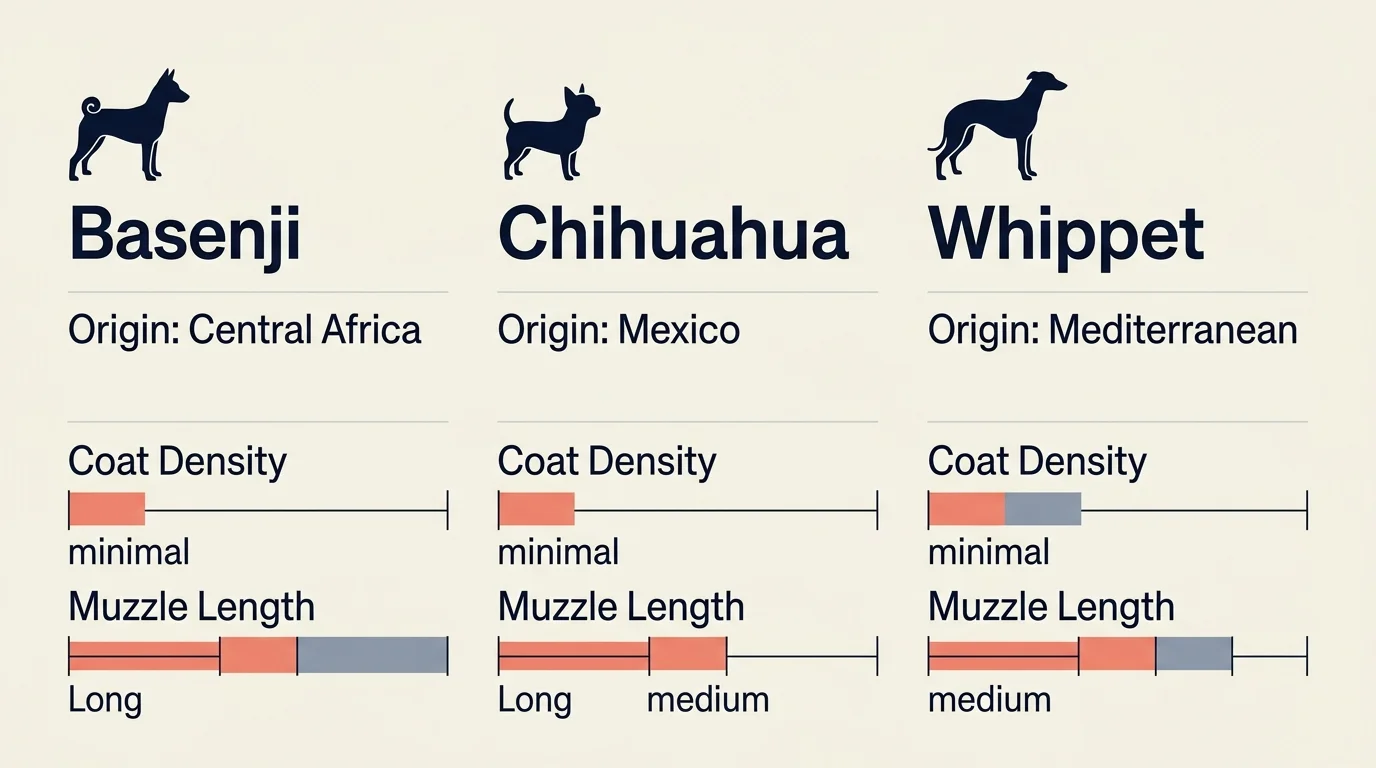
Comparing Warm-Weather Dog Breeds
To help you compare these dog breeds that handle heat, the following table summarizes their average size, coat characteristics, primary heat-dissipating traits, and climate origin.
| Breed Name | Average Size | Coat Type | Climate Origin | Key Heat Adaptation |
|---|---|---|---|---|
| Basenji | 16–24 lbs | Short, fine single coat | Central Africa | Large erect ears, minimal body coat, low body mass |
| Chihuahua | 2–6 lbs | Smooth, short single coat | Mexico (Desert) | High surface-area-to-mass ratio, oversized ears |
| Rhodesian Ridgeback | 70–85 lbs | Short, dense, light coat | Southern Africa | Sun-reflecting wheaten coat, extreme physical stamina |
| Saluki | 35–65 lbs | Smooth or feathered single coat | Middle East | Dolichocephalic muzzle, low body fat, ancient desert lineage |
| Vizsla | 45–60 lbs | Short single coat (no undercoat) | Hungary | No undercoat, athletic build, rapid heat release through skin |
| Ibizan Hound | 45–50 lbs | Short smooth or wire coat | Spanish Islands | Massive thermal ear radiators, lean body frame |
| Whippet | 25–40 lbs | Fine, short single coat | Great Britain | Thin skin, superficial blood vessel vasodilation |
| Dalmatian | 45–70 lbs | Short, sleek white coat | Croatia / Europe | Sun-reflecting white fur, strong athletic stamina |
| Australian Cattle Dog | 35–50 lbs | Short protective double coat | Australia | Insulating double coat that blocks radiant solar heat |
Crucial Safety Rules for High Temperatures
Even heat-tolerant breeds require proper care when environmental temperatures rise into uncomfortable ranges. Never assume that a heat-tolerant breed is immune to heatstroke.
According to warm weather pet safety guidelines from the American Veterinary Medical Association (AVMA), ambient temperatures above 85 degrees Fahrenheit combined with high humidity pose a serious threat to any canine.
Implement these practical guidelines to protect your dog during summer months:
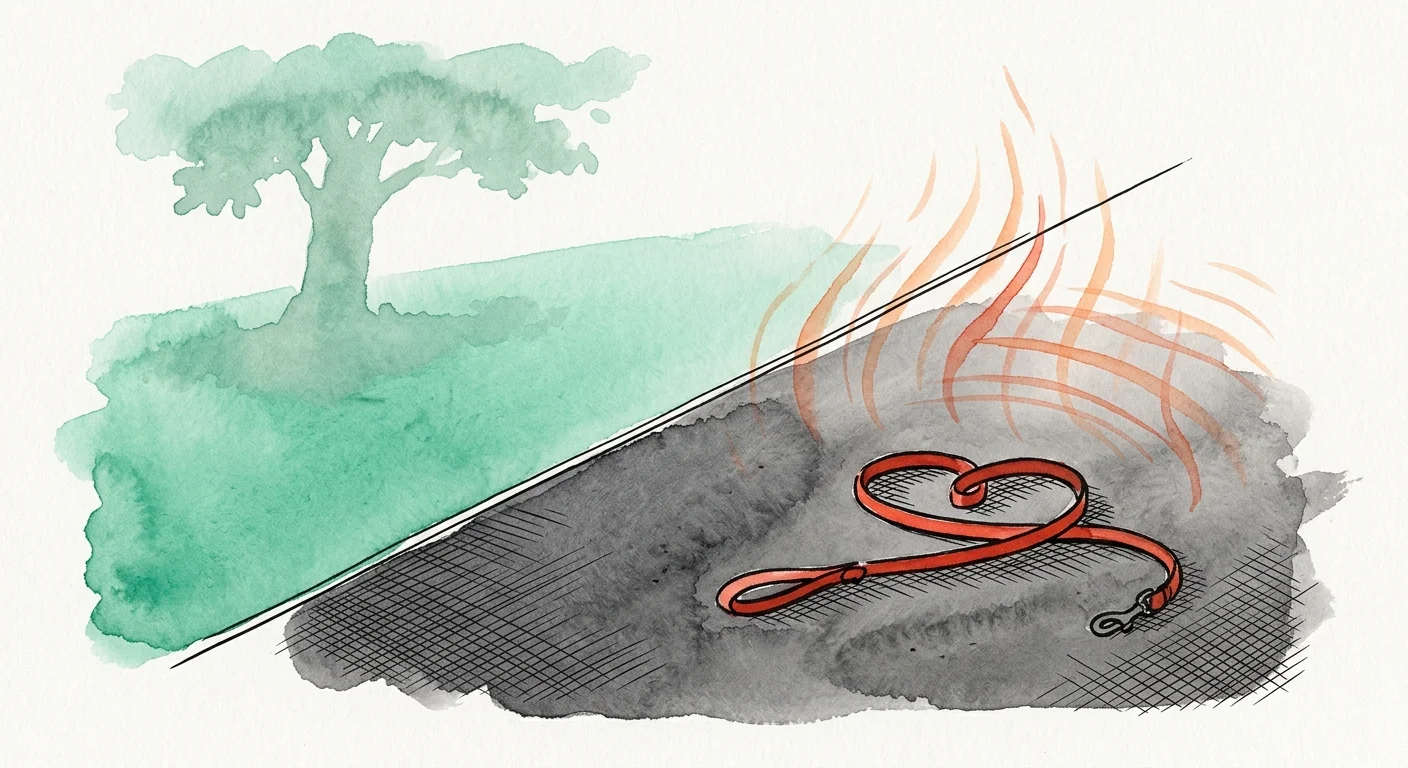
- The 7-Second Asphalt Test: Place the back of your bare hand firmly against the sidewalk or road for 7 seconds. If the pavement feels too hot for your hand, it is too hot for your dog’s sensitive paw pads. Asphalt absorbs heat and can easily reach 135 degrees Fahrenheit when ambient air is only 85 degrees.
- Monitor Dew Point and Humidity: High humidity impairs evaporative cooling. When humidity is high, moisture does not evaporate from your dog’s tongue efficiently, causing their internal core temperature to rise faster.
- Shift Exercise Schedules: Walk and run your pet during early dawn or late dusk when temperatures drop to their daily lows.
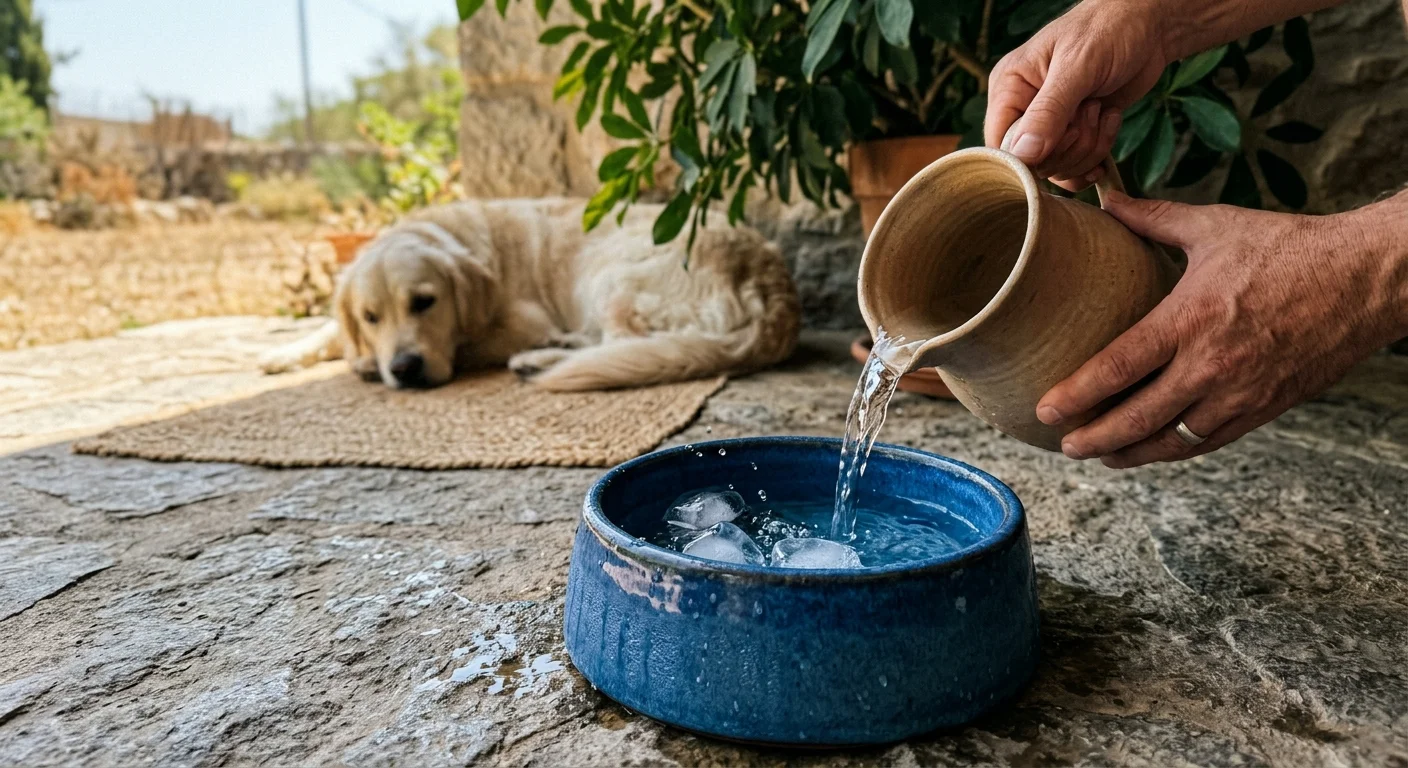
- Provide Constant Clean Hydration: Dogs require significantly more fresh water in hot environments. Add ice cubes to outdoor water bowls or carry portable dog water bottles during every walk.
- Use Cooling Gear: Cooling vests that utilize evaporative cooling technology can keep a dog’s chest and core cool during extended outdoor excursions.
Common Mistakes to Avoid in Hot Weather Dog Care
Well-meaning pet owners often make mistakes that inadvertently increase their dog’s risk of heat exhaustion. Avoid these four common pitfalls:
1. Shaving Double-Coated Breeds: Shaving breeds like Australian Cattle Dogs, Huskies, or Golden Retrievers destroys their natural thermoregulation system. Their double coat provides a thermal barrier that insulates against ambient temperature while protecting skin from sunburn.
Shaving exposes raw skin directly to UV rays and heat radiation.
2. Leaving Dogs in Parked Cars: Never leave your dog inside a parked vehicle, even with windows cracked open. On a 70-degree day, the interior temperature of a car can soar past 100 degrees Fahrenheit in less than 20 minutes, rapidly leading to fatal heatstroke.
3. Assuming Shade Is Always Enough: Shaded areas offer protection from direct sunlight, but if ambient air temperatures are 95 degrees with zero wind breeze, your dog can still overheat while lying in complete shade.
4. Forgetting Paw Protection: Hot sand, dirt, and rock surfaces transfer heat directly into your dog’s body while causing painful thermal burns. Equip your dog with breathable outdoor booties if you must walk across hot ground surfaces.

Getting Expert Input for Warm Climate Pet Safety
Every dog is an individual whose heat tolerance depends on age, weight, heart health, and overall physical condition. Senior dogs, puppies, and overweight dogs struggle significantly more in hot conditions than healthy young adult dogs, regardless of their breed traits.
Consult a qualified veterinarian under the following specific circumstances:
- Relocating to a Warm Region: Ask your vet for a customized transition plan to acclimate your dog to desert or tropical heat safely over several weeks.
- Preventative Heartworm and Flea Care: Warm climates harbour dense insect populations year-round. Ensure your dog receives consistent year-round parasite preventatives.
- Evaluating Respiratory Health: Have a vet evaluate any dog exhibiting noisy breathing or excessive panting before embarking on summer hiking activities.
- Sunscreen Selection: Ask your vet to recommend dog-safe, non-toxic sunscreen products for pink-skinned or short-haired breeds exposed to bright sunshine.
Frequently Asked Questions About Dogs and Heat
Can long-haired dogs handle hot climates?
Yes, certain long-haired breeds can manage warm weather if their coat is a natural double coat designed to insulate against both cold and heat, or if they possess lean body mass and large nasal passages.
However, heavy double coats require careful grooming to remove trapped dead hair that blocks airflow.
Should you shave your dog for the summer?
You should never shave double-coated dog breeds. Their outer guard hairs and insulating undercoat create an air layer that protects their skin from heat rays and sunburn.
Shaving a double coat ruins their natural temperature regulation system and increases the risk of heatstroke.
At what temperature is it too hot to walk a dog?
Temperatures above 85 degrees Fahrenheit (29 degrees Celsius) pose an increased risk of heat exhaustion for most dogs. Asphalt temperatures can exceed 125 degrees Fahrenheit when ambient air is 85 degrees, which causes severe paw pad burns in under a minute.
Do dark-coated dogs absorb more heat than light-coated dogs?
Dark coats absorb more solar radiation than light coats, causing the outer fur surface to warm up faster under direct sunlight. While light-colored coats reflect sunlight better, skin pigmentation underneath also matters for UV protection.
Protecting Your Canine Companion in Every Season
Choosing a dog breed naturally suited for warm weather lays a strong foundation for years of safe outdoor fun.
By matching your regional climate with traits like sleek single coats, slender body builds, long muzzles, and sun-reflecting coat colors, you significantly reduce the physical stress hot weather places on your pet.
Pairing these genetic advantages with smart warm-weather care—such as avoiding midday sun, providing constant fresh water, and checking pavement temperatures—ensures your dog stays happy and healthy no matter how high the thermometer climbs.
This is general informational content based on widely accepted guidance. Individual results vary.
Verify current details—rules, prices, eligibility, regulations—with official sources before making important decisions.
Last updated: May 2026. Rules, prices, and details change—verify current information with official sources before acting on it.