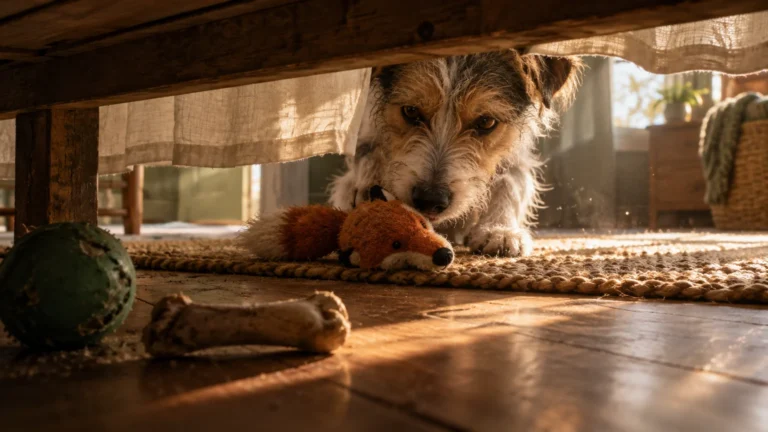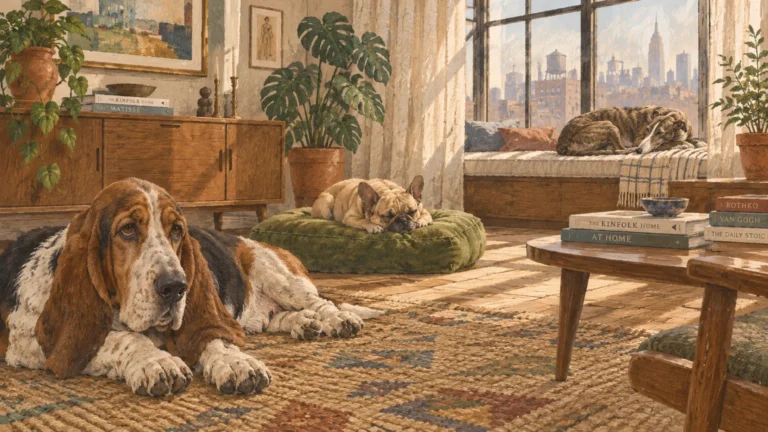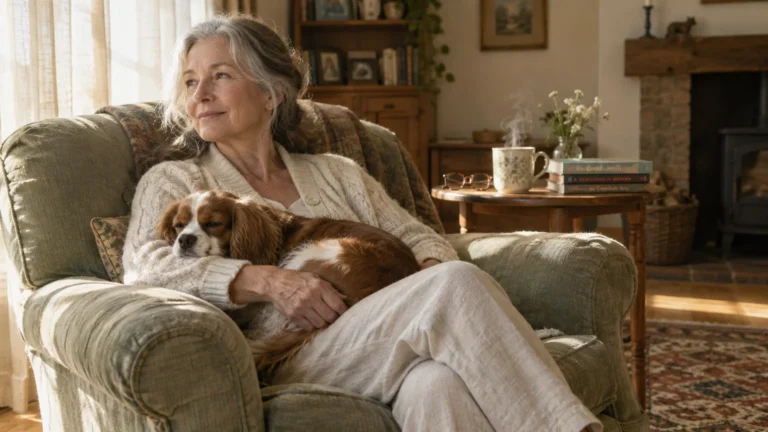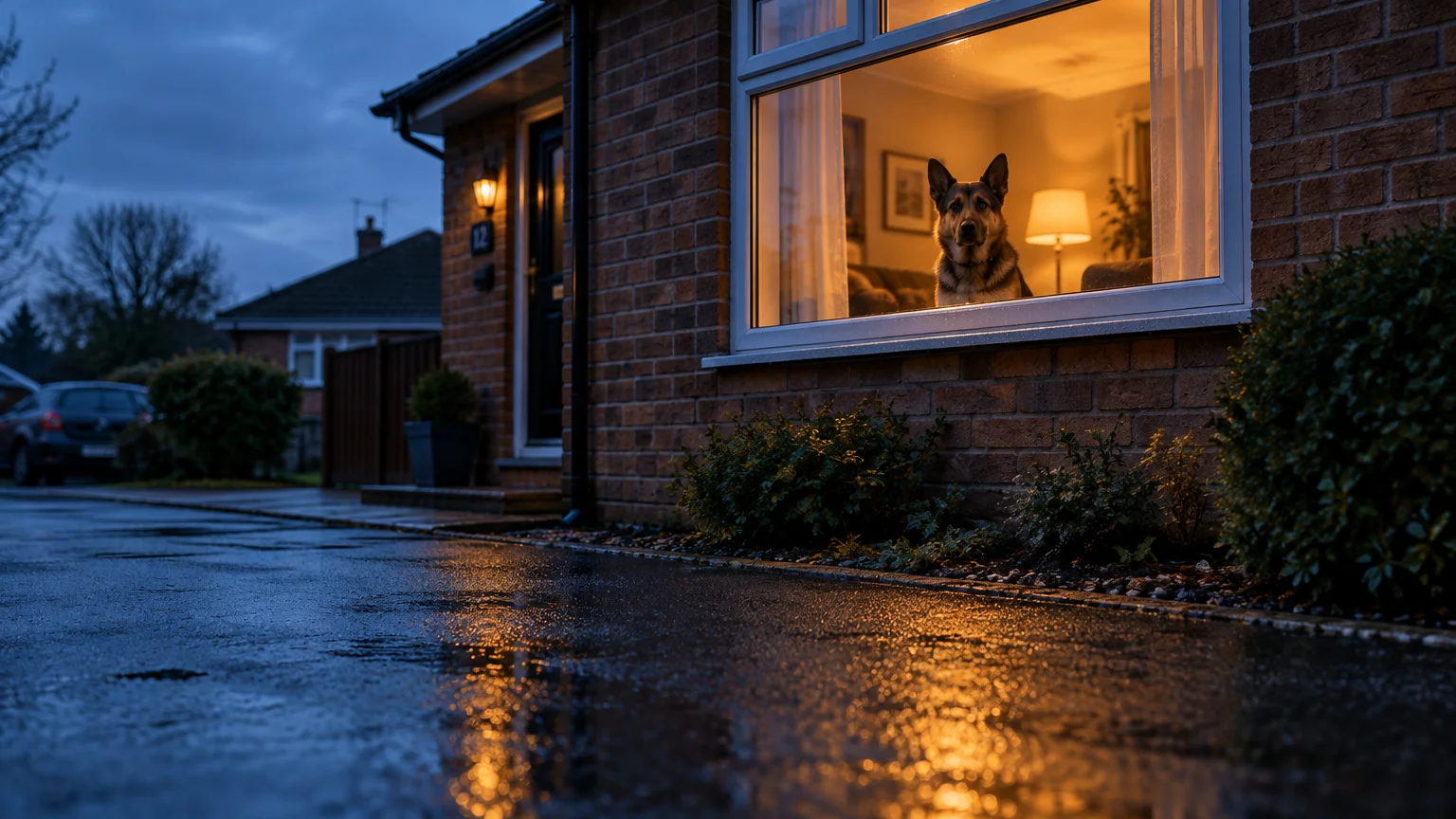
Pulling into your driveway and spotting a familiar canine face framed by the window instantly warms your heart. That steady vigil reveals fascinating biological mechanisms behind canine devotion and attachment.
Dogs track household routines, process subtle environmental cues, and form intense social bonds that draw them toward glass observation posts. Exploring this habit helps you understand your companion’s emotional health and daily expectations.
Unpacking why your dog waits at the window highlights sensory superpowers, canine communication, and key signs of separation anxiety.
01 Acoustic Mapping and Distinct Sound Recognition
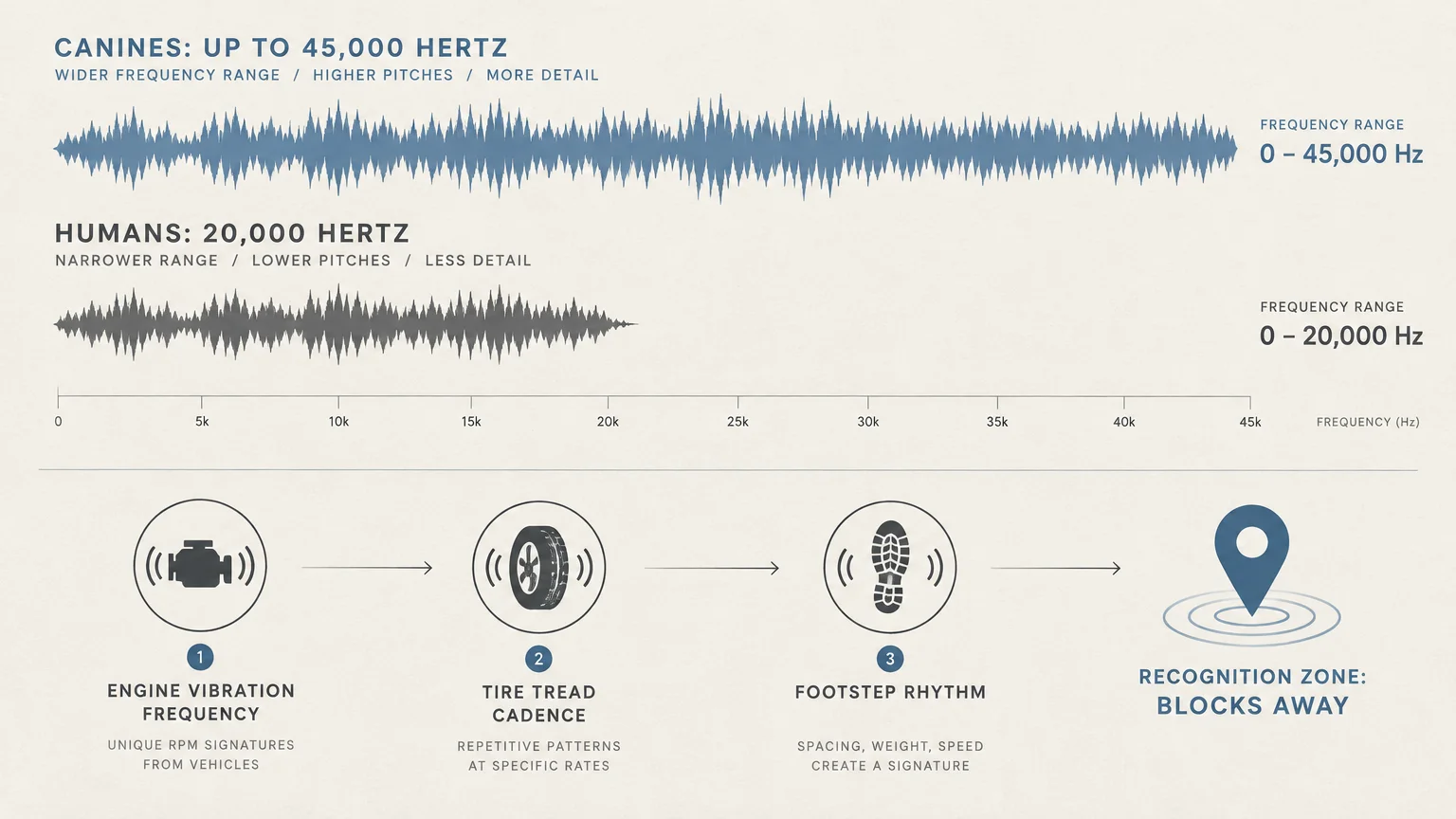
Your dog’s hearing ability far surpasses human limits. Canines detect high frequencies up to 45,000 Hertz, whereas humans generally cap out near 20,000 Hertz.
This acoustic precision allows your dog to identify your vehicle several blocks away. They distinguish the unique vibration of your engine, the cadence of your tires, and your distinct footsteps.
To an outside observer, your dog suddenly rushes to the glass without obvious provocation. In reality, sound waves alerted your pet minutes before you even turned onto your street.
Dogs construct mental acoustic maps of neighborhood activity throughout the day. They ignore delivery vans and passing traffic, saving their window vigil exclusively for the familiar cadence of your arrival.
02 Scent Decay and Olfactory Timekeeping
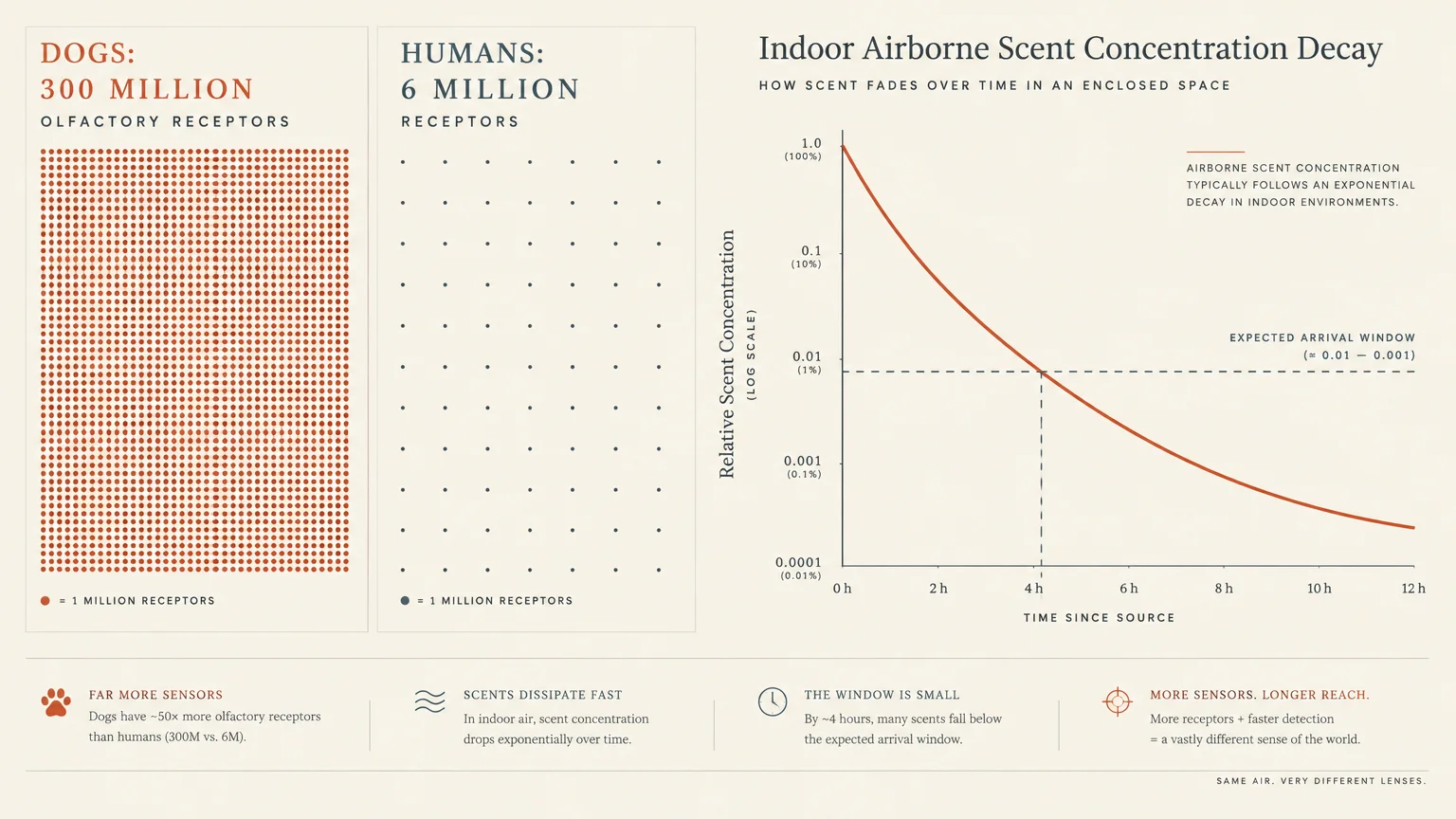
Dogs possess up to 300 million olfactory receptors in their noses, compared to roughly six million in humans. This biological marvel turns their sense of smell into a functioning timekeeper.
According to VCA Animal Hospitals, dogs use their olfactory system to capture information about the past, present, and future.
Canine cognitive researchers suggest dogs monitor the rate at which your personal scent dissipates inside your home. Every passing hour reduces the concentration of your airborne scent molecules.
When your scent decays to a predictable concentration, your pet anticipates your impending arrival. They position themselves at the window precisely when past olfactory experience tells them you are due.
03 Internal Circadian Rhythms and Daily Schedules
Canines operate on deeply ingrained circadian rhythms that synchronize with your daily schedule. Their bodies track regular shifts in daylight, atmospheric pressure, and indoor temperature.
Research highlighted by the American Kennel Club demonstrates that dogs respond reliably to consistent daily schedules and temporal conditioning.
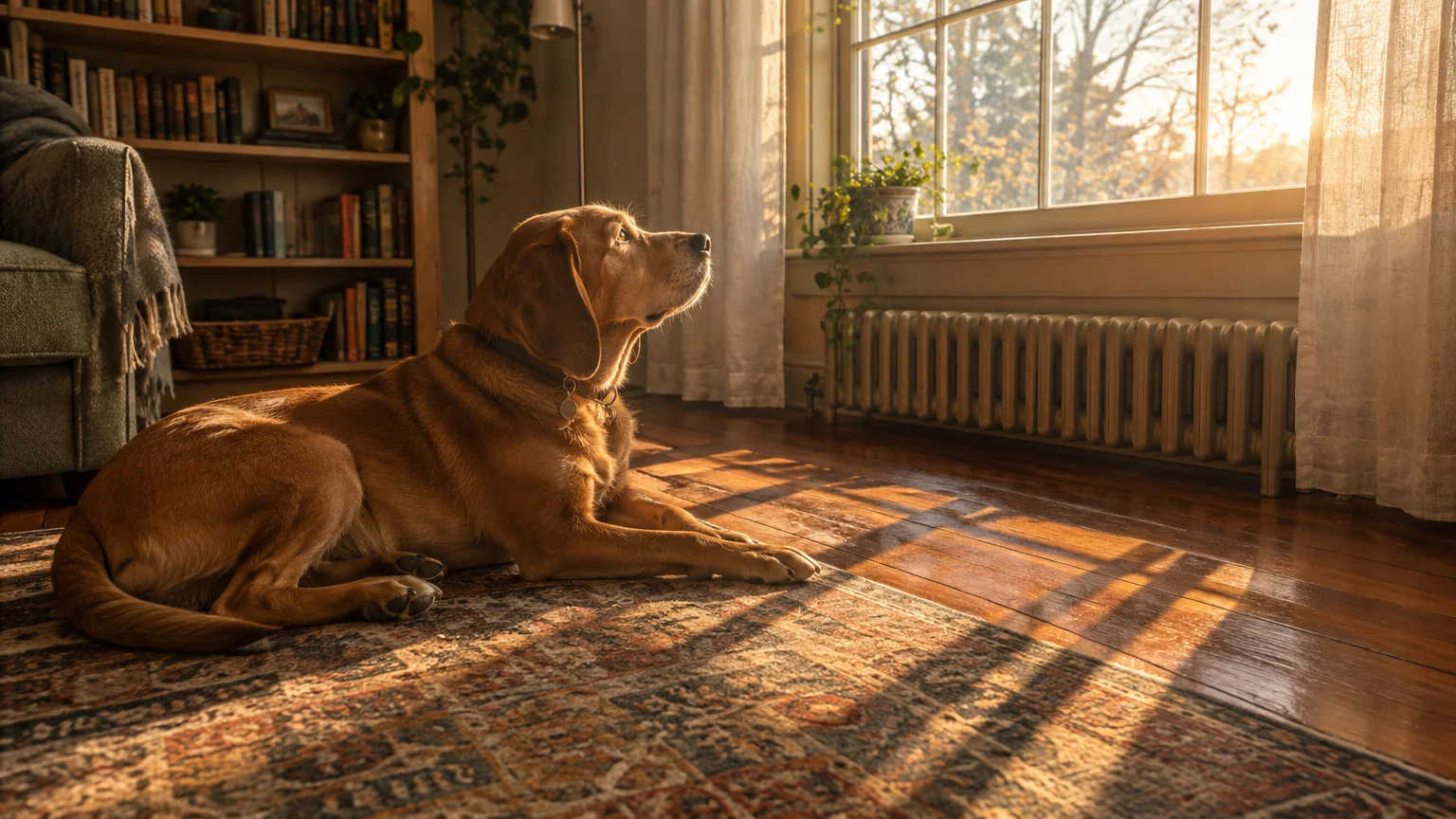
Sunlight shifting across the living room carpet acts as an environmental sundial for your pet. They notice when interior shadows lengthen or when afternoon traffic outside begins to swell.
If you arrive home at five o’clock every weekday, your dog adjusts its internal clock accordingly. By late afternoon, your pup assumes position at the window ledge in eager anticipation.
04 Social Attachment and Emotional Connection
Domestication molded dogs into uniquely human-oriented companions over thousands of years. They view you as their secure base, primary provider, and favorite social partner.
Interacting with you floods your dog’s brain with oxytocin, the hormone responsible for bonding and trust. Waiting near the glass reflects this powerful neurological pull toward social reunion.
Dogs form attachment bonds with owners similar to the emotional bonds between young children and their parents. Your presence provides reassurance, comfort, and security in their domestic territory.
Sitting at the window allows your dog to shorten the emotional distance between you during prolonged absences. Seeing you approach provides an immediate burst of emotional relief and joy.
05 Environmental Enrichment and Visual Stimulation
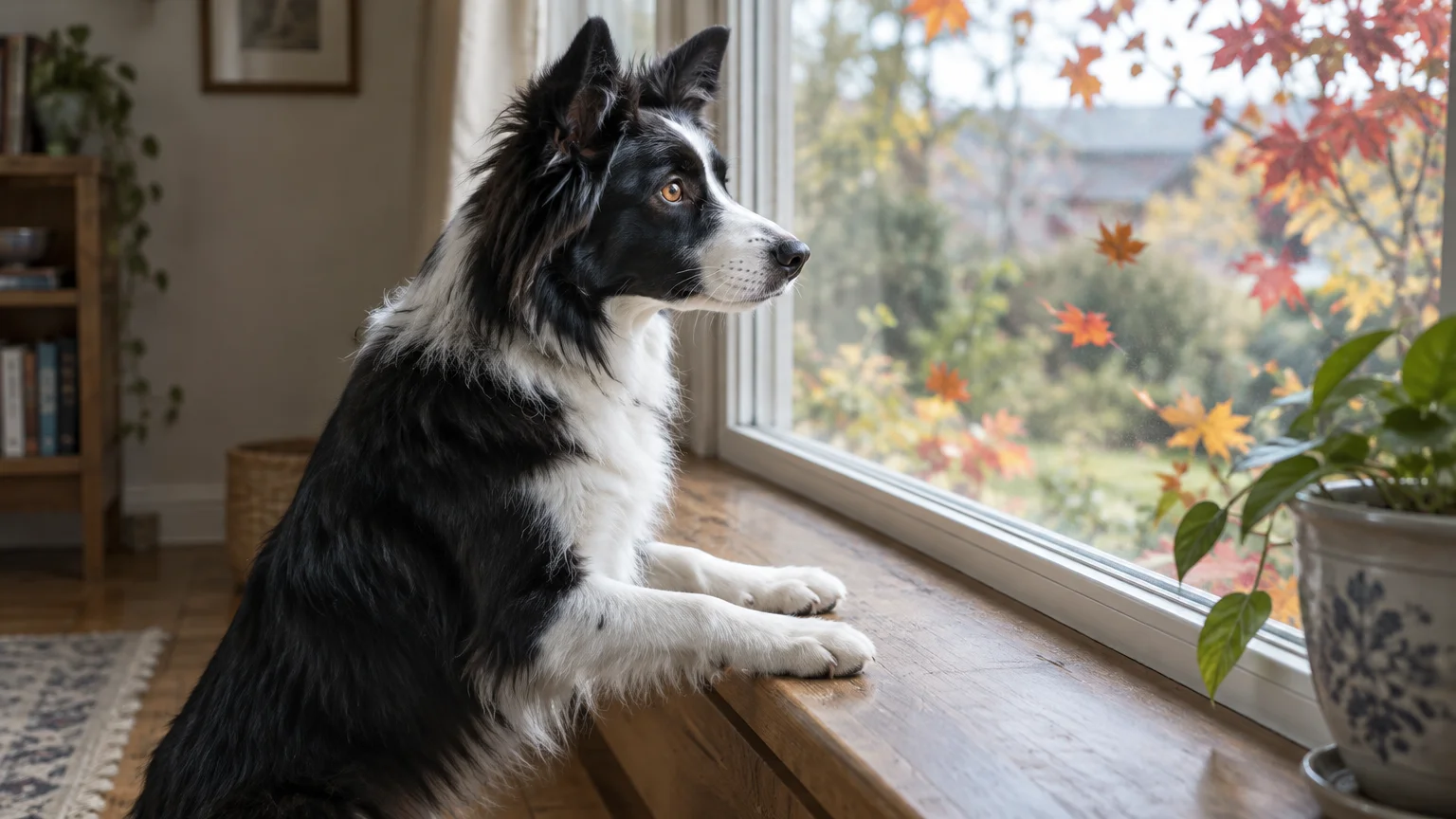
An empty house offers limited entertainment while you are away at work. For an active canine, a front window serves as an interactive entertainment screen.
The outdoor panorama features fluttering leaves, neighborhood dogs, and darting squirrels. These dynamic visuals engage your dog’s predatory drive, visual curiosity, and cognitive faculties.
Perching on a couch cushion or windowsill breaks up hours of monotonous resting. It stimulates their senses and helps prevent dullness during long stretches alone.
Your dog may start the afternoon casually watching neighborhood wildlife. Over time, that casual viewing post seamlessly transitions into an arrival checkpoint for your return.
06 Territorial Perimeter Defense
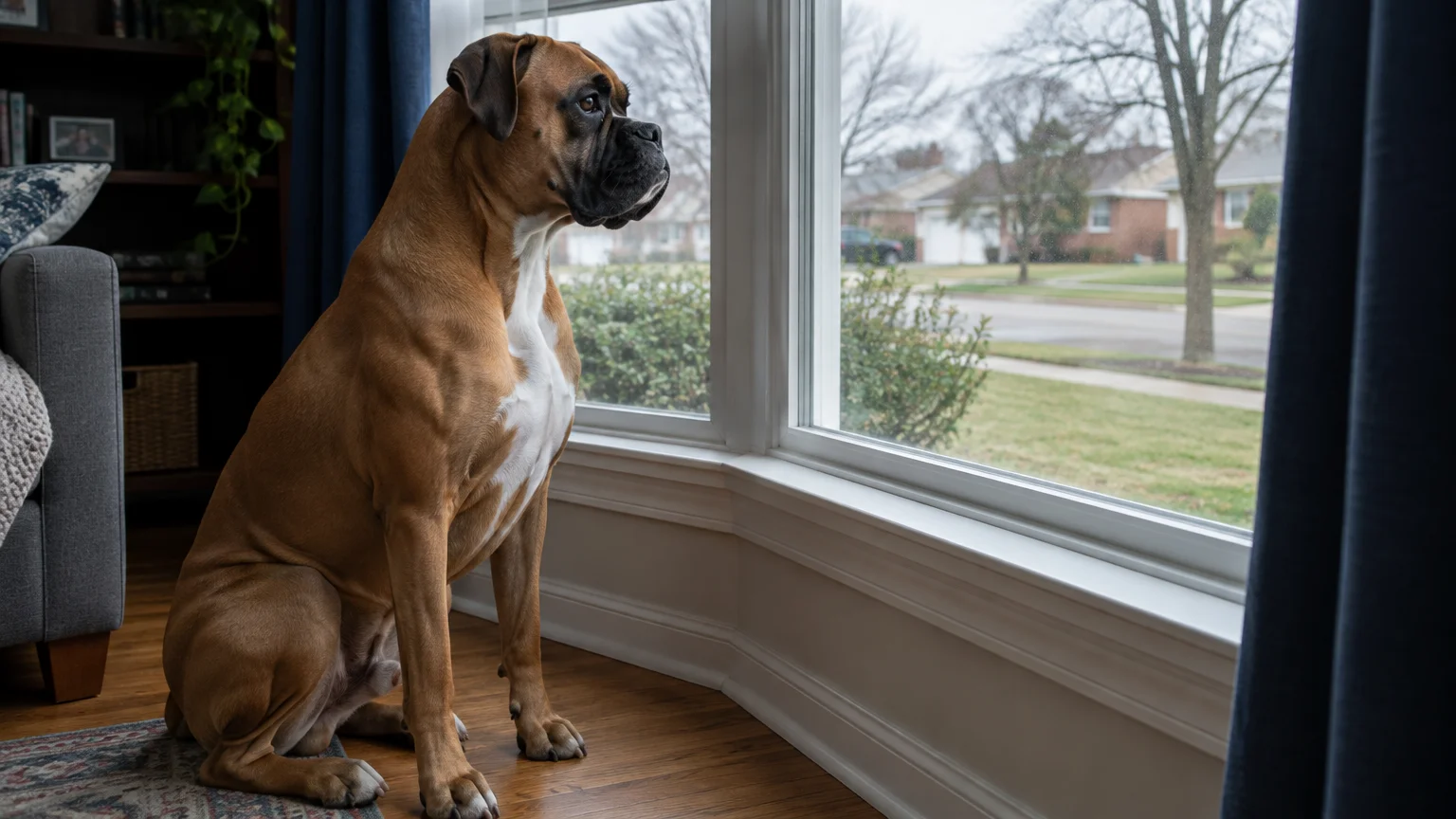
Domestic dogs maintain an innate awareness of their home perimeter. Windows grant them an elevated vantage point to survey property boundaries and monitor incoming stimuli.
Guard and working breeds feel a strong genetic impulse to assess boundary lines. Watching from the window allows them to track postal workers, passing neighbors, and unfamiliar vehicles.
When you enter that monitored zone, your dog’s alert posture shifts instantly into celebratory recognition. The vigilant sentry gives way to a joyful companion welcoming their family member.
This sentinel behavior gives dogs a sense of purpose while holding down the fort. Monitoring the perimeter helps them manage their instinct to keep the living space safe.
07 Anticipation of High-Value Rewards
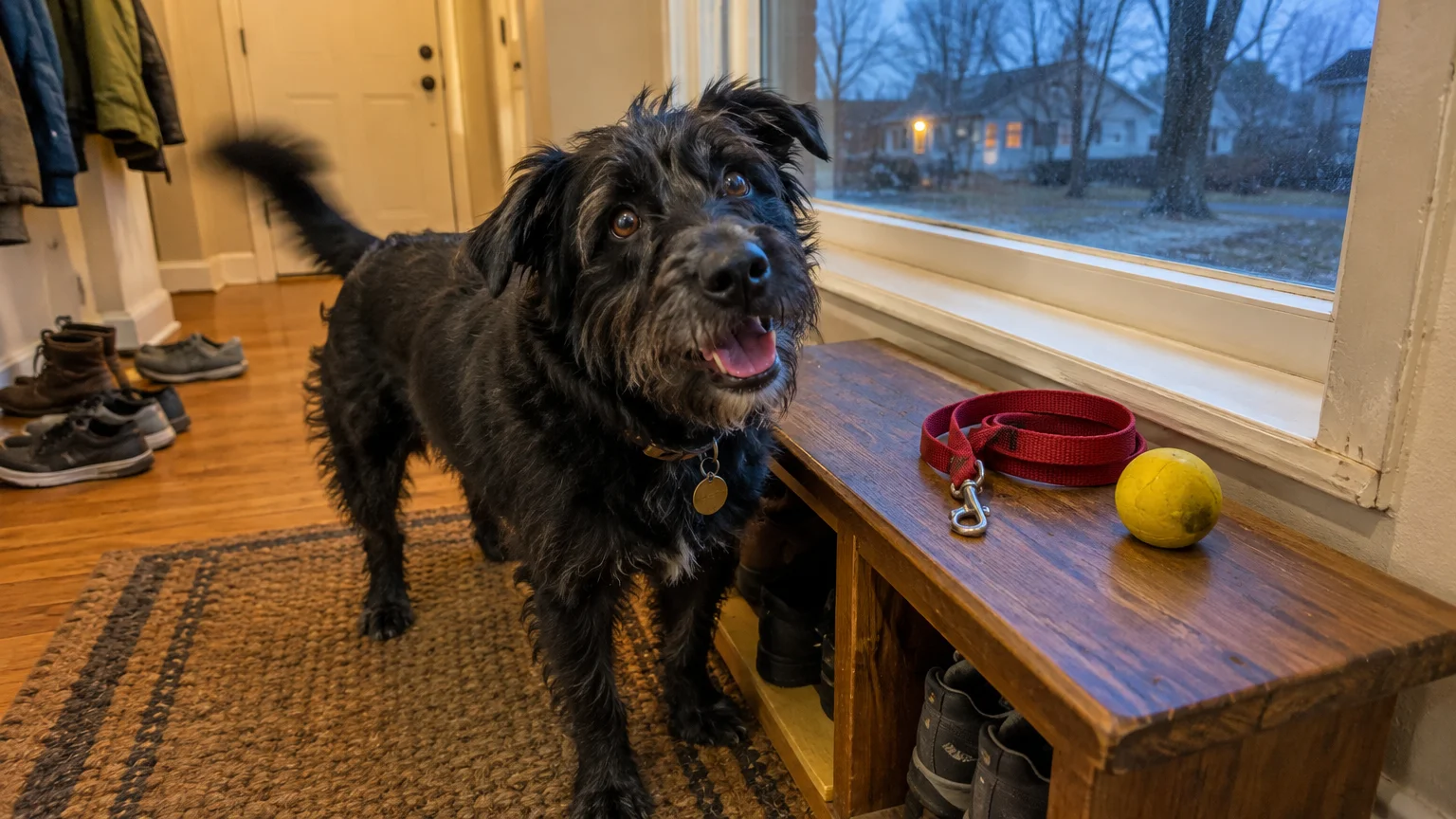
Your arrival initiates the most rewarding moments of your dog’s day. Crossing the threshold brings evening meals, brisk neighborhood walks, bathroom breaks, and affectionate play sessions.
Classical conditioning teaches your pet that your visual presence reliably predicts these positive events. The sight of your face outside the glass triggers an eager release of dopamine.
Dogs remember event sequences exceptionally well. They know that seeing you walk up the path means their food bowl fills within five minutes.
Waiting at the window serves as the preparatory stage for this cascade of daily rewards. Your dog eagerly counts down the moments until your front door unlocks.

08 Separation Distress and Barrier Frustration
While window vigils often reflect harmless affection, they can also signal acute emotional distress. Dogs suffering from isolation distress frequently fixate on physical exit points.
The ASPCA notes that separation anxiety drives dogs to engage in frantic monitoring, escape attempts, and persistent vocalization.
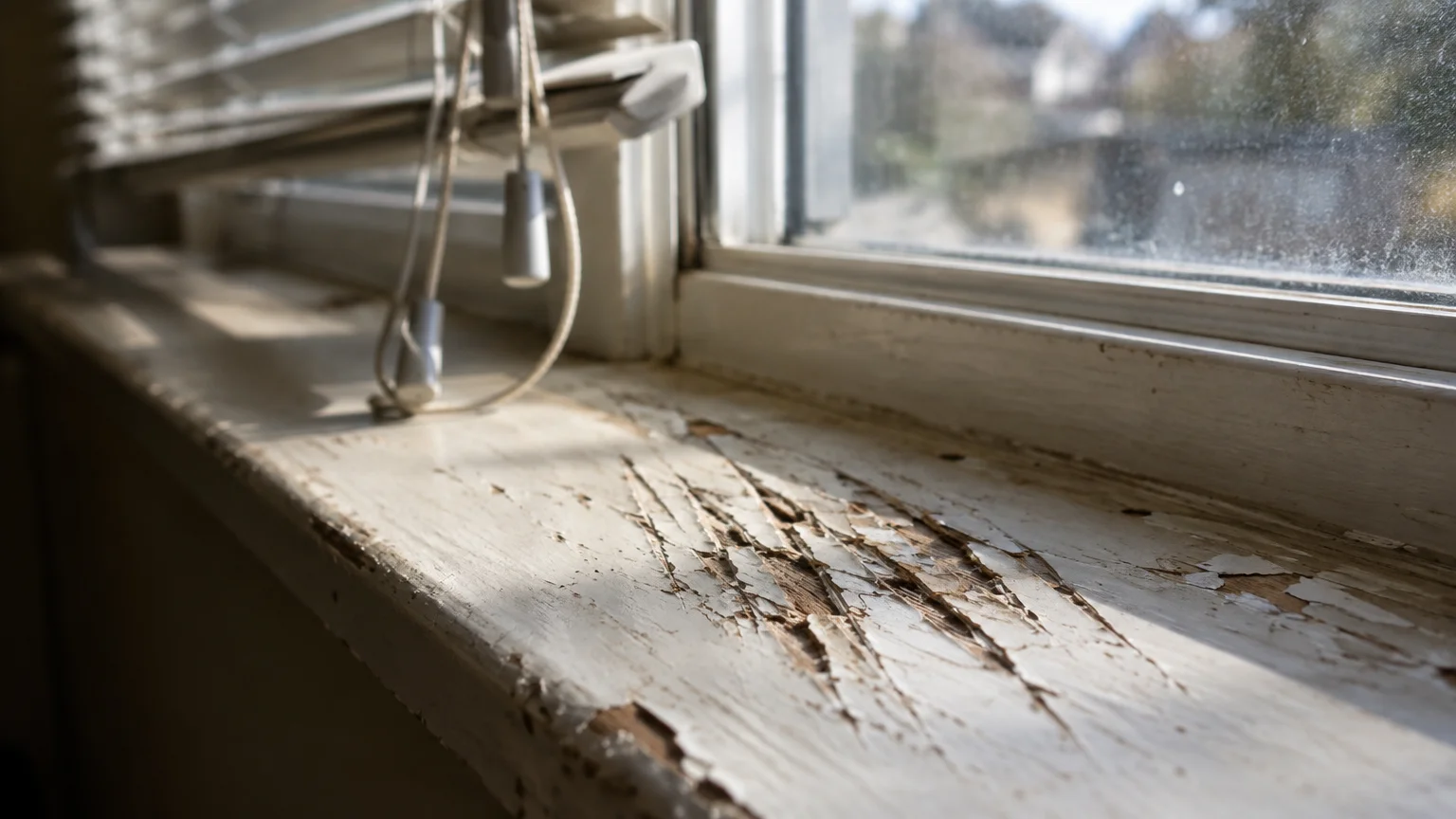
A distressed dog does not rest calmly on a cushion while looking outside. Instead, they pace before the glass, pant heavily, whine, or repeatedly scratch at the sill.
The window represents a transparent barrier between the dog and the human they desperately crave. Observing the outside world without being able to reach you intensifies their barrier frustration.
09 Understanding Portals and Physical Boundaries
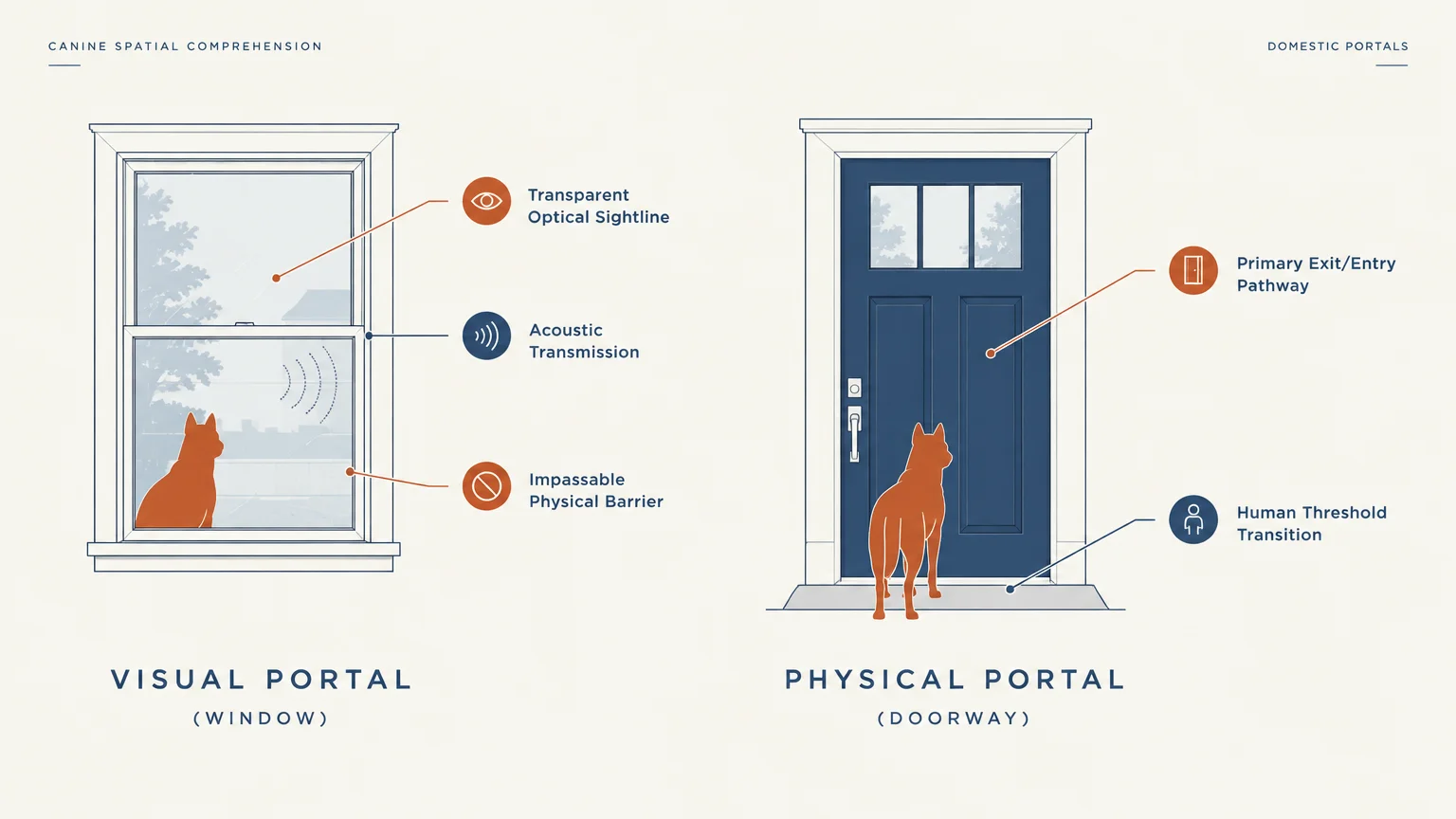
Dogs understand domestic architecture remarkably well. They grasp that windows and exterior doors function as thresholds linking their indoor world to the broader neighborhood.
Your pet observes you exiting and returning through specific entry points every day. They quickly deduce that the driveway path visible from the window brings you back inside.
Transparent glass provides an immediate sensory portal that solid walls cannot offer. Your dog positions itself where sightlines maximize early visual detection of your return.
This strategic spatial placement demonstrates practical canine problem-solving. By choosing the window overlooking the walkway, your dog ensures they never miss your arrival.
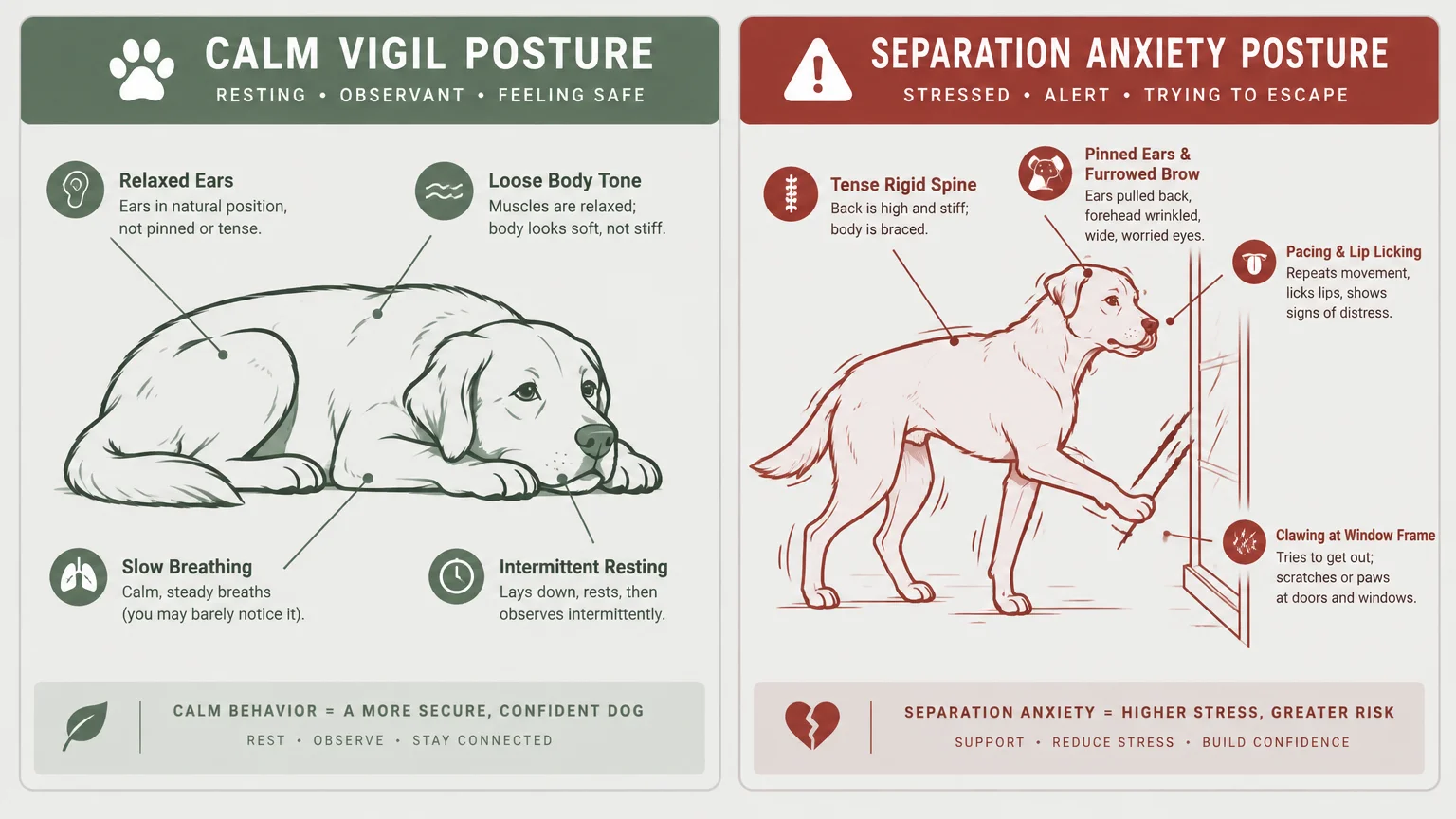
Deciphering the Posture: Calm Waiting vs. Separation Anxiety
Differentiating between happy anticipation and stressful fixation preserves your dog’s emotional health. Monitoring your pet’s physical cues while they sit at the window reveals their state of mind.
A calm dog rests comfortably, while an anxious companion shows physical signs of systemic tension. Use this comparison table to evaluate your dog’s window-watching habits.
| Behavioral Indicator | Calm Anticipation | Separation Distress |
|---|---|---|
| Body Posture | Loose muscles, resting chin, soft eyes, and relaxed ears. | Rigid posture, raised hackles, pacing, lip-licking, and trembling. |
| Vocalizations | Soft greeting grunts, occasional quiet whuffs, or complete silence. | High-pitched whining, repetitive barking, or sustained howling. |
| Interaction With Glass | Gazing outward passively without clawing the windowpane or sill. | Frantic pawing, biting window frames, and heavy panting that fogs glass. |
| Greeting Upon Entry | Joyful tail wagging and body wiggles; settles down within minutes. | Hysterical leaping, frantic clinginess, and prolonged inability to calm down. |
| Daily Flexibility | Moves easily between the window, sleeping areas, and chew toys. | Refuses to leave the window, ignores food, and never naps during the day. |
Calm watchers shift positions easily, nap intermittently, and disengage when other indoor stimuli arise. In contrast, distressed dogs remain hyper-focused, unable to relax or enjoy treats while observing.
Recognizing these subtle differences allows you to intervene before mild unease spirals into chronic anxiety. Adjusting your departure habits can transform window time into a peaceful activity.
Practical Ways to Support Your Window-Watching Dog
You can optimize your home environment to keep window watching safe, enjoyable, and relaxing. Thoughtful adjustments prevent reactivity while encouraging healthy, calm observation.
Implement these practical strategies to enhance your dog’s daytime viewing experience:
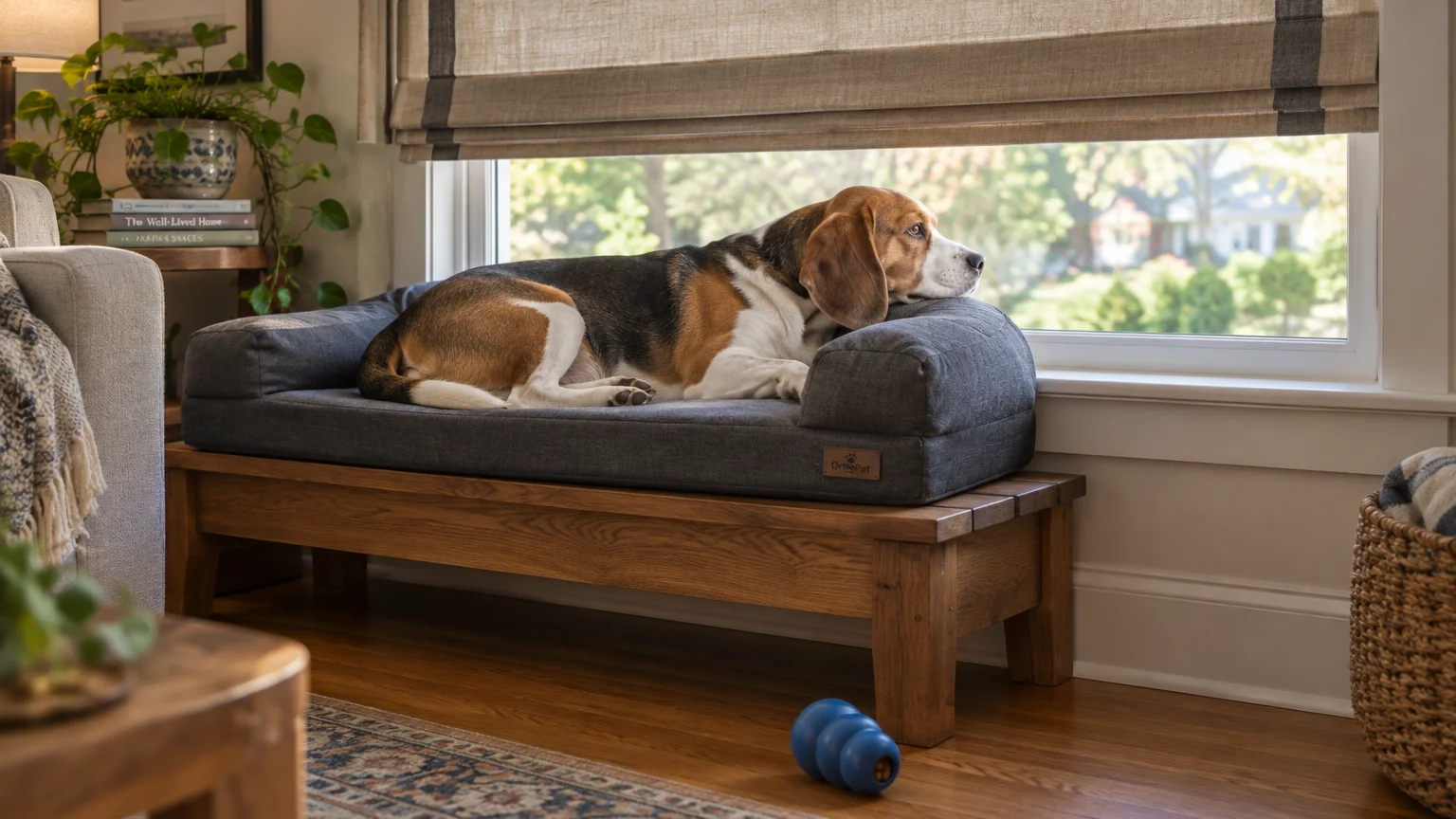
- Create an ergonomic resting zone: Place a supportive pet bed or sturdy ottoman beneath the sill so your dog rests without straining joints.
- Install visual diffusion film: Apply frosted or patterned window film across the bottom pane to block street-level triggers if your dog barks at passersby.
- Provide interactive foraging toys: Offer frozen lick mats or puzzle feeders in the room to keep your dog mentally stimulated away from the glass.
- Keep arrival greetings low-key: Greet your dog with calm, grounded energy rather than intense excitement to reduce hyper-arousal before your return.
- Establish background white noise: Run a sound machine, fan, or calming music to mask sudden neighborhood noises that trigger frantic rushes to the window.
Placing an orthopedic bed near the windowsill prevents joint stiffness in aging dogs. Providing ergonomic support ensures your pet rests comfortably during their afternoon watch.
If street foot traffic triggers barrier frustration, apply static-cling decorative film to the lower windowpane. This simple fix diffuses outdoor movement while preserving natural ambient daylight inside.
Things to Watch Out For
Window watching can occasionally compromise safety or escalate into troublesome behavioral patterns. Watch for these common risks to protect both your pet and your home.
Barrier frustration develops when dogs bark frantically at delivery couriers, postal trucks, or walking dogs. This heightened arousal can spill over into destructive scratching or redirected aggression.
Thin glass panes pose genuine physical danger to energetic, heavy dogs. Jumping forcefully against windowpanes or scratching at lower muntins can cause painful lacerations or structural breakages.
Window screen failures occur when dogs push against lightweight frames to pursue passing wildlife. Always secure secondary locks on open windows to avoid accidental falls or escapes.
Compulsive pacing before the glass indicates unhealthy obsessive behavior rather than casual observation. If your pet ignores food, toys, and rest to watch the glass, intervention is necessary.
When DIY Isn’t Enough
Standard environmental modifications do not resolve every window-related behavioral problem. Certain clinical scenarios demand specialized professional intervention to keep your pet safe.
Seek professional guidance if your dog exhibits any of the following severe symptoms:
- Self-injurious behavior: Pawing until pads bleed, breaking claws on the sill, or chipping teeth against window hardware.
- Severe panic attacks: Heavy drooling, trembling, frantic howling, or accidental indoor elimination whenever you step outside.
- Extreme redirected aggression: Snapping at housemate pets or family members when aroused by visual outdoor stimuli.
- Total refusal of food: Ignoring high-value treats and meals for entire workdays while glued to the window glass.
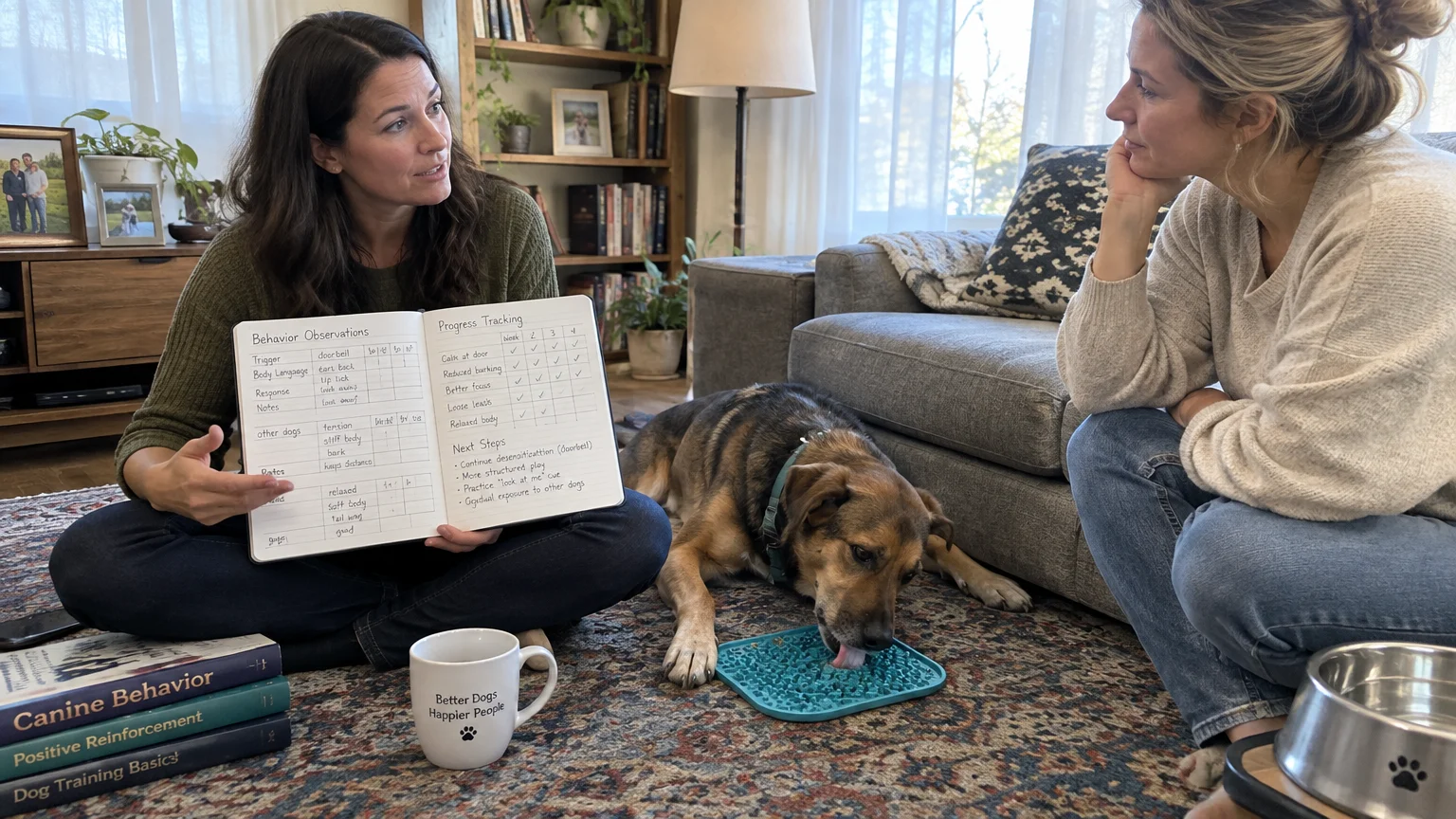
Consult a board-certified veterinary behaviorist or a certified professional dog trainer. These credentialed specialists construct systematic desensitization plans tailored to your dog’s distinct emotional profile.
A veterinarian can also evaluate whether underlying medical issues, joint pain, or neurochemical imbalances contribute to obsessive window fixation. Medical therapy often supports behavioral rehabilitation.
Frequently Asked Questions
Can dogs tell time while waiting at the window?
Dogs do not read clocks, but they track time using internal biological rhythms and environmental cues. They notice changing sunlight patterns, scent decay, and regular auditory triggers throughout the day.
These combined sensory markers allow your pet to predict your daily arrival window with striking accuracy.
Should I close the blinds to stop my dog from waiting?
Closing the blinds helps if outdoor visual triggers cause frantic barking, pacing, or territorial reactivity. Blocking the view lowers arousal and helps anxious dogs settle down indoors.
However, if your dog watches calmly without stress or barking, the window provides healthy visual enrichment. Tailor your approach to your dog’s specific emotional reaction.
Why does my dog wait at the window when other family members are home?
Dogs often form a primary attachment bond with one specific human in the household. Even when the house is full, your pet tracks their primary social anchor.
Additionally, your dog associates you with specific rewarding routines, such as your evening walk or specialized training games.
Does waiting at the window mean my dog has separation anxiety?
Window waiting alone does not indicate clinical separation anxiety. Most dogs watch out the window simply out of curiosity, boredom, or happy anticipation.
You should only suspect separation anxiety if window watching accompanies distressed vocalization, pacing, destructive scratching, or prolonged trembling.
Supporting Your Dog’s Daily Well-Being
Spotting your dog’s silhouette framed in the glass highlights the remarkable bond connecting humans and canines. That patient vigil blends sharp sensory capabilities with steadfast social loyalty.
Observe your pet’s body language closely to ensure their viewing time remains peaceful and enriching. Supporting their daily routine turns their favorite observation station into a comfortable sanctuary.
This is general informational content based on widely accepted guidance, and individual results vary. Verify current details—rules, prices, eligibility, regulations—with official sources before making important decisions.
Last updated: May 2026. Rules, prices, and details change—verify current information with official sources before acting on it.