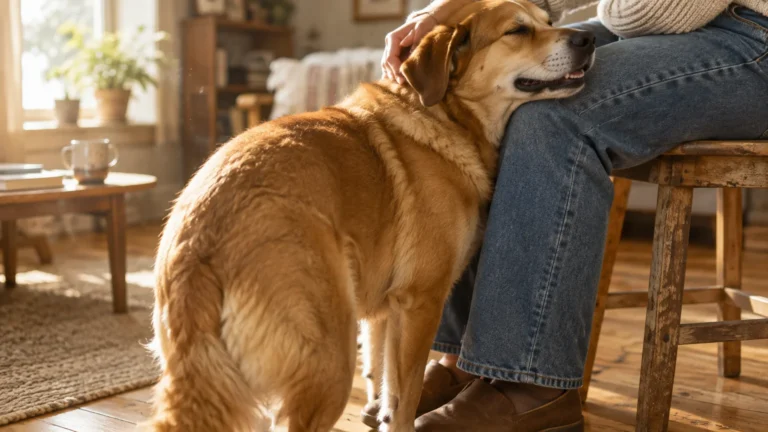
You might feel completely fine while typing at your desk, but your dog suddenly rests their chin on your foot. Your pet often detects subtle physiological shifts before your conscious mind registers rising tension.
Canines do not wait for you to cry or yell to understand your emotional state. Instead, their senses pick up microscopic biochemical signals and subtle posture changes you produce without realizing it.
Here are nine clear signs your dog recognized your internal mood shift before you did—and the biology explaining their reaction.
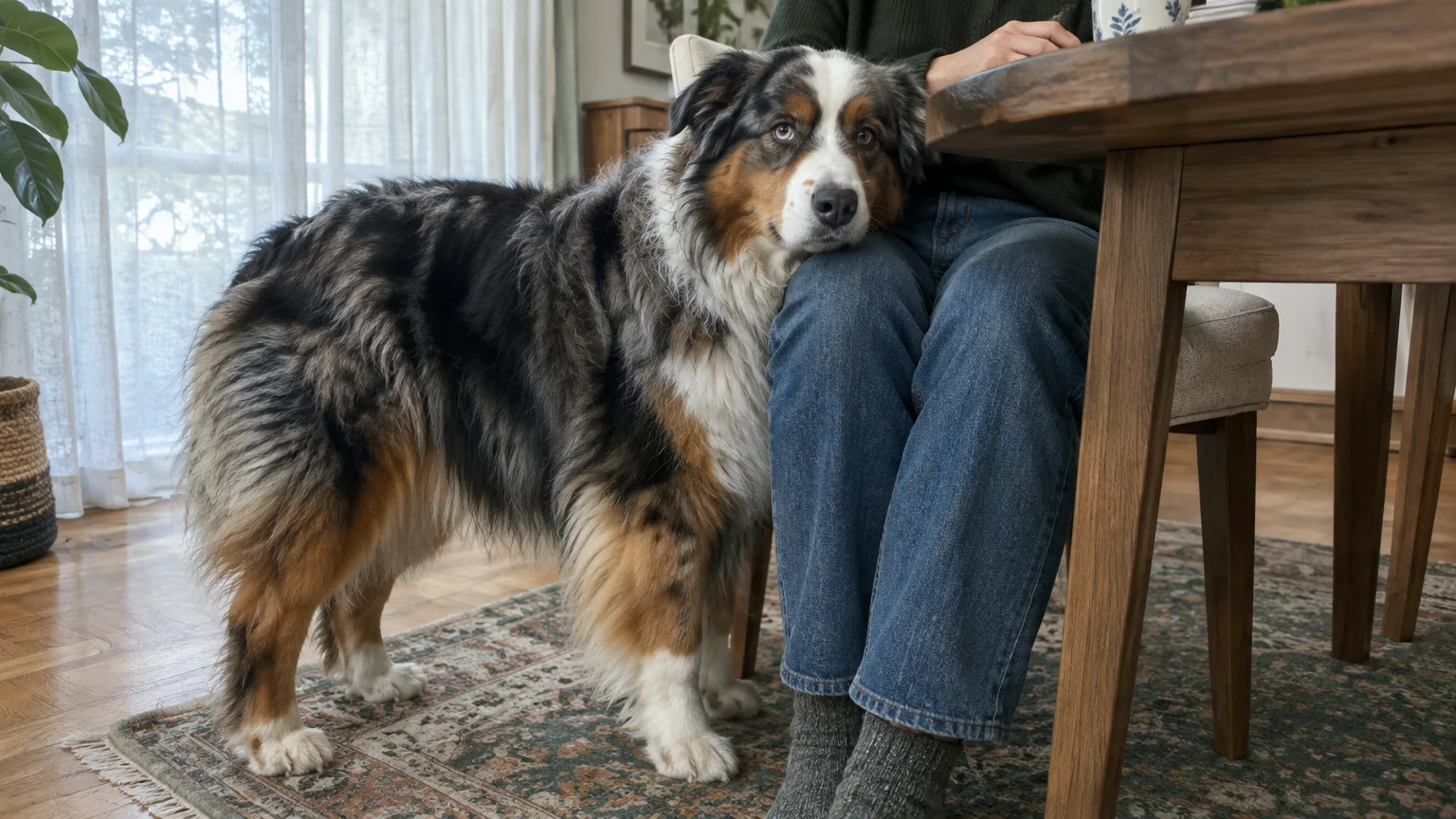
01 Sudden, Heavy Body Pressure or “Velcro” Leaning
Your dog walks over, turns around, and presses their entire ribcage firmly against your shins. While you might assume they just want affection, this targeted physical pressure often signals emotional grounding.
Canines intuitively use body weight to anchor companions during moments of subtle human dysregulation.
When you start to feel overwhelmed, your heart rate accelerates and your muscle tone tightens imperceptibly. Your dog senses these microscopic shifts and offers deep tactile pressure in response.
Working service dogs use this exact technique—known as Deep Pressure Therapy (DPT)—to alleviate sensory overload and reduce anxiety in humans.
If your normally independent dog suddenly glues themselves to your legs while you read emails, examine your stress levels. You are likely clenching your jaw or holding your breath without noticing.
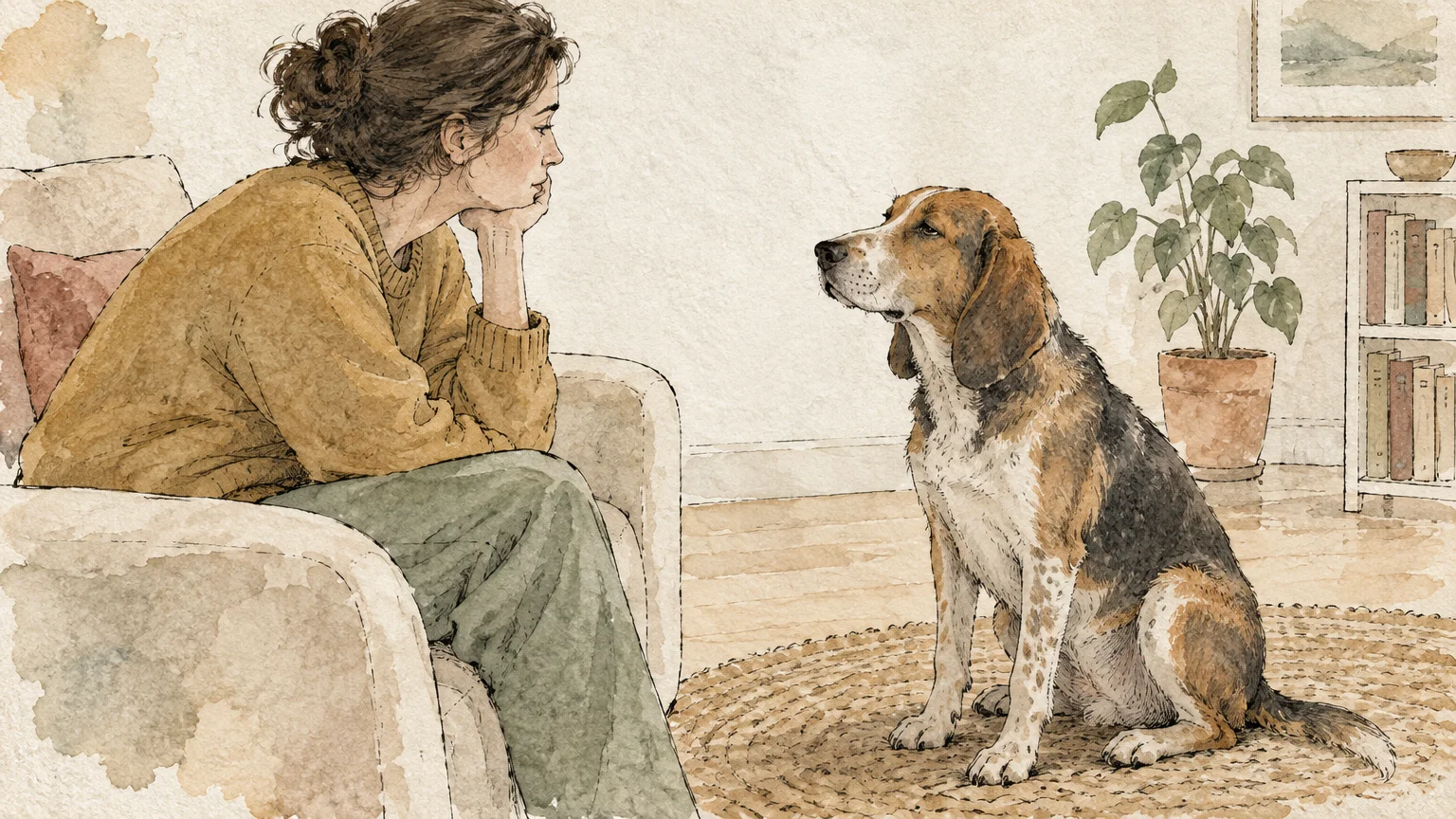
02 Sustained, Gentle Eye Gazing
Direct eye contact among animals often signals a challenge or a threat. However, domesticated dogs have evolved a unique behavior: they hold your gaze with soft, blinking eyes when they sense your emotional vulnerability.
This gentle gaze represents an active attempt to establish emotional connection and provide comfort.
This mutual gaze stimulates a remarkable neurochemical loop. According to a landmark study published in Science, mutual gazing between dogs and their owners triggers an oxytocin surge of up to 130% in canines and 300% in humans.
Your dog uses their eyes to calm your nervous system while simultaneously soothing their own.
If your pet sits across the room and stares at you with relaxed, drooping eyelids, pause and check in with yourself. They have likely registered your internal fatigue and are offering a biological reset.
03 Intently Sniffing Your Face and Breath
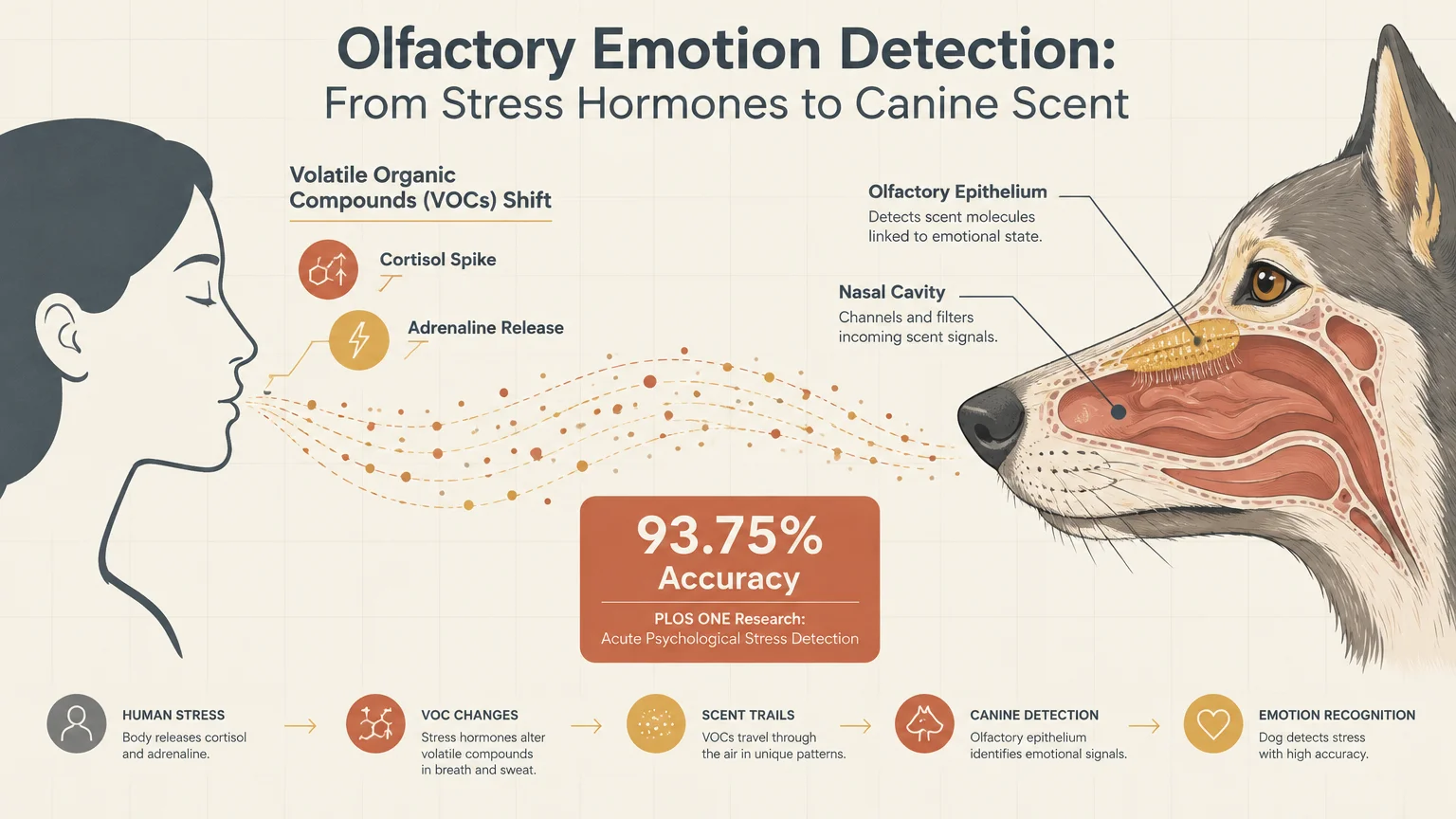
You might notice your dog stretching their neck upward, delicately sniffing your lips, chin, or collarbone with unusual focus. This is not simple curiosity; your dog is reading your bloodstream through your breath.
Human emotions trigger rapid hormonal cascades that alter the volatile organic compounds (VOCs) you exhale.
Research published in PLOS ONE proved that dogs can detect acute psychological stress from human breath and sweat samples with 93.75% accuracy. Dogs do not need to see your expression to know you feel stressed.
When your adrenaline or cortisol spikes, your metabolic scent changes in seconds.
Your dog’s wet nose detects these shifting scent molecules long before your brain admits that an incoming phone call or bill made you anxious. Take that inquisitive sniff as an early warning to take a deep breath.
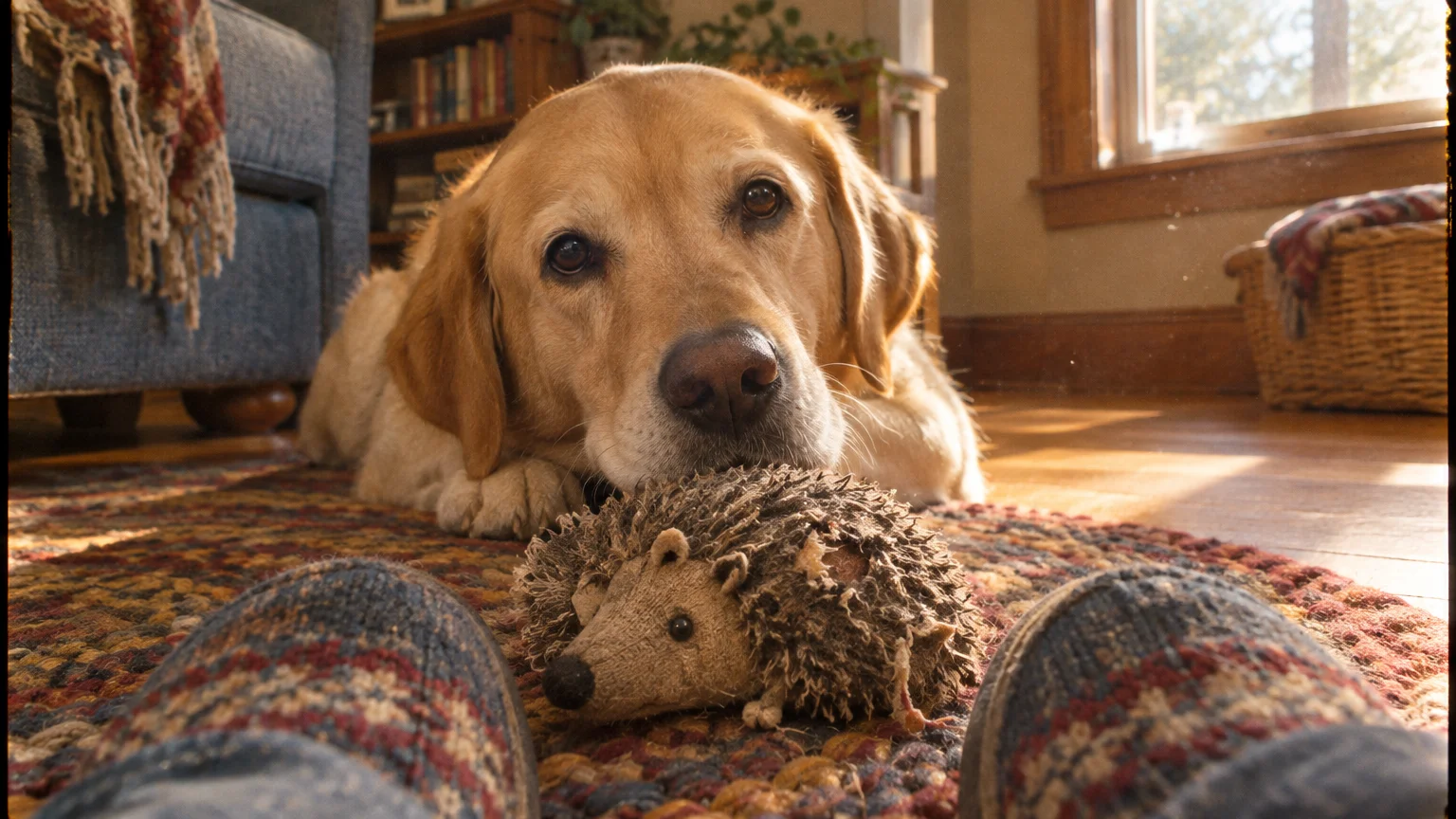
04 Presenting a Prized Toy Without Wanting to Play
Your dog enters the room carrying their favorite worn-out plush squeaker or rubber bone. They drop it gently onto your lap or place it beside your hand, but when you reach out to toss it, they do not move.
They do not want a game of fetch. Instead, they are offering their most valued possession as an appease-and-soothe ritual.
In canine social groups, sharing valuable resources often diffuses social tension and establishes safety. By delivering an item that provides them security, your dog attempts to share comfort with you.
This action represents sophisticated dog empathy behavior aimed at shifting the emotional atmosphere of the room.
If your pet brings you a toy and immediately lies down with a heavy sigh, accept the gesture gratefully. Pet them quietly, thank them for the gift, and let the toy rest between you.
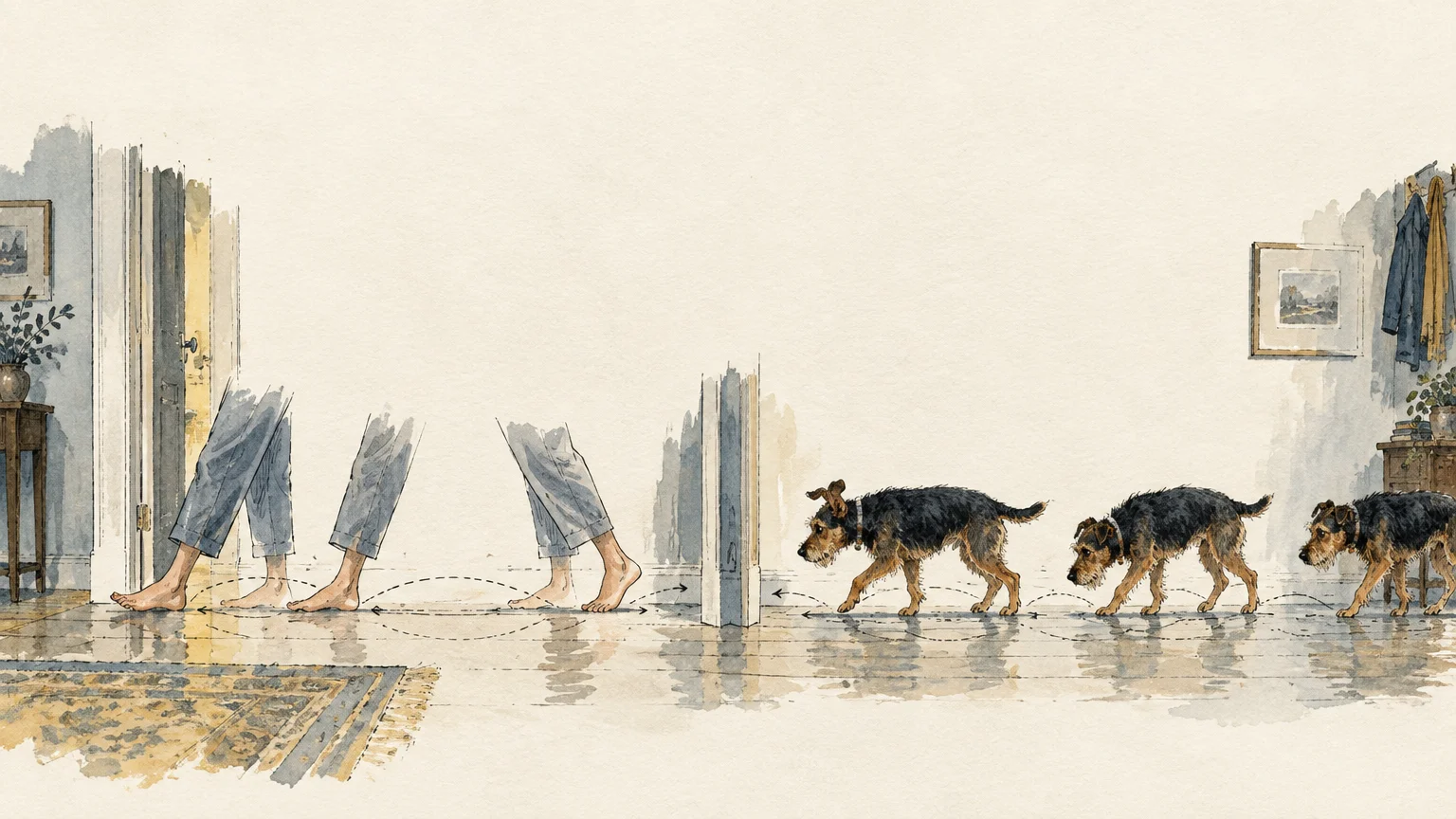
05 Mirroring Your Restlessness and Pacing
Have you ever spent an afternoon pacing the hallway, adjusting picture frames, or restlessly switching tasks, only to find your dog shadowing every step? Your dog may not be bored; they are mirroring your internal turmoil.
Dogs act as emotional sponges, soaking up the physiological arousal vibrating through their home environment.
This biological mimicry happens at the deepest hormonal levels. A study published in Scientific Reports revealed that cortisol levels in dog hair synchronize directly with the cortisol levels of their owners over several seasons.
When you silently carry chronic worry, your dog’s endocrine system mirrors that burden.
If your dog cannot settle into their bed and keeps pacing the floor, look in the mirror. Your dog’s erratic pacing often serves as a living reflection of your suppressed mental racing.
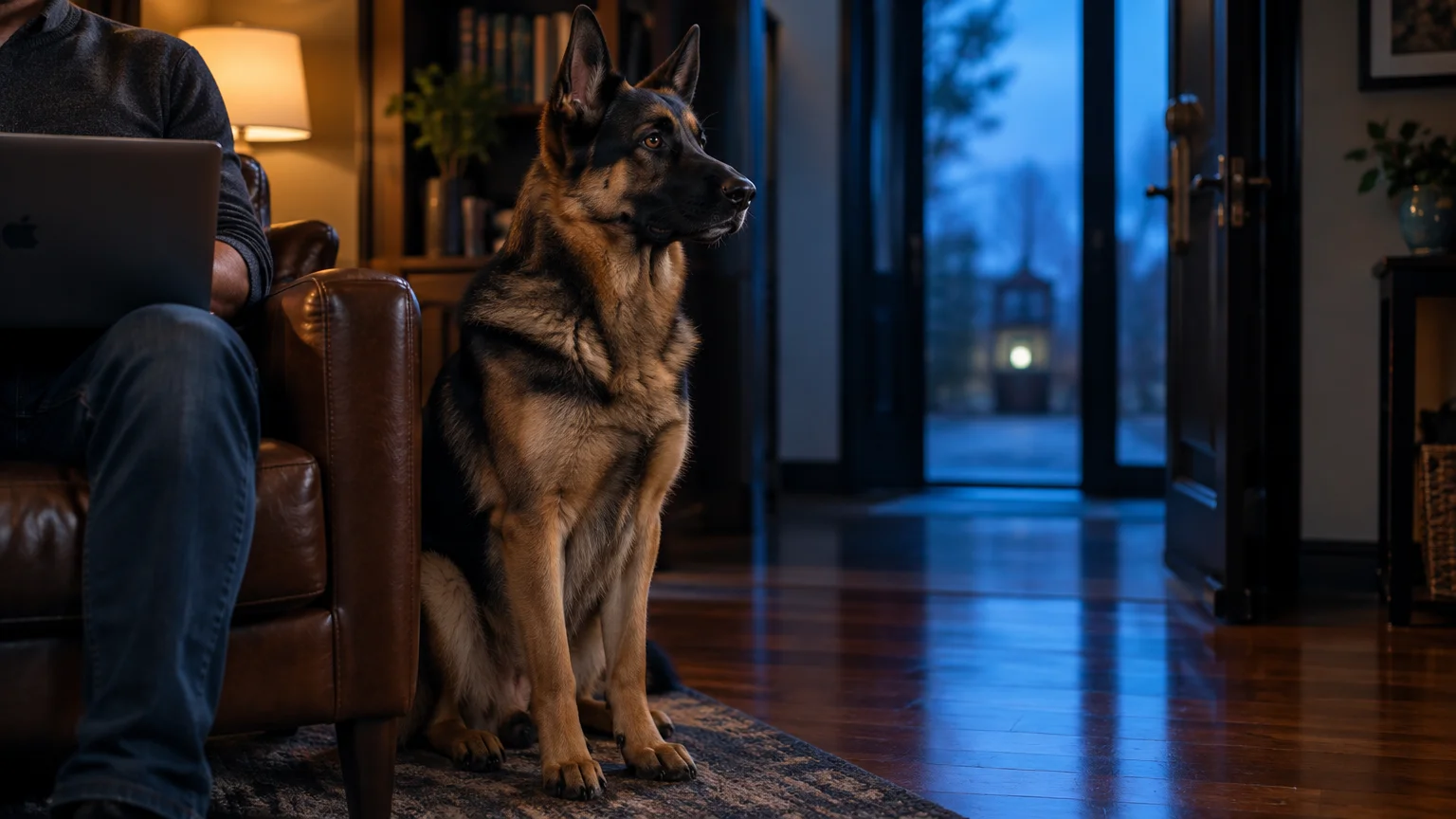
06 Adopting a Sentry Position Near Your Side
Your dog might suddenly relocate from their comfortable dog bed to lie across the threshold of your doorway or position their back against your chair. They sit upright, facing the entrance, quietly scanning the perimeter.
This subtle shift to sentry duty occurs when your dog senses that you feel vulnerable, exhausted, or unwell.
In a pack dynamic, resting animals depend on alert companions to monitor environmental dangers. When you experience deep sadness or physical depletion, your posture slumps and your reaction times slow down.
Your dog picks up these micro-signals and voluntarily takes over security detail so you can safely recuperate.
This protective stance does not mean your dog is turning aggressive. Rather, they are managing your environment, giving you the space you need to recover from an exhausting day.
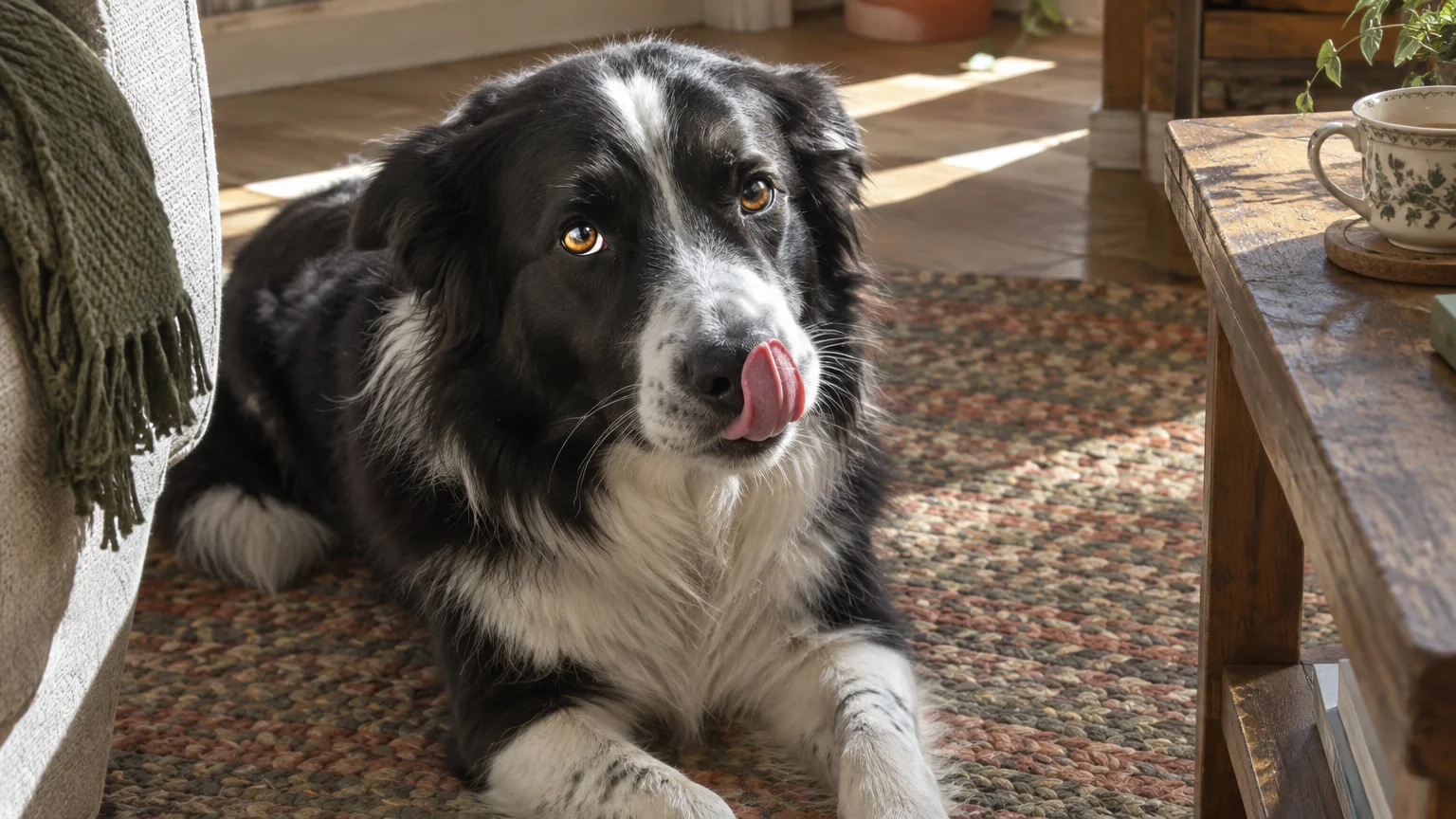
07 Frequent Lip-Licking and Yawning While Watching You
If your dog yawns repeatedly while staring at you—even though they just woke from a three-hour nap—they are communicating with you. The same applies to rapid, repeated tongue flicks across their nose.
In canine body language, these actions are known as calming signals or appeasement gestures.
Dogs use calming signals to de-escalate tension and communicate peaceful intentions. When you harbor silent frustration, your facial muscles harden, your brow furrows, and your breathing pattern turns shallow and rapid.
Dogs read these micro-expressions effortlessly and perceive the subtle hostility or tension radiating from your body.
By yawning or licking their lips, your dog gently signals: “I see your tension, and I mean no harm.” When you observe these subtle cues, soften your face, drop your shoulders, and exhale audibly.
08 Matching Your Energy Shift Before You Switch Tasks
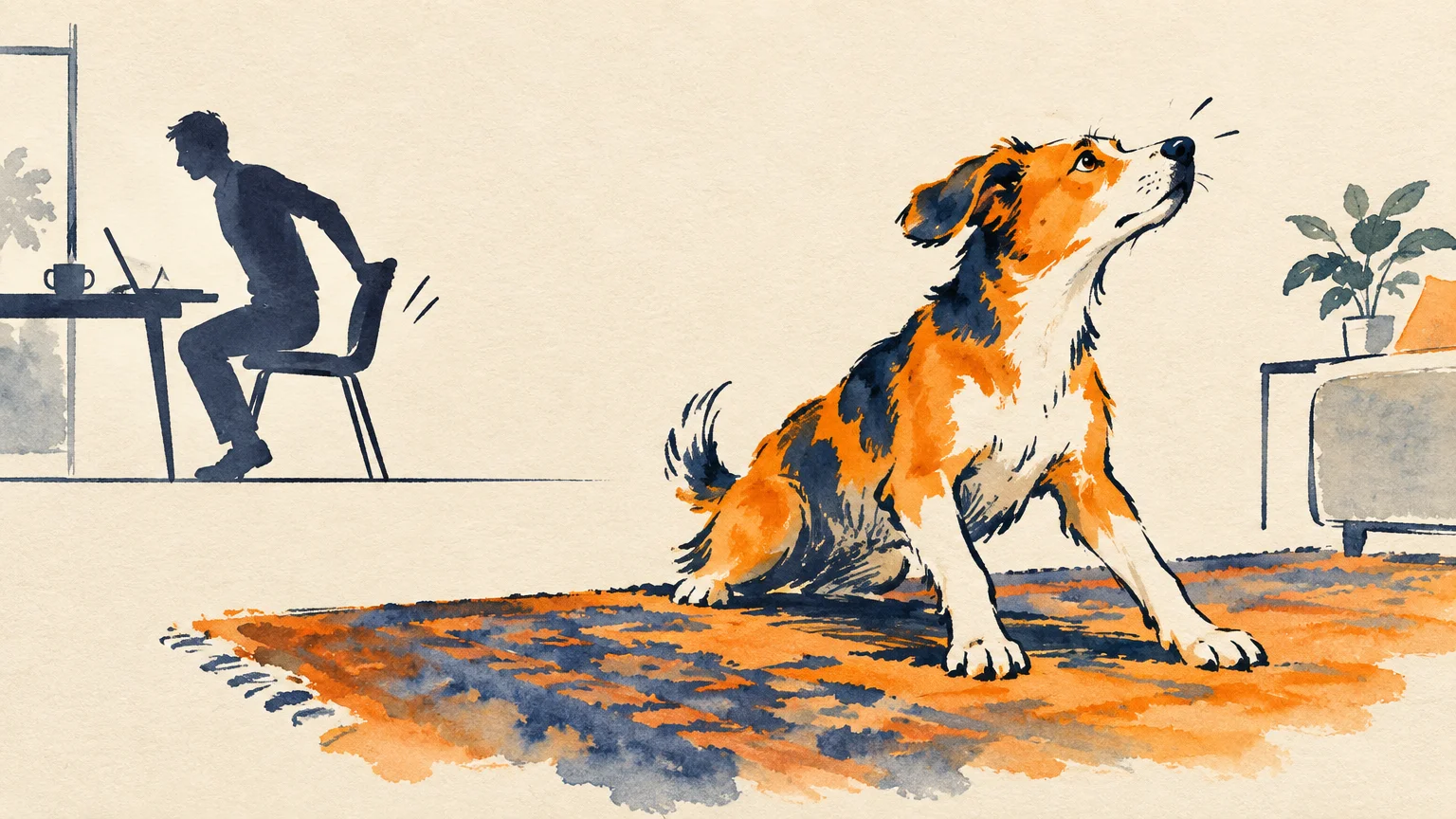
You decide internally that you are finished working for the evening, but you haven’t closed your laptop or spoken a word. Suddenly, your sleeping dog jumps to their feet, tail wagging, ready to start the evening walk.
Alternatively, the moment you decide you are too exhausted to cook, your dog deflates into a limp bundle beside the couch.
Dogs excel at cross-modal sensory integration. A study published in Biology Letters proved that canines combine visual and auditory signals to mentally categorize human emotional states.
Before you stand up, your pupil dilation, breathing rhythm, and muscle tension change significantly.
Your dog tracks these micro-movements all day long. They do not read your mind; they read the physical precursors to your decisions long before you make them concrete.

09 Seeking Distance or Withdrawing Quietly
Not every dog responds to human emotional shifts by cuddling or leaning. Some dogs pick up on your rising irritation or passive anger and immediately leave the room to rest in a quiet corner.
This behavior is not rejection; it is an intelligent coping mechanism for an overstimulated companion.
Recent neuroimaging research published in iScience shows that dogs’ brains activate distinct neural pathways when viewing different human emotions. Canine brains differentiate negative emotional states like fear and latent anger from positive valence.
When you project tight, irritable energy, highly sensitive dogs choose self-preservation and space.
If your dog retreats to their crate or rests under a table when you feel overwhelmed, respect their boundary. They are managing sensory overload, and forcing them to interact will only elevate their anxiety alongside yours.
The Science of Dog Behavior Mood Sensing
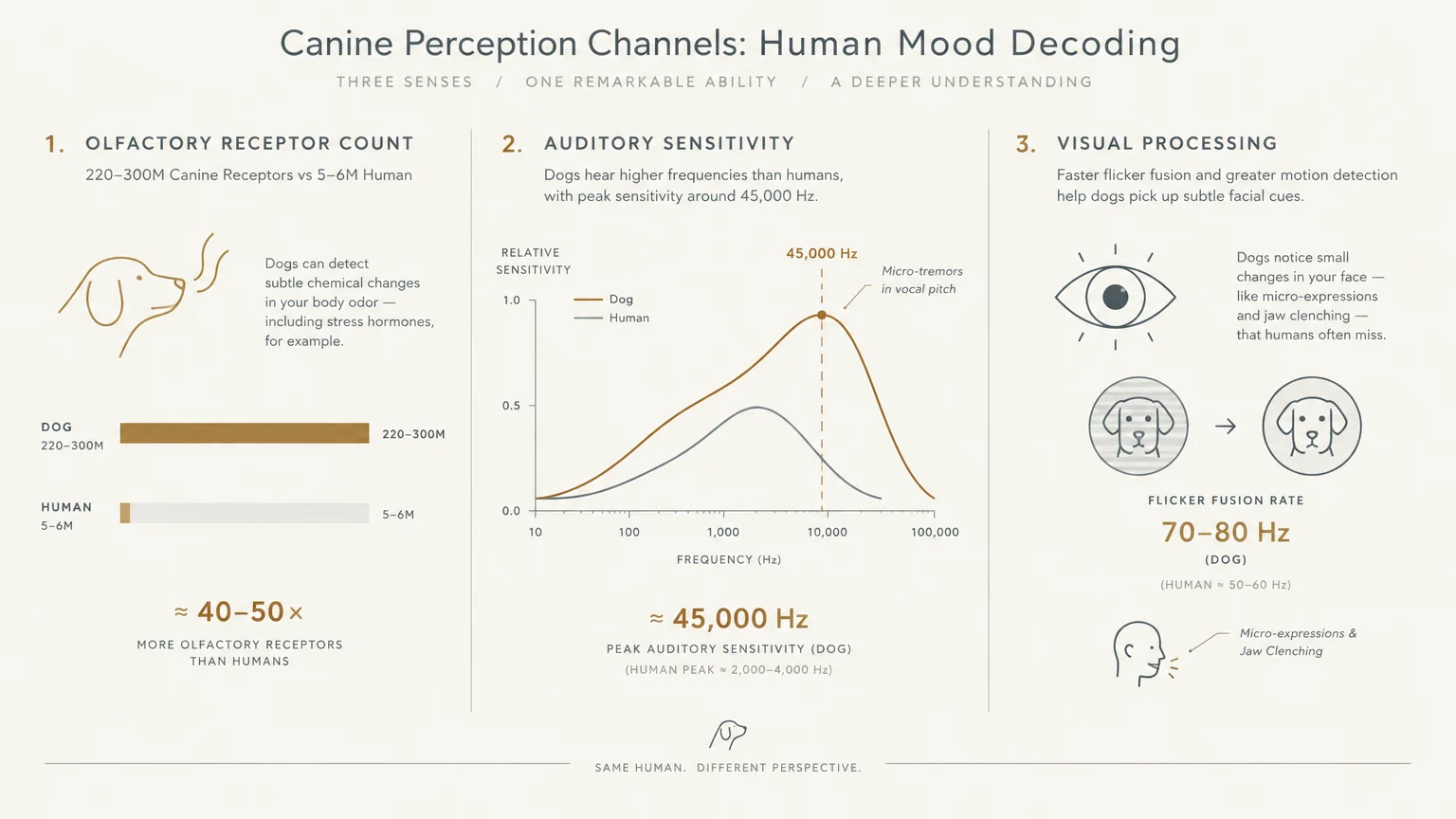
How dogs read emotions involves a multi-sensory feedback loop developed over tens of thousands of years of domestication. They monitor human beings with sensory hardware that far outpaces our own.
The canine olfactory cortex is forty times larger than ours, enabling them to smell our hormones in real time.
Meanwhile, their auditory system detects subtle changes in our vocal tone and breathing cadence that escape human ears. They also possess specialized facial processing regions that decode tiny shifts in human eyes and mouths.
The table below summarizes the primary sensory pathways dogs use to detect human emotions before we consciously acknowledge them.
| Sensory Channel | Human Physiological Signal | Canine Behavioral Response | Primary Sensory Driver |
|---|---|---|---|
| Olfactory | Cortisol and adrenaline spikes in breath and sweat | Intense facial sniffing, sudden proximity seeking | Vomeronasal organ and olfactory bulb |
| Visual | Slumped posture, furrowed brow, jaw clenching | Appeasement yawning, lip-licking, soft eye gaze | Temporal lobe visual processing centers |
| Auditory | Shallow breathing, sighs, clipped speech cadence | Ear adjustments, head tilting, hovering close | High-frequency acoustic sensitivity |
| Neurochemical | Dopamine drops, heightened autonomic arousal | Physical leaning, deep pressure contact, mirroring | Oxytocin feedback loop and emotional contagion |

How to Respond When Your Dog Senses Your Shift
Recognizing signs your dog understands you gives you a remarkable opportunity to improve your own well-being. When your dog mirrors your tension or alerts you to a foul mood, take deliberate action to reset.
Do not dismiss their behavioral cues as random quirks or demanding habits.
- Practice physiological sighs: Take two quick inhales through your nose followed by a long, audible exhale through your mouth to drop your heart rate.
- Release your physical tension: Intentionally unclench your teeth, lower your shoulders away from your ears, and soften your facial muscles.
- Offer long, rhythmic strokes: Pet your dog in slow, flat-palmed motions down their back or chest, which releases oxytocin in both nervous systems.
- Give your dog permission to rest: Use a calm, reassuring release cue like “all done” or “go rest,” signaling that they do not need to manage your stress.
- Step away from your environment: Step outside for five minutes of fresh air together without your phone or digital distractions.
Using these grounding steps benefits both you and your canine companion. When you deliberately regulate your own nervous system, your dog’s mirrored stress dissipates almost immediately.
Frequently Asked Questions About Dogs Sensing Human Emotions
Can dogs absorb human anxiety?
Yes, dogs experience emotional contagion and frequently absorb human anxiety. Chronic household stress elevates cortisol levels in dogs, which can lead to behavioral issues or digestive sensitivity over time.
Why does my dog lick my face when I am crying?
Your dog licks your tears due to a blend of salty taste attraction and instinctual grooming. In canine packs, mutual licking acts as an appeasement signal that soothes distressed group members.
Do dogs prefer happy owners over sad owners?
Brain imaging shows that dogs experience reward-center activation in response to happy human faces. However, dogs routinely seek out distressed owners to provide comfort and gather chemical information through scent.
How far away can a dog smell your mood change?
A dog can detect volatile organic compounds associated with stress from across a standard room. Their extraordinary olfactory receptors require only a few parts per trillion to register biochemical shifts.
A Shared Bond Built on Silent Understanding
Your dog serves as an honest, living mirror of your internal emotional landscape. By tuning into their subtle signals—from gentle leans to sudden face sniffs—you gain a reliable biofeedback partner who keeps you grounded.
The next time your companion interrupts your busy day with an unprompted nudge, pause and listen. They might just be reminding you to take care of yourself.
This article provides general information only. Every reader’s situation is different—what works for others may not be the right fit for you.
For personalized guidance on health, legal, or financial matters, consult a qualified professional.
Last updated: May 2026. Rules, prices, and details change—verify current information with official sources before acting on it.