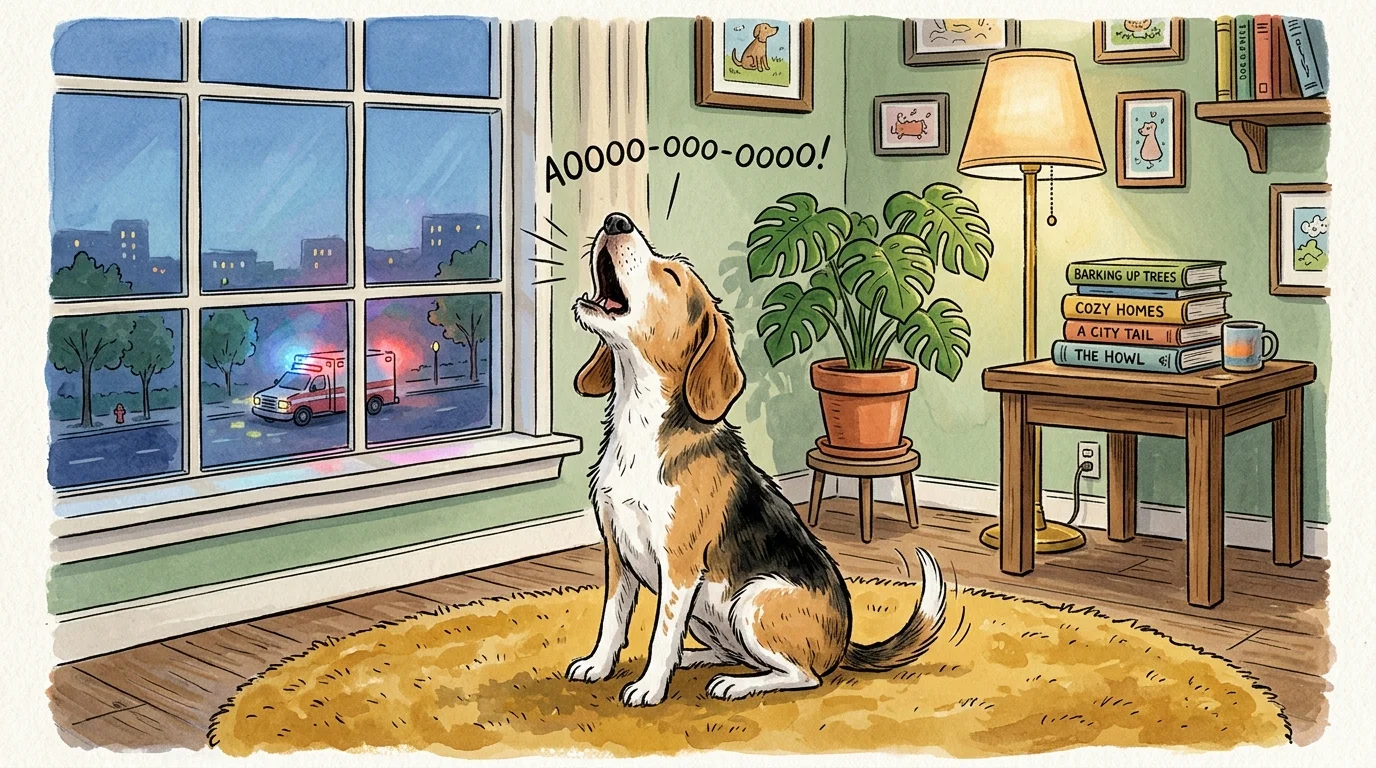
When an emergency siren wails in the distance, your dog might lift their snout toward the ceiling and let out an impressive howl, while your neighbor’s dog barely blinks.
Dogs howl at sirens because the rising pitch mirrors the acoustic frequency of an ancestral pack vocalization, triggering an innate social response. This vocal reaction blends evolutionary biology, canine hearing mechanics, and individual genetic traits.
While many pet owners worry that the noise causes physical pain, behavioral evidence reveals that most dogs howl simply to acknowledge what they perceive as a distant pack member. Understanding this acoustic trigger helps you decipher your pet’s ancient instincts.

The Evolutionary Echo: Howling as Canine Communication
To understand why a fire truck or ambulance triggers a mournful chorus from your pet, you must look back thousands of years to the shared ancestors of domestic dogs and wolves. In the wild, vocalizations serve as the primary long-distance communication network for canids.
Wolves use howls to gather scattered pack members before a hunt, warn neighboring packs to stay away from established territory, and guide lost individuals back to safety across vast forests and tundras.
According to VCA Animal Hospitals, howling acts as a natural acoustic beacon designed to carry over immense distances where visual cues and scent trails fail.
When domestic dogs hear an emergency siren, their brain does not process the sound as an electronic warning device mounted on a motor vehicle.
Instead, the undulating pitch and sustained, high-volume tone strike a deep evolutionary chord; your dog interprets the siren as a mysterious, distant animal calling out into the night.
When your dog joins in, they participate in what animal behaviorists call social facilitation—often referred to as group howling or chorus howling. In a wild pack, when one wolf begins to vocalize, others join in to reinforce pack unity and advertise their collective presence.
Your living room hound is essentially replying to the emergency vehicle with a clear message: “I hear you, and I am right here.”
The Auditory Science: Pitch, Tone, and Canine Hearing
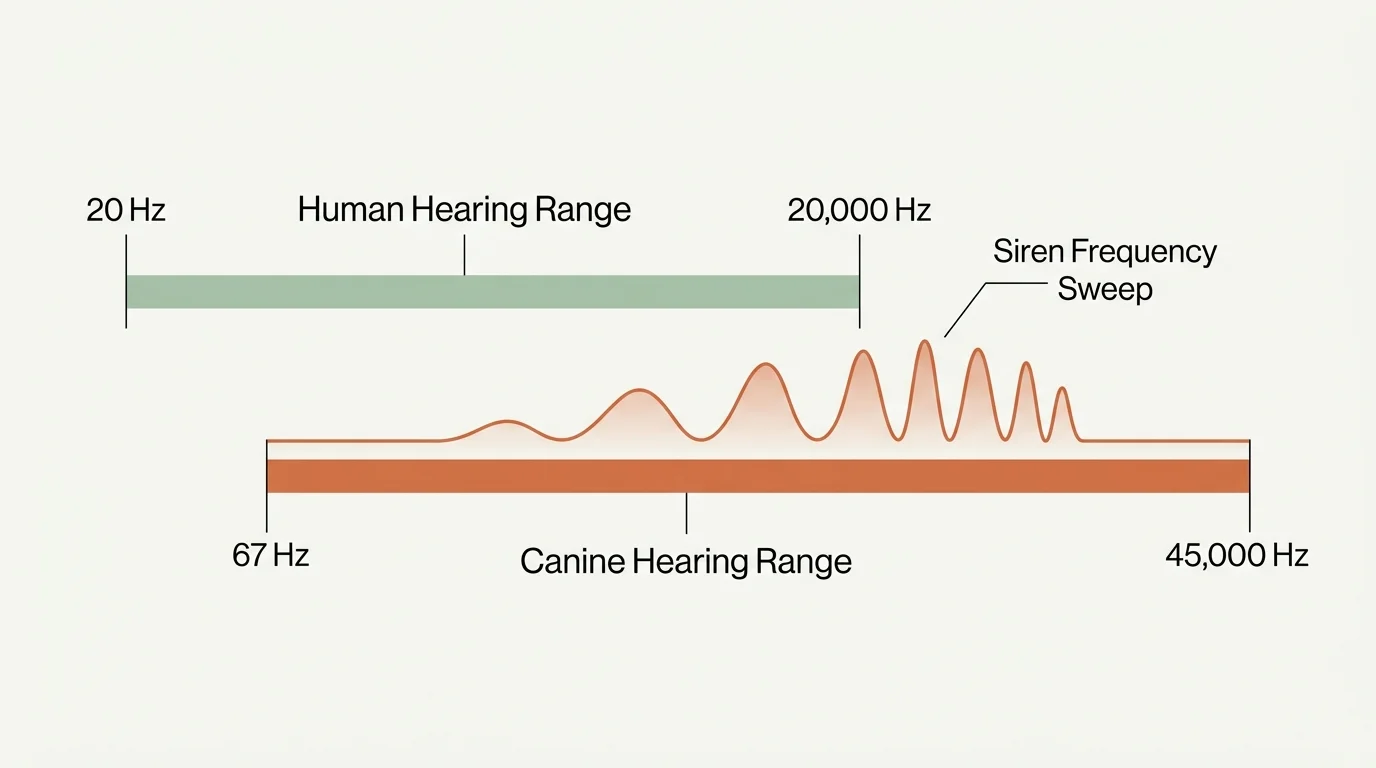
Canine ears are extraordinary biological acoustic receivers. While the average human hears sound frequencies between 20 Hz and 20,000 Hz, dogs detect sounds ranging from approximately 67 Hz up to 45,000 Hz or higher.
This high-frequency sensitivity allows dogs to hear faint rustles in tall grass, subtle rodent squeaks, and distance signals long before human ears register a sound.
Sirens produce a unique acoustic signature. Emergency vehicles use sweep sirens that rapidly shift pitch from low frequencies to high-frequency peaks, creating a cresting wave of sound.
This continuous, rising and falling cadence closely mimics the frequency modulations of a canine howl. Because the pitch changes constantly, it prevents the brain from easily tuning it out, forcing immediate auditory focus.
A widespread myth suggests that dogs howl at sirens because the sound causes them acute physical pain. While sirens are unquestionably loud—often exceeding 110 decibels at close range—a dog howling out of instinct behaves very differently from a dog experiencing physical ear distress.
When a noise causes discomfort or fear, dogs display overt stress behaviors; they lower their heads, pin their ears back against their skulls, pace frantically, whine, or hide under beds and couches.
Conversely, a dog responding instinctively to a siren usually stands firm, tilts its snout skyward to clear its vocal tract, and projects a steady sound until the vehicle passes, returning immediately to its previous activity once the noise fades.

Why Do Some Dogs Howl While Others Ignore Sirens Completely?
If sirens trigger an evolutionary response, why does your golden retriever sleep soundly through a passing police cruiser while your friend’s beagle sings along every single time? Several distinct factors explain this variance in canine behavior.
1. Breed Proximity and Genetic Traits
Selective breeding over thousands of years altered not only physical appearances but also vocal inclinations. Spitz-type breeds—such as Siberian Huskies, Alaskan Malamutes, Samoyeds, and Shiba Inus—retain a closer genetic relationship to ancient canids and possess a strong innate drive to howl.
Similarly, scent hounds like Beagles, Basset Hounds, Bloodhounds, and Coonhounds were deliberately bred for centuries to “bay” or howl, alerting human hunters to distant scents across fields and forests.
On the other hand, many guarding, herding, or companion breeds were selected for short alert barks or low vocal activity, making them far less likely to respond to siren tones.
2. Environmental Habituation
Living conditions play a massive role in how a dog reacts to loud environmental sounds. A dog residing in downtown Chicago or Los Angeles hears dozens of police, fire, and ambulance sirens every day.
Through a psychological process called habituation, the dog’s brain quickly learns that these recurring sounds carry no real social significance or threat. Over time, the dog filters out the noise entirely.
Conversely, a suburban or rural dog exposed to a siren only once or twice a week experiences the sound as a novel, highly significant event that demands an immediate vocal answer.
3. Individual Personality and Confidence
Every dog possesses a unique temperament. Highly outgoing, expressive, or reactive dogs often jump at the chance to participate in auditory group activities.
Quieter, naturally reserved dogs may hear the exact same siren and choose to monitor the situation silently. Personality dictates whether a dog feels compelled to express itself vocally or simply observe its surroundings without making a sound.
4. Age and Sensory Changes
As dogs enter their senior years, age-related hearing loss—known medically as presbycusis—gradually diminishes their ability to perceive high-frequency sounds. A senior dog that howled vigorously at sirens in its youth might gradually stop as high-frequency siren waves fade beyond its hearing threshold.
Conversely, senior dogs suffering from cognitive changes may sometimes begin howling at novel sounds due to altered environmental awareness.

Comparing Canine Responses to Sirens
The table below summarizes how genetic, environmental, and behavioral differences shape your dog’s reaction when an emergency vehicle drives past.
| Factor | High Howling Propensity | Low Howling Propensity | Primary Behavioral Reason |
|---|---|---|---|
| Breed Group | Spitz breeds, Scent Hounds, Nordic working dogs | Toy breeds, Retrievers, Water Spaniels | Genetic retention of pack vocalization traits |
| Environment | Quiet suburban or rural neighborhoods | Dense urban downtown centers | Habituation levels to frequent background sirens |
| Posture & Body Language | Head raised, loose body, ears forward or neutral | Relaxed lying position or head resting on paws | Social communication vs. indifference |
| Hearing Ability | Intact high-frequency hearing range | Presbycusis or partial hearing loss | Ability to detect shifting siren frequencies |
| Emotional State | Inquisitive, communicative, playful | Unbothered, sleeping, or mildly curious | Drive to respond to distant acoustic signals |

Deciphering Your Dog’s Body Language: Pain vs. Instinct
Distinguishing between natural vocal expression and acoustic distress allows you to care for your dog effectively. Howling itself is a neutral communication tool, but accompanying body language tells the true story of how your pet feels during the event.
“Observing your dog’s tail, ears, and overall posture during a siren alert provides immediate clarity; a confident vocalizer looks upwards with a relaxed posture, whereas a distressed dog lowers its body and seeks shelter.”
When analyzing your pet’s reaction, evaluate the following signs:
- The dog lifts its snout upward toward the ceiling or sky, opening the throat.
- Body language remains loose, steady, and neutral or mildly excited.
- The tail may wag slowly or hold a relaxed, natural position.
- Vocalizations cease almost immediately once the siren fades away.
- The dog immediately returns to eating, playing, or sleeping without residual anxiety.
- The dog pins its ears flat against its head and tucks its tail tightly under its belly.
- Pacing, panting, lip licking, or wide “whale eyes” showing white sclera.
- The dog attempts to bolt, hide behind furniture, or seek out small, enclosed spaces.
- Whining, trembling, or drooling occurs alongside or instead of howling.
- The dog remains agitated, hypervigilant, or unable to settle long after the sound ends.
Research and guidelines published by the American Kennel Club emphasize that recognizing these behavioral cues helps owners determine whether their pet requires gentle behavioral modification or simple acceptance of a natural instinct.

How to Manage or Reduce Excessive Siren Howling
If your dog’s siren singing occurs occasionally and lasts only a few seconds, it is entirely harmless and serves as a fascinating window into their wild heritage.
However, if you live in an area with frequent emergency traffic, or if your dog’s howling becomes disruptive during work meetings or late at night, you can use practical training techniques to manage the habit.
1. Avoid Punishing or Scolding
Never yell at, punish, or physically discipline a dog for howling at a siren. If your dog is howling out of instinct, yelling simply sounds like you are joining in the vocal chorus, which encourages them to howl louder.
If your dog is howling out of fear or distress, scolding increases their stress level and creates negative associations with both you and the sound.
2. Practice Counter-Conditioning and Desensitization
You can systematically change your dog’s emotional response to sirens using recorded sound files. Play a siren recording at an extremely low volume—so faint that your dog notices the sound without howling or showing stress.
While the faint sound plays, feed your dog high-value treats such as small pieces of cooked chicken or liver. Over several weeks, gradually increase the playback volume in micro-steps, keeping your dog calm and rewarding them continuously.
Eventually, your dog learns to connect the sound of a siren with delicious treats rather than a compulsion to howl.
3. Redirect with an Incompatible Behavior
Teach your dog a cue that makes howling physically difficult or mentally incompatible. For example, train a reliable “fetch your toy” or “go to your mat” command.
When you hear a distant siren approaching, immediately call your dog in a cheerful tone and ask them to pick up a favorite plush toy or head to their bed for a chew bone.
Holding a toy in their mouth naturally reduces their ability to howl while focusing their attention on a rewarding task.
4. Create an Acoustic Refuge
For dogs that find siren sounds overwhelming, minimize sound penetration inside your home. Close windows during peak traffic hours, drop heavy acoustic drapes, and run a white noise machine or box fan to mask sudden outdoor sounds.
Classical music—specifically arrangements designed with slow tempos—can also soften ambient noise spikes and promote relaxation.

When to Consult a Veterinary Professional
While siren howling is usually normal, sudden changes in behavior warrant professional attention. If an adult dog that never previously howled at sirens suddenly develops an intense, persistent howling reaction, schedule a thorough checkup with your veterinarian.
Sudden vocal shifts can indicate middle ear infections, dental pain, systemic discomfort, or sensory decline.
Furthermore, if your dog displays severe noise phobia—panicking, damaging doors or windows in escape attempts, or injuring themselves when sirens pass—behavioral modification alone may not suffice.
According to the Merck Veterinary Manual, severe sound sensitivities often require targeted intervention plans overseen by a licensed veterinarian or a board-certified veterinary behaviorist, who can evaluate whether short-acting anti-anxiety medications or specialized therapy protocols are appropriate.
Frequently Asked Questions
Do sirens actually hurt my dog’s ears?
In most cases, no. While sirens are very loud, howling is primarily a social instinct rather than an expression of physical pain.
A dog in pain will typically hide, tremble, pin its ears back, and whine, whereas a dog answering a siren tilts its head up, howls confidently, and relaxes as soon as the sound passes.
Why does my dog only howl at fire trucks and not police cars?
Emergency vehicles use different siren tones, pitch sweeps, and frequencies. Fire trucks and ambulances frequently use long, sweeping, low-to-high wails that closely resemble canine vocalizations.
Police cruisers often employ rapid “yelp” or “phaser” settings that sound distinctly artificial and do not match natural canine howling frequencies.
Can I train my dog to stop howling at sirens completely?
Yes, through consistent desensitization and redirection. By rewarding your dog for remaining quiet when sirens pass, or by teaching them to retrieve a toy whenever they hear a siren, you can successfully replace the howling habit with a quiet behavior.
Why does one of my dogs howl while my other dog ignores the siren?
Differences in breed genetics, hearing sensitivity, age, and individual personality account for this. One dog may possess strong wolf-like vocal instincts or hound genetics, while the other may have habituated to urban noise, possess lower high-frequency hearing, or lack the vocal drive to participate.
Practical Takeaway
When your dog lifts their snout to howl at a passing siren, they are tapping into a deeply rooted evolutionary communication instinct passed down through thousands of generations.
Unless your dog displays clear signs of fear, agitation, or pain, this behavior is a completely healthy, harmless way for them to express their natural canine drives.
By paying attention to their posture and using positive reinforcement, you can comfortably manage their acoustic responses while appreciating the ancient biology singing through your companion.
This article provides general information only. Every reader’s situation is different—what works for others may not be the right fit for you.
For personalized guidance on health, legal, or financial matters, consult a qualified professional.
Last updated: May 2026. Rules, prices, and details change—verify current information with official sources before acting on it.