Most people are surprised they cannot name these snake facts! Are you one of them?
Most people end up fearing snakes since they are most of the time associated with danger and death, as some of them are venomous, while culturally they are associated with deceit, lying, and trickery.
It is no surprise that many people end up being wary when it comes to them, but snakes are just part of our ecosystem and world, just like many other animals.
Generally speaking, snakes are not aggressive towards humans, like most animals, but they can get scared, which will push them to try to protect themselves.
Even more, out of all the species of snakes out there, only a little more than 3,000 are actually venomous!
Snakes are some of the most enigmatic reptiles, and while we are all concentrating on how scaley and dangerous they can be, there are many things that make them extremely fascinating!
Whether you are curious to know more about them or you want to test your knowledge of the natural world, these facts about snakes are bound to surprise you!
Did you know these snake facts before? Do you like or fear snakes? Share your thoughts in the comments below!
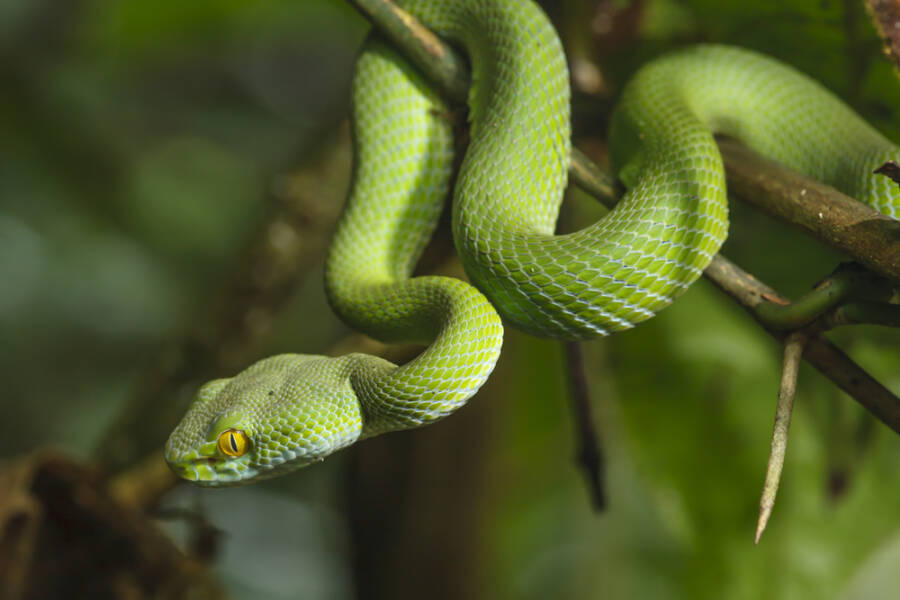
Slithering is just one of the ways in which they move.
The snake is most often associated with slithering, as this is their most often seen and recognized means of movement. The scientific name for this movement is lateral undulation, meant to take them quickly from one point to another.
The S-shape in which their body moves can easily carry them over different types of terrain, and it is the most often used method of movement if they are in a hurry or scared.
However, snakes move in many more ways, and their locomotive technique is varied enough to help them adapt to their environment and the myriad circumstances around them.
The other most notable types of movement that a snake can do include:
- concertina: coiling up and then straightening in order to cover ground;
- rectilinear: using the muscle on their bellies in order to move ahead in a straight fashion;
- sidewinding: mainly used on sand, a type of sideward slither.
These are just some that are common and most snakes can end up using these four.
Yet, there are snakes in parts of Southeast Asia that end up flying, since they push themselves off their tree branch and glide in the air, angling their movement so they reach the destination they want.
While this is an impressive feat for this animal, it can be a bit jarring to know that in certain parts of the world, a snake can aim itself to fall directly on you!
Did anyone say heat vision?
Yep, you read that right. While we are all aware that snakes have pretty poor eyesight and they manage to orient themselves through other means (more on that later), it is hard to imagine that they also have heat vision advantages.
This is only true for some species, but they can easily detect the infrared waves that are being given off by warm objects, which makes it a great aid to them when hunting.
This type of “heat vision” is an evolution that is mainly seen in boas, pit vipers, and pythons.
This evolutionary difference occurs not only in their eyes but also in the pits that form either along their lips or between the nostrils and eyes, all based on the particular species.
These pits end up becoming heat sensors that can take in the infrared waves and then send the signal to the brain, which in turn passes the information to the eyes, which end up producing a thermal image that the snake can use.
It is an impressive feature that allows snakes to be able to locate their prey even in pitch black, and it works perfectly for their species.
Snakes are reptiles that are neither diurnal nor nocturnal, and they can be active at any point in the day, so heat vision ensures that they will not starve if they have to hunt at night.
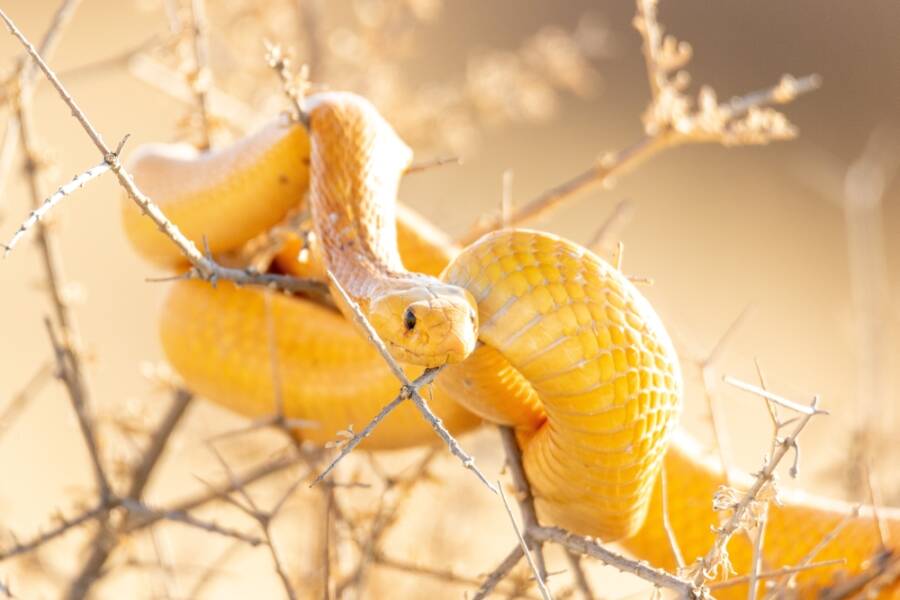
Snakes are powered by the sun.
No, they are not solar panel power banks, but they do rely on the heat of the sun quite a lot.
While snakes are known to have cold blood, it does not mean that it is actually cold since all living creatures rely on warmth.
What this denomination of cold-blooded shows us is that they cannot generate body heat for themselves, so they have to rely on other means of heat in order to keep their body temperature under control.
This is why you can more often than not find a snake coiled up in direct sunlight or slithering away to hide under a rock, in order to adapt to the changes of temperature that happen around them.
Some snakes in colder climates, since they cannot rely on the sun during the winter season, survive by going through brumation (which is a reptile’s version of hibernation). They will only wake up to drink water, otherwise remaining coiled up and dormant somewhere safe.
Snakes do not need their nostrils for their sense of smell — they use their tongues for that!
Snakes do have nostrils, but they are not used as their primary source of scent; instead, they rely on their tongues to smell their surroundings. This explains why they are constantly flicking their tongues around so often and why it has its signature forked shape.
A snake’s tongue does not have any taste buds or olfactory receptors, so they do not actually smell or taste with it. Instead, the flicking organ ends up gathering scent particles from the ground and the air, and then bringing them inside the mouth.
The sensory organ for scent is located on the roof of the snake’s mouth, also known as Jacobson’s organ.
It analyzes the scent particles brought up in the mouth and then sends the analyzed composition to the brain, which in turn helps the snake identify if they are surrounded by predators, prey, or potential mates.
The forked tongue can also aid in determining the direction from which the scent came.
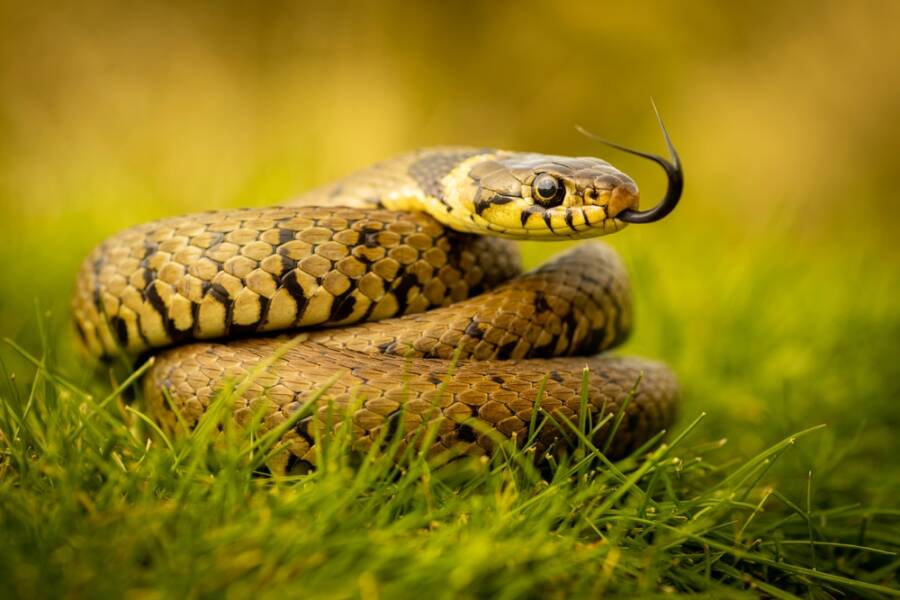
They’re everywhere! Well… almost everywhere!
When it comes to how many snakes are out there, we can safely say that most of us are not going to see one in the wild. However, they are more common than we may think!
Sure, they may not be the venomous ones, but this does not mean that snakes are rare across the world.
Serpentine species are all over the world, from the deserts in Africa to the dense Amazon rainforest and from the temperate woods of America all the way to the tropical islands of Southeast Asia.
With thousands of species, it would be impossible not to find one around your location.
Snakes are so widespread, that they have colonized a lot of habitats, and with the exception of the continent of Antarctica, they can be found everywhere!
The sole reason why Antarctica and the far north of continents do not have them is due to the extremely cold climate, and we have already discussed how snakes rely heavily on external temperature; there they have nothing to keep them alive.
Other parts of the world that are not that cold but have no native snake population include Ireland and some other temperate regions, but this is due to their location.
They got separated from other big landmasses when the last ice age ended, making it impossible for snakes to be able to make their way across to them.
If you want to get to know these reptiles better and be able to recognize them anywhere, this book from the Smithsonian will be a great aid and a great addition to any home library!
While many people are afraid of snakes, they are not just all about their bad reputation! There are some celebrities who have fallen in love with the slithery reptiles, and they keep them as pets. Curious to see which celebrities do this? Check it out here!