
Welcoming a companion animal into your retirement years does not have to strain your savings. Strategic fostering and adoption programs unlock substantial financial perks while filling your home with unconditional love.
Animal welfare rescues and community agencies offer targeted subsidies, tax deductions, and fee waivers designed specifically for older adults. You can enjoy the therapeutic presence of an animal while keeping your budget intact.
From subsidized veterinary care to reduced municipal fees, these programs make companion animal care remarkably accessible. Here is how you can maximize seven distinct financial perks available today.

01 Zero-Cost Veterinary Care and Core Supplies Through Fostering
Fostering companion animals provides an exceptional financial shortcut to the joys of pet care. Rescue organizations supply essential gear, premium food, and medical treatments directly to your doorstep.
The rescue retains full legal ownership of the foster animal. Because of this legal status, the organization absorbs all veterinary liabilities and regular wellness costs.
Shelters pay for core vaccinations, annual rabies shots, microchipping, and routine parasite preventatives directly from their operational funds. You never have to worry about unexpected clinic invoices.
Shelter data reveals that foster caregivers save between $800 and $1,500 annually compared to traditional pet owners. That savings keeps your retirement budget predictable and stable.
You supply a warm home, basic exercise, and daily affection. In exchange, the rescue shelter handles all supply logistics and medical bills.
This dynamic shields retirees from catastrophic veterinary emergencies that could otherwise derail a fixed income. If your foster pet develops a sudden illness, the shelter clinic provides medical treatment at zero cost to you.

02 Tax Deductions for Out-of-Pocket Foster Pet Expenses
You can write off unreimbursed foster expenses when you volunteer with a registered 501(c)(3) animal rescue. The Internal Revenue Service treats approved out-of-pocket volunteer expenses as deductible charitable donations.
The landmark U.S. Tax Court case Van Dusen v. Commissioner established this legal precedent. The court affirmed that direct costs incurred while housing rescue animals qualify for charitable tax relief.
Eligible deductions include specialized food, grooming supplies, crate bedding, and cleaning products purchased exclusively for foster animals. You can also write off over-the-counter flea treatments and litter.
According to IRS Charitable Contributions guidelines, you must maintain accurate, contemporaneous financial records. Save all itemized store receipts and canceled bank checks.
To claim these tax deductions, you must itemize on IRS Schedule A rather than taking the standard deduction. Retirees with significant charitable contributions benefit substantially from this specific tax strategy.
Ask your rescue organization for an official written acknowledgment letter at tax time. This document verifies your active volunteer status and confirms you received no goods or services in exchange.

03 The Statutory 14-Cent Volunteer Mileage Deduction
Driving your personal vehicle on behalf of an animal rescue delivers tangible tax savings. Federal law recognizes your volunteer travel as a direct service to charitable organizations.
Under 26 U.S. Code § 170(i), taxpayers can deduct 14 cents per mile driven for charitable activities. This statutory rate applies directly to foster pet transport.
Your round-trip drives to veterinary clinics, foster supply hubs, and shelter adoption fairs all qualify. The miles you log transporting rescue animals accumulate into notable end-of-year tax relief.
Bridge tolls and parking fees incurred during volunteer transport are also fully deductible. These incidental travel costs add up quickly during multi-stop shelter events.
Keep a physical logbook in your glove compartment or track your trips with a mileage smartphone app. Record the trip date, destination, starting odometer reading, ending odometer reading, and volunteer purpose.
Consistent contemporaneous recordkeeping protects your deduction if tax authorities ever examine your return. Clean records give you total confidence when filing your annual taxes.

04 “Seniors for Seniors” Adoption Fee Waivers
If you prefer permanent adoption over temporary fostering, dedicated adoption programs eliminate major upfront costs. Shelters nationwide actively reduce barriers for older adopters.
Municipal shelters and humane societies across the country operate popular “Seniors for Seniors” adoption initiatives. These programs match adults aged 60 or 62 and older with mature companion animals.
Shelters generally designate dogs and cats aged six to eight years or older as senior pets. Older animals exhibit calm temperaments, predictable energy levels, and established home manners.
Participating shelters routinely discount adoption fees by 50% to 100%. Standard adoption fees often range between $150 and $400 for younger dogs and puppies.
A complete fee waiver leaves hundreds of dollars in your personal emergency fund. That money can stay invested or pay for premium pet nutrition.
Furthermore, senior shelter pets arrive already spayed or neutered, vaccinated, and microchipped. You bypass the expensive initial medical setup bills associated with juvenile animals.

05 Subsidies and Retention Grants from Pets for the Elderly
National charitable foundations actively support companion animal ownership for older adults. These nonprofits understand that companion animals provide vital physical and emotional health benefits.
The Pets for the Elderly Foundation partners with participating animal shelters across more than 30 states. Their program covers or heavily discounts pet adoption fees for adults aged 60 and older.
Shelter partners apply these foundation subsidies directly at the adoption counter. You receive immediate savings without filing complex reimbursement paperwork.
Beyond initial adoption subsidies, the foundation awards crucial pet retention grants. These grants help senior pet owners pay for routine veterinary checkups, surgical interventions, and food.
Retention funding prevents older adults from having to surrender beloved pets during unexpected financial emergencies. This safety net provides priceless peace of mind on a fixed income.
Check with your local humane society or municipal shelter to see if they participate in the foundation’s network. New shelters join the initiative every year.

06 Discounted Pet Insurance Premiums for Mature Adults
Pet health insurance protects your long-term savings from catastrophic veterinary bills. Mature consumer associations negotiate exclusive insurance discounts to keep monthly premiums affordable.
AARP members receive a 10% lifetime monthly premium discount through Fetch Pet Insurance. This discount stays locked in for the entire life of your policy.
Comprehensive policies cover up to 90% of eligible emergency veterinary medical costs. Eligible conditions include major surgeries, diagnostic imaging, cancer treatments, and prescription medications.
Saving 10% on monthly premiums compounds into substantial savings across a pet’s lifespan. Over ten years, that discount preserves hundreds of dollars in your retirement account.
Enrolling an adopted pet early helps you secure affordable coverage before pre-existing conditions develop. Clear policy terms ensure you avoid sudden out-of-pocket financial surprises down the road.

07 Fair Housing Waivers and Senior Municipal Licensing Rates
Rental housing fees can make companion pet ownership frustratingly expensive for retirees. Landlords frequently demand hefty non-refundable pet fees, additional security deposits, and recurring monthly pet rent.
Assistance animals receive clear legal exemptions from these housing surcharges. The Fair Housing Act protects individuals with documented disabilities who rely on support animals.
Research from HUD Assistance Animals guidelines confirms that housing providers cannot charge pet deposits or pet rent for certified assistance animals. This rule includes medically prescribed Emotional Support Animals (ESAs).
A formal letter from your licensed medical provider documents this reasonable accommodation. Eliminating monthly pet rent can easily save you $300 to $600 each rental year.
Additionally, city and county animal control departments provide steep licensing discounts for mature residents. Municipalities frequently discount annual pet registration fees to roughly $10 or waive them entirely for seniors aged 60 and older.
Securing a discounted municipal license ensures full legal compliance while preserving your monthly cash flow. Contact your local city clerk or animal control office to apply.
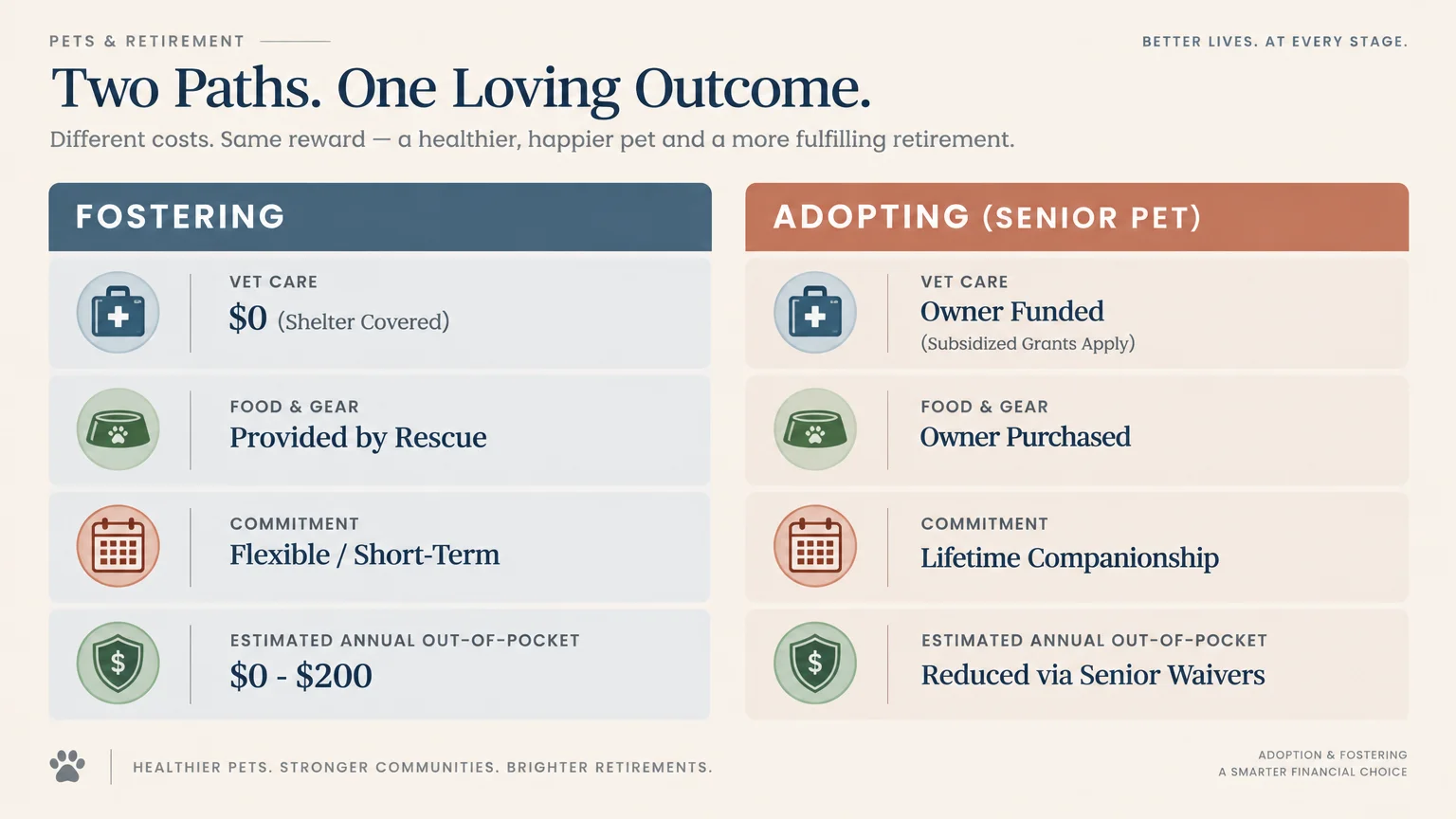
Comparing the Economics: Fostering vs. Adopting
Both fostering and adoption offer distinct financial structures for older adults. Reviewing these cost differences helps you pick the right arrangement for your lifestyle and retirement budget.
| Cost Category | Pet Fostering Program | Senior Pet Adoption |
|---|---|---|
| Upfront Adoption Fee | $0 (Shelter retains ownership) | $0 to $100 (With senior waivers) |
| Daily Food & Essentials | 100% covered by rescue organization | Paid by adopter ($400–$800/year) |
| Routine Vet Care | 100% paid by rescue clinic | Paid by owner (Subsidies available) |
| Emergency Medical Bills | Zero owner liability | Owner responsibility (Insurance offsets) |
| Tax Deductibility | Unreimbursed expenses deductible | Standard pet expenses not deductible |
| Time Commitment | Weeks to months (Flexible) | Permanent lifetime commitment |
Fostering serves as a zero-cost option that brings animal companionship into your home with total financial protection. Permanent adoption requires ongoing maintenance costs but establishes a lifelong, uninterrupted bond.
“Fostering allows older adults to share their daily lives with companion animals while community rescues lift the financial weight of veterinary care.”

Things to Watch Out For
While these financial perks deliver genuine savings, specific logistical pitfalls can catch unprepared retirees off guard. Evaluating potential obstacles ensures you protect both your budget and your peace of mind.
- Standard Deduction Versus Itemizing: Claiming foster pet deductions requires itemizing on Schedule A. If your total itemized deductions do not exceed the standard deduction, you will not receive any tax savings from foster expenses.
- The Financial Reality of a “Foster Fail”: If you fall in love and officially adopt your foster animal, financial responsibility shifts to you. Free medical care and complimentary food stop the moment adoption papers are finalized.
- Unauthorized Emergency Clinic Visits: Shelters require foster parents to use approved network clinics for veterinary care. If you take a foster pet to an unauthorized private hospital without prior consent, the shelter may decline reimbursement.
- Housing Community Breed and Weight Rules: While the Fair Housing Act protects certified assistance animals, regular pets remain subject to landlord weight and breed bans. Always review community lease rules before bringing an adopted animal home.

When DIY Isn’t Enough
Navigating tax regulations, landlord negotiations, and veterinary contracts can occasionally require professional guidance. Seeking experienced help prevents costly legal or financial mistakes.
- High-Value Volunteer Tax Filings: If your out-of-pocket rescue expenses exceed several thousand dollars, consult a Certified Public Accountant. A tax professional ensures your documentation complies with IRS substantiation mandates.
- Landlord Assistance Animal Disputes: If a property manager refuses to waive pet rent for a verified assistance animal, contact a local fair housing advocacy center. Tenant rights specialists can resolve accommodation disputes quickly.
- Estate Planning for Companion Animals: Consult an estate planning attorney to draft a pet trust. A legally binding pet trust guarantees dedicated funds and designated caregivers for your animal if you experience health complications.
- Complex Behavioral or Medical Foster Cases: If a foster animal exhibits intense behavioral challenges or severe illness, do not attempt to manage it alone. Contact your shelter coordinator to access professional veterinary behaviorists and shelter medical staff.
Frequently Asked Questions
Can I foster a shelter animal if I live on a fixed Social Security income?
Yes, animal rescues welcome retirees living on fixed incomes. Because shelters supply food, medication, and veterinary care, low personal income does not disqualify you from becoming an approved foster parent.
Do all animal shelters offer “Seniors for Seniors” adoption discounts?
Most municipal shelters and large humane societies offer senior adoption programs, but exact policies vary by location. Call your local animal services agency directly to ask about senior fee waivers and age requirements.
How do I track my charitable driving miles for the IRS?
Maintain a running travel log noting the date, purpose of the trip, destination, and starting and ending odometer numbers. You can keep this record in a notebook or use an automated mileage tracking smartphone application.
Does Medicare cover veterinary care for an emotional support animal?
No, Medicare does not cover veterinary expenses, grooming, or pet food for emotional support animals or service dogs. You must rely on personal funds, nonprofit retention grants, or discounted pet insurance policies to handle care costs.
Closing Thoughts: Bringing Companionship Home Affordably
Retirement provides the ideal schedule and calm home environment for nurturing companion animals. By taking full advantage of fee waivers, tax write-offs, and nonprofit grants, you can embrace the joys of pet care without compromising your financial independence.
Connect with a local rescue organization today to explore senior fostering opportunities or inquire about adoption fee subsidies. A grateful shelter dog or cat is waiting to share your home.
This article provides general information only. Every reader’s situation is different—what works for others may not be the right fit for you.
For personalized guidance on health, legal, or financial matters, consult a qualified professional.
Last updated: May 2026. Rules, prices, and details change—verify current information with official sources before acting on it.