Deciphering Mixed Signals: Affection vs. Stress
Cats communicate with delicate nuances, meaning some affectionate signs can look deceptively similar to signs of stress or discomfort. Accurately reading the whole cat prevents painful misunderstandings.
According to behavioral guidance from the Cornell Feline Health Center, body language must always be evaluated in complete context. A single gesture never tells the whole story.
The following comparison table breaks down how to distinguish genuine affection from subtle stress or overstimulation in common everyday scenarios.
| Behavior | Affection Sign | Stress or Warning Sign | Recommended Response |
|---|---|---|---|
| Purring | Soft, rhythmic purring during cuddles or relaxation. | Strained, high-pitched purring accompanied by a hunched posture. | Pet gently if relaxed; consult a veterinarian if hunched or reclusive. |
| Exposing Belly | Loose, limp body posture with slow blinks and gentle stretching. | Tense limbs, dilated pupils, and flattened ears. | Praise softly without touching the stomach; give immediate space if tense. |
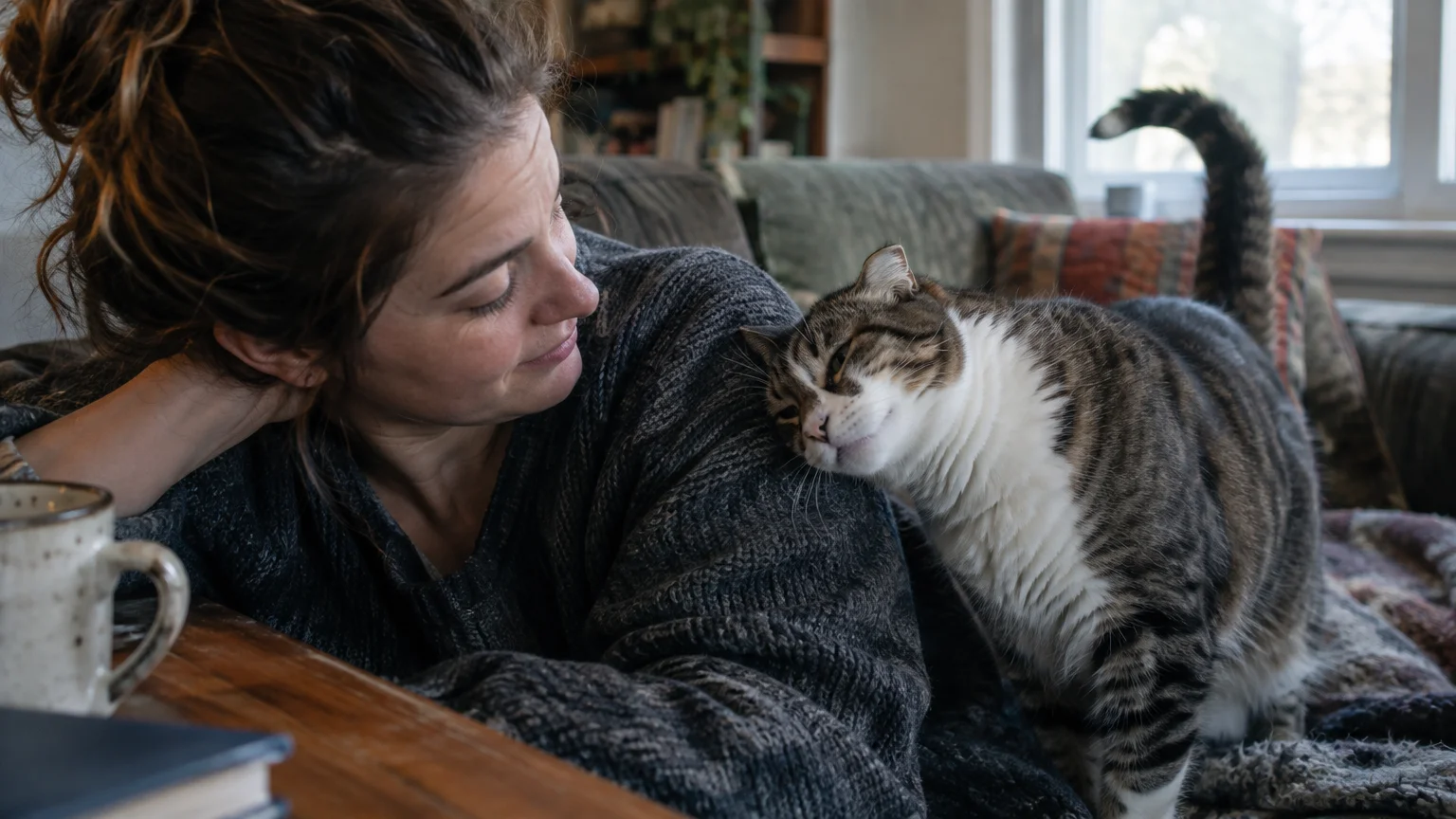
| Tail Movement | Held upright with a soft hook at the tip; gentle base vibration. | Low carriage, twitching tip, or rapid horizontal thrashing. | Approach with open hands when upright; pause petting if the tail lashes. |
| Kneading | Soft, rhythmic front-paw pumping while purring on your lap. | Frantic, rigid kneading paired with excessive skin licking. | Provide a thick blanket; introduce calming interactive play if frantic. |
| Eye Contact | Soft, languid gaze broken by deliberate slow blinks. | Unblinking, wide-eyed stare with stiffened facial whiskers. | Return the slow blink softly; break direct eye contact if staring coldly. |
Observing your cat’s ears, whiskers, and pupil dilation alongside these behaviors gives you an accurate assessment of their mood. Relaxed ears and soft eyes invariably accompany true affection.