You call your cat across the living room, but they stare straight ahead without moving a muscle. This familiar aloofness rarely signals disinterest or a lack of affection.
Recent cognitive studies reveal that cats hear your voice and recognize their names perfectly. They simply communicate their acknowledgement through subtle micro-signals rather than noisy greetings.
Understanding cat psychology helps you decode these quiet gestures and strengthens your daily bond. Here is what science says about why cats ignore you—and how they actually show love.

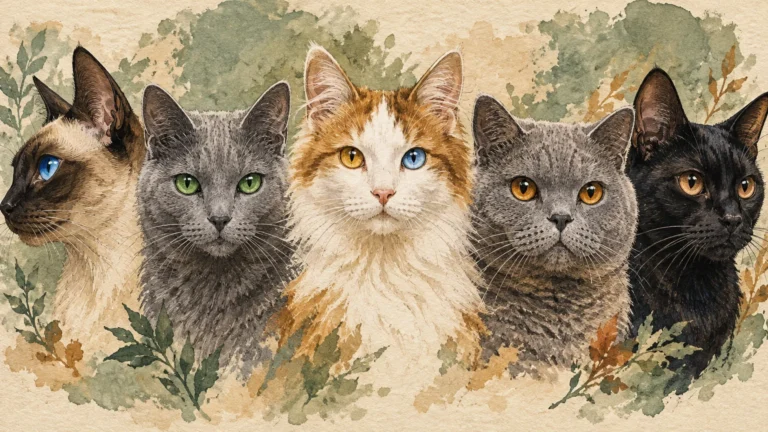
The Essentials: Why Cats Act Aloof
Cats rarely display enthusiasm the same way dogs or humans do. Instead, feline communication relies on calm, energy-conserving body language.
Here are four primary reasons backed by modern behavioral science:
- Subtle Orienting Responses: Cats acknowledge sounds through micro-movements like ear swivels rather than vocal replies.
- Name and Voice Discrimination: Felines distinguish their owner’s unique voice and name from background noise, even when lying motionless.
- Selective Speech Sensitivity: Cats tune out casual human conversation, responding primarily to high-pitched, directed baby talk.
- Secure Attachment Baseline: Confident cats treat their owners as a safe anchor, allowing them to rest independently without clinging.

Name Recognition: They Hear You, but Choose Not to Run
Many pet owners wonder if their cat actually understands its given name. Cognitive researchers answered this question definitively in a landmark 2019 study.
Research published in Scientific Reports demonstrated that domestic cats easily distinguish their names from similar-sounding words.
Researchers at Sophia University tested 78 household and cafe cats. The animals consistently responded to their own names after habituating to other common nouns.
Instead of running to their owners, most cats responded with subtle movements. They twitched their ears, rotated their heads, or dilated their pupils.
Your cat registers your call instantly. Their quiet response represents a deliberate choice rather than ignorance or confusion.

Vocal Recognition and Subtle Orienting Responses
Cats do not just recognize words; they specifically identify your unique voice. They separate your vocal patterns from total strangers with remarkable accuracy.
A 2013 study published in Animal Cognition tracked 20 domestic cats listening to voice recordings. Cats showed marked physical reactions when hearing their owners compared to unknown voices.
These reactions did not include meowing, purring, or running forward. Instead, cats utilized subtle “orienting behaviors” to track the sound source.
An ear swivel toward your voice serves as an active feline reply. To a cat, this subtle ear movement fully acknowledges your presence.

The Power of “Cat-Directed Speech”
How you speak to your cat matters just as much as what you say. Cats distinguish between general human conversation and speech directed specifically at them.
A 2022 study from Université Paris Nanterre evaluated how felines react to different vocal tones. The findings revealed that cats ignore standard adult conversation.
When owners switched to high-pitched “cat-directed speech,” the cats immediately paid attention. They moved their ears, paused their grooming, and looked up.
Interestingly, this heightened attention occurred only when their specific owner used the high-pitched tone. Stranger voices using baby talk produced no such reaction.
If your cat ignores your standard speaking voice, switch your pitch. Speaking in a higher, affectionate tone signals that your message is meant for them.

Evolutionary Biology: Solitary Predators vs. Pack Socialites
Canine behavior stems from pack dynamics where vocal compliance ensures survival. Dogs evolved alongside human hunting teams, learning to follow immediate commands.
In contrast, domestic cats descend from the African wildcat (Felis lybica), a strictly solitary hunter. Solitary hunters conserve energy and avoid unnecessary movement that might alert prey or predators.
Felines never developed social pressures to perform on command. Their natural survival strategy relies on quiet observation, self-reliance, and selective engagement.
When your cat stays put after you call, they are acting on ancient survival instincts. Cat independence behavior does not mean rejection; it reflects their evolutionary design.

Secure Attachment: Why Calm Independence Means Love
Many owners misinterpret a cat’s aloof resting behavior as emotional detachment. However, developmental psychology suggests the exact opposite might be true.
Research from Oregon State University published in Current Biology analyzed feline attachment styles using standard behavioral tests.
The study revealed that approximately 64% to 65.8% of domestic cats display secure attachment to their owners. This rate mirrors the secure attachment rates found in human children and dogs.
A securely attached cat views you as a safe home base. This emotional security allows them to explore comfortably or nap across the room without feeling anxious.
When your cat calmly rests nearby without demanding attention, they feel completely safe in your presence. Quiet co-existence is one of the highest compliments a feline can give.

Decoding the Body Language: Subtle Responses vs. True Avoidance
Learning to differentiate between subtle acknowledgment and active avoidance will transform your relationship with your pet. Cats provide clear feedback through micro-expressions.
The table below illustrates how to read your cat’s everyday reactions accurately.
| Feline Reaction | What It Looks Like | What It Actually Means | How You Should Respond |
|---|---|---|---|
| Subtle Acknowledgment | Ear swivel, slight tail tip twitch, slow blink. | “I hear you and acknowledge you, but I am resting.” | Acknowledge with a soft voice or return the slow blink. |
| Overstimulated / Annoyed | Fast tail flicking, skin rippling, flattened ears. | “Give me physical space immediately.” | Stop touching and allow the cat to walk away. |
| True Avoidance / Fear | Crouched posture, tucked tail, hiding under furniture. | “I feel threatened or overwhelmed by the environment.” | Remove stressors and let them approach at their own pace. |
| Secure Relaxation | Exposed belly, slow breathing, half-closed eyes. | “I trust you completely and feel totally safe.” | Respect their rest; offer gentle chin scratches only if invited. |
Recognizing these quiet signals prevents misinterpreting your cat’s calm presence as cold indifference.

Actionable Ways to Communicate on Your Cat’s Terms
You can dramatically improve your daily interactions by adjusting how you initiate contact. Cats prefer subtle invitations over direct physical confrontation.
Try implementing these evidence-based techniques to build a stronger connection:
- Master the Slow Blink: Narrow your eyes and blink slowly. This universal feline signal communicates safety, trust, and friendly intentions.
- Offer the Finger Sniff Test: Extend an index finger at nose level from a short distance. Allowing them to approach and sniff first respects their natural greeting ritual.
- Use Cat-Directed Tones: Speak in higher pitches with melodic inflections when calling your pet. Reserve this friendly tone exclusively for interactions with them.
- Respect Autonomy: Never force an interaction when your cat looks away. Allowing them to initiate contact creates long-term emotional confidence.
Giving your cat control over their interactions makes them much more likely to seek you out voluntarily.

When to Get Professional Help: Sudden Aloofness and Medical Issues
While baseline independence is normal, sudden shifts in behavior warrant careful veterinary evaluation. Cats naturally mask pain, illness, and sensory decline.
Schedule a veterinary appointment if you notice any of the following warning signs:
- Sudden Total Unresponsiveness: If an attentive cat suddenly stops reacting to loud sounds or food bags, they may be experiencing hearing loss or ear infections.
- Hiding and Social Withdrawal: Cats experiencing chronic pain from conditions like osteoarthritis often hide or withdraw entirely from family routines.
- Aggression When Approached: Growling, hissing, or swiping when you approach often indicates physical tenderness, dental distress, or acute illness.
- Disorientation or Confusion: Senior cats suffering from feline cognitive dysfunction may vocalize aimlessly, stare into corners, or appear to forget familiar household members.
A thorough veterinary checkup can quickly identify underlying physical ailments before they worsen.
Frequently Asked Questions
Why does my cat ignore me until I open a can of food?
Cats prioritize immediate survival motivators like food. While they love their owners, high-value rewards trigger an active physical response that casual conversation simply does not.
Do cats ignore their owners more than strangers?
Research shows cats recognize and prefer their owners over strangers. However, they feel comfortable ignoring owners because they already feel safe and established in the relationship.
How do I know if my cat is mad at me or just being independent?
Cats do not experience human-style spite. If your cat looks away calmly, they are resting comfortably. If they flick their tail rigidly or flatten their ears, they need space.
Can you train a cat to come when called?
Yes, positive reinforcement training works well. Pair your high-pitched call with high-value treats consistently, rewarding every approach until they reliably come on cue.
Deepening Your Connection
Your cat’s subtle independence is not a sign of emotional coldness. It is an expression of deep security and thousands of years of evolutionary adaptation.
When you understand their quiet language, you will realize your cat has been answering you all along. Appreciate their calm ear twitches, slow blinks, and silent companionship.
This article provides general information only. Every reader’s situation is different—what works for others may not be the right fit for you. For personalized guidance on health, legal, or financial matters, consult a qualified professional.
Last updated: May 2026. Rules, prices, and details change—verify current information with official sources before acting on it.