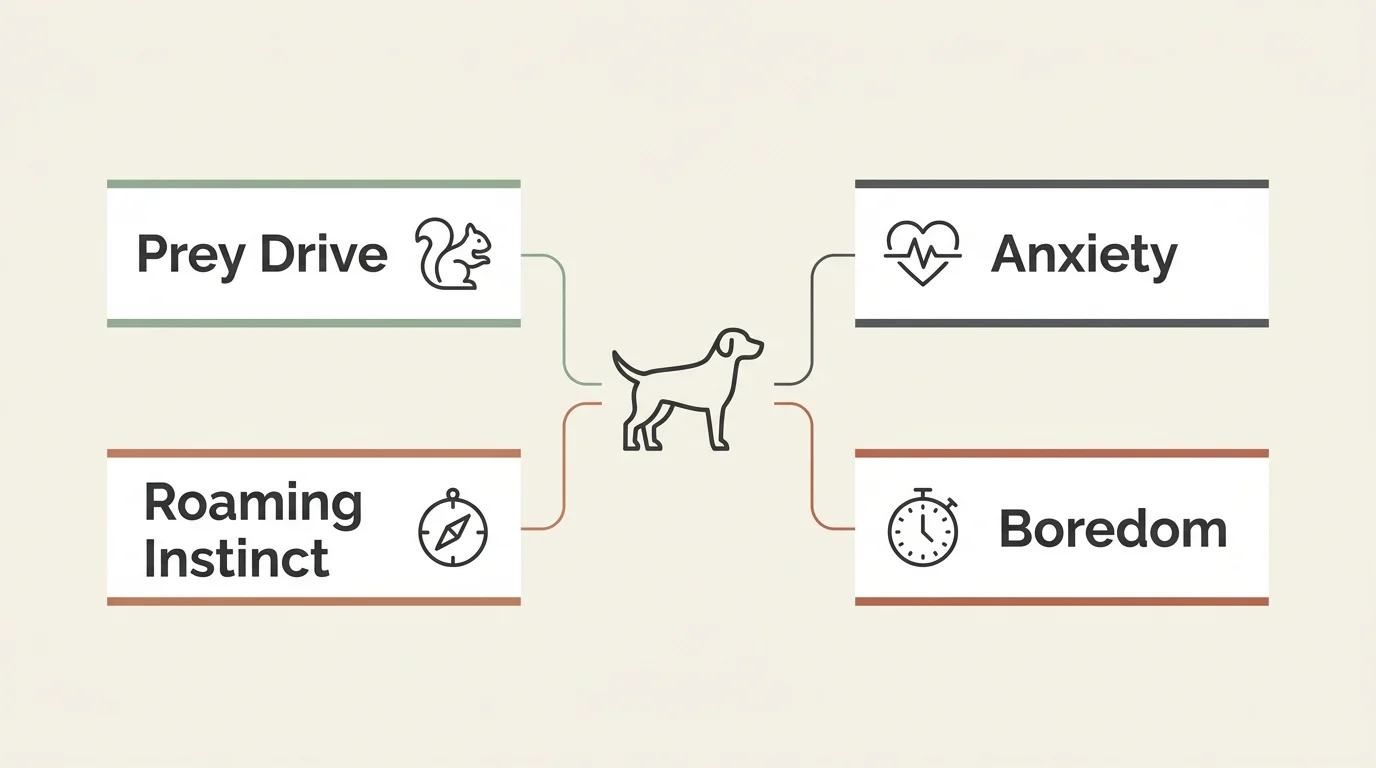
Why Dogs Escape: Unpacking the Four Primary Drivers
To stop persistent escape behavior, you must address the emotional and biological motivations driving your dog across the perimeter. Animal behaviorists categorize escape triggers into four primary drivers:
- Boredom and Isolation: High-energy breeds left alone in barren yards turn to escaping as an exciting, self-rewarding activity. The outside world offers sights, sounds, and scents far more stimulating than a vacant lawn.
- Prey Drive and Environmental Triggers: Working and hunting dogs possess deeply ingrained instincts to chase small animals, cars, or livestock passing outside their visual field.
- Separation Anxiety and Fear: Thunderstorms, fireworks, or acute distress caused by being separated from human family members can trigger panic-driven escapes, where dogs attempt to burst through barriers to find safety or reunion.
- Mating Instincts: Intact male dogs can detect a female dog in heat up to three miles away. Driven by biology, intact dogs will leap, dig, or chew through extraordinary obstacles to reach a potential mate.
According to safety guides from the ASPCA, neutering or spaying your pet significantly reduces roaming behavior motivated by hormonal drives, making routine yard containment far more successful.