Cute Animal Planet

Featuring Cute Animals from All Around the World

  • Home
  • Cute Animals
  • Dogs
  • Cats
  • Birds

10 Signs Your Dog Is Stressed

September 15, 2026 · Dogs
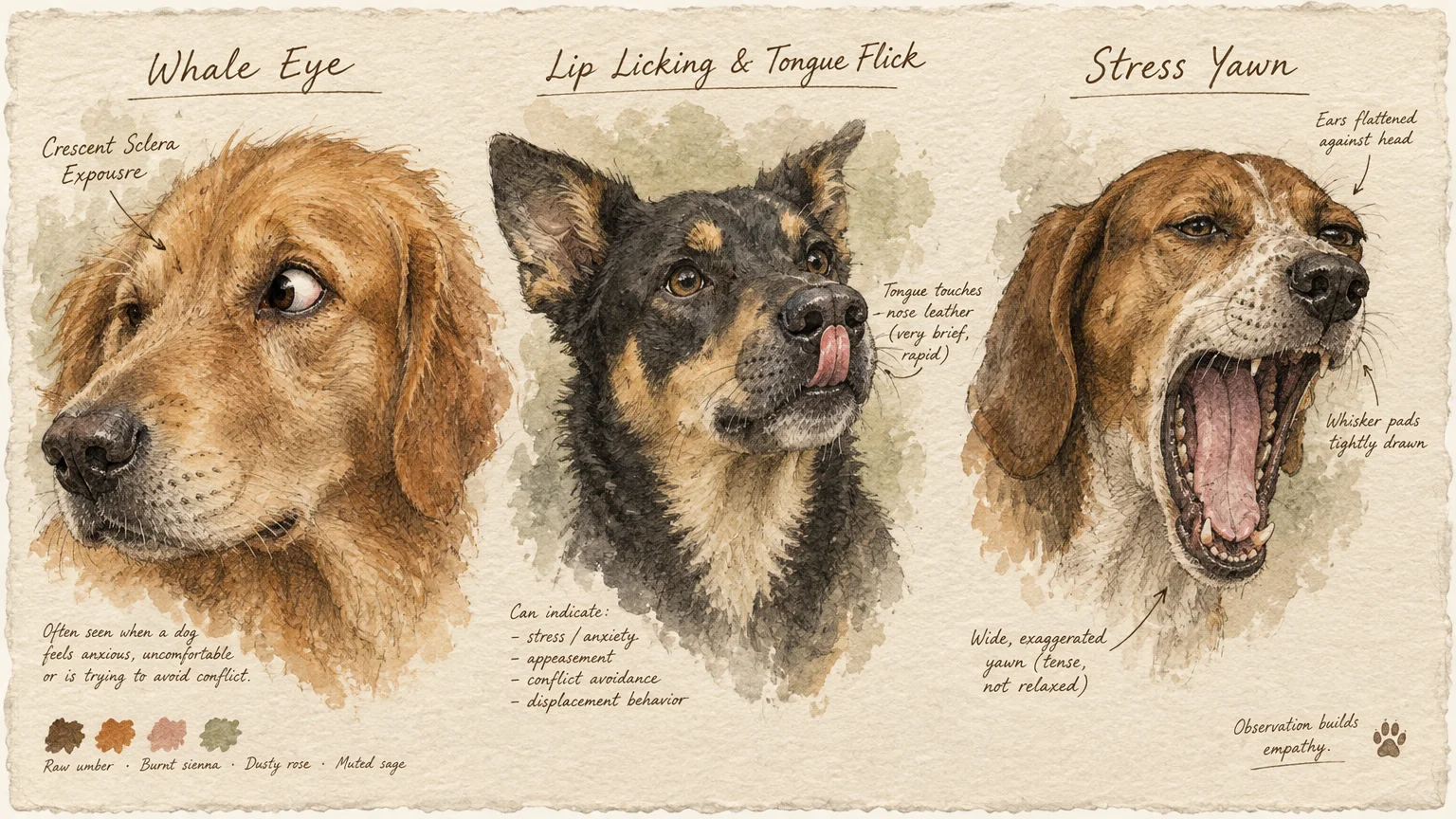
Illustrated guide depicting three canine stress signs: whale eye in a retriever, lip licking in a shepherd, and yawning.
Rapid tongue flicks occurring outside of mealtime often serve as subtle appeasement gestures to defuse perceived conflict.

10 Distinct Signs of a Stressed Dog
1. Whale Eye and Hard Stares

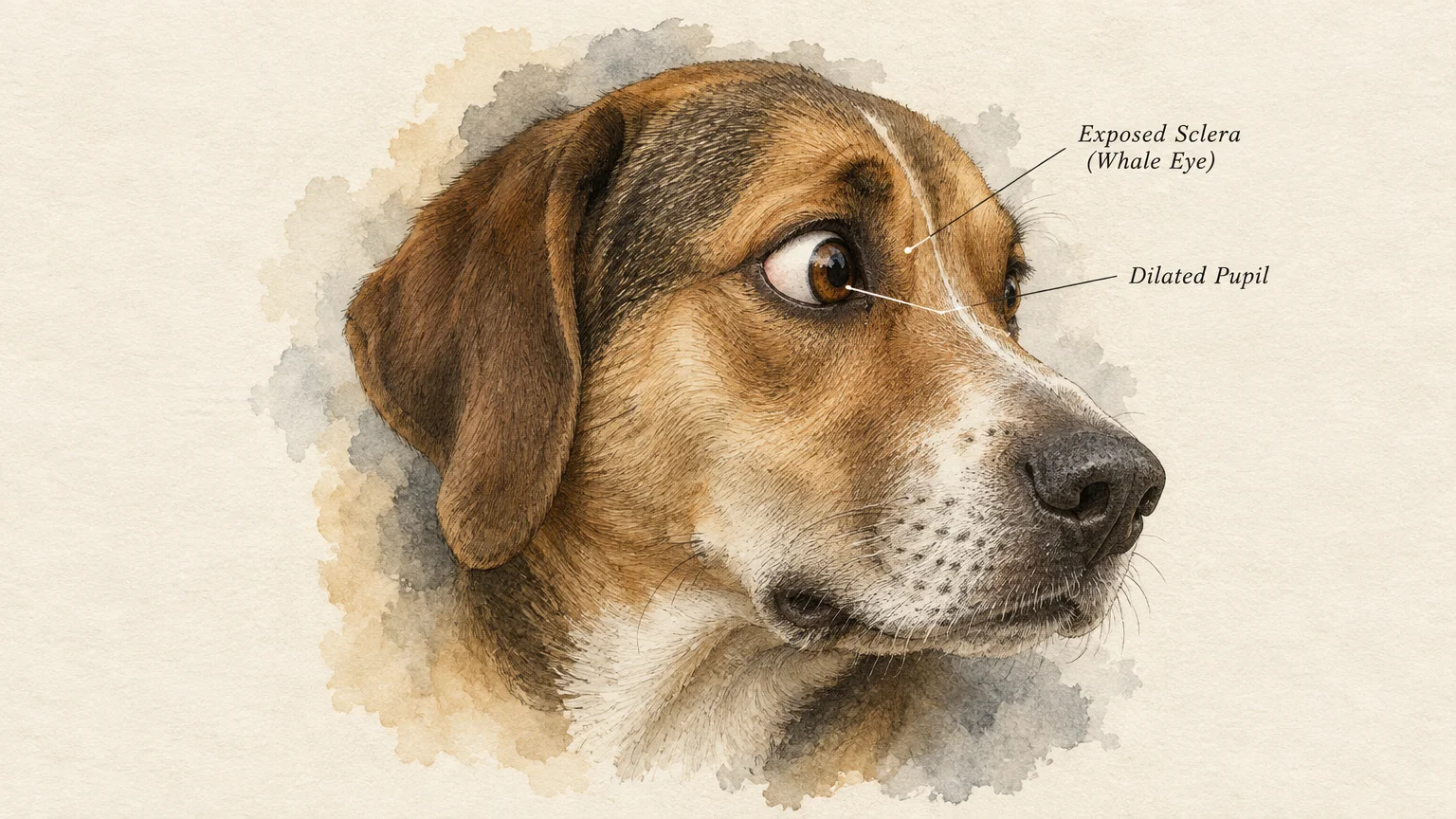
“Whale eye” occurs when a dog turns their head slightly away while maintaining eye contact with a perceived threat. This movement exposes the white outer sclera of the eye in a distinct crescent shape.

You will often notice wide, dilated pupils and a rigid, unblinking stare accompanying this expression. It signals high apprehension, warning that your dog feels trapped or pressured.

If you see whale eye during handling or petting, stop immediately. Give your dog space to decompress and reassess the environment on their own terms.
2. Frequent Lip Licking and Tongue Flicks

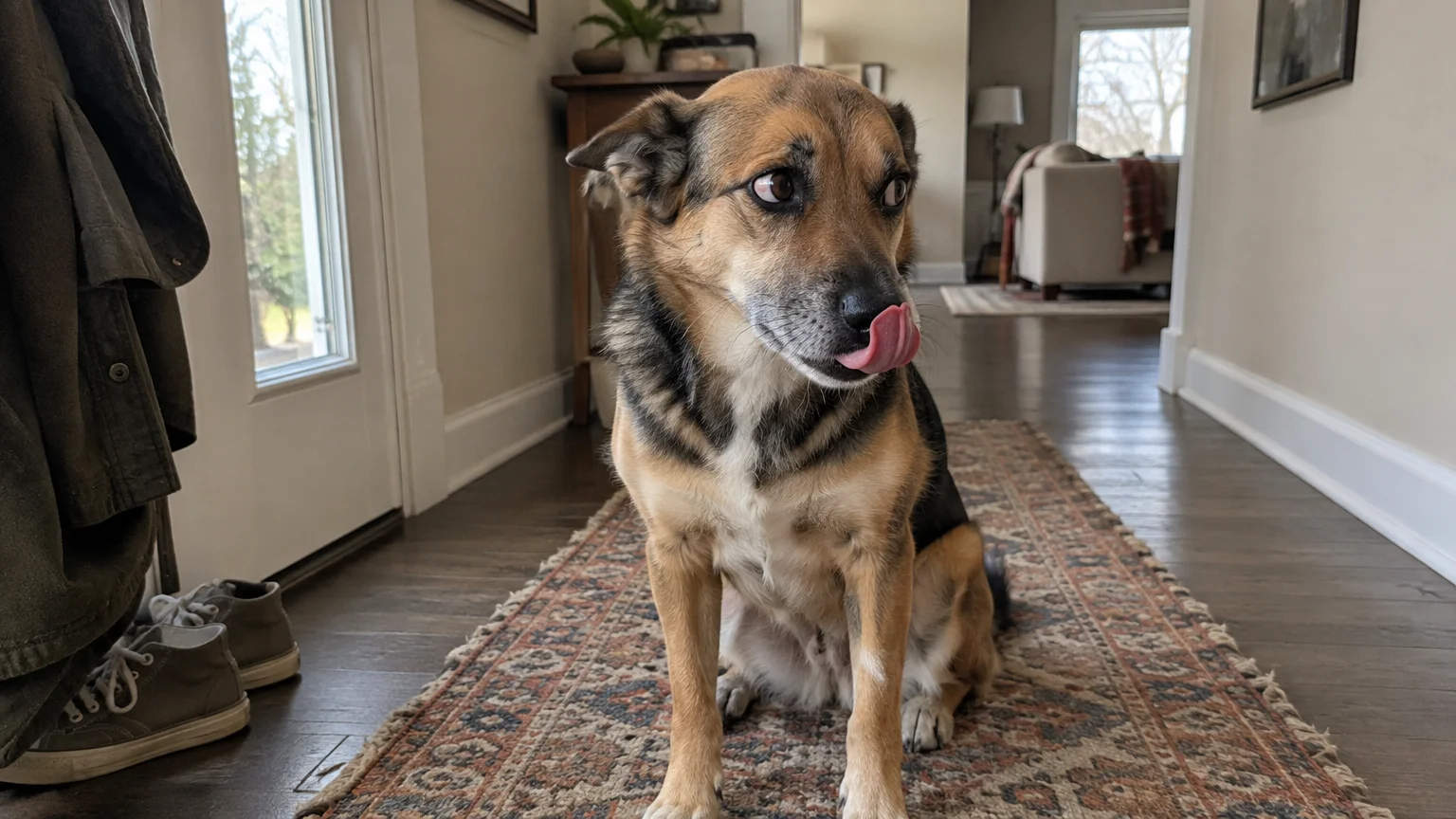
Dogs frequently flick the tip of their tongue upward over their nose when experiencing social discomfort. Unlike post-meal grooming, this stress-related licking is rapid, repetitive, and occurs in the absence of food.

Veterinary behaviorists consider rapid tongue flicks an appeasement gesture. Your dog uses this signal to convey harmlessness and defuse perceived tension in their immediate environment.

Pay close attention if this happens during hugs, vet examinations, or encounters with unfamiliar guests. Step in and gently redirect your dog toward a quieter spot.
3. Context-Free Yawning

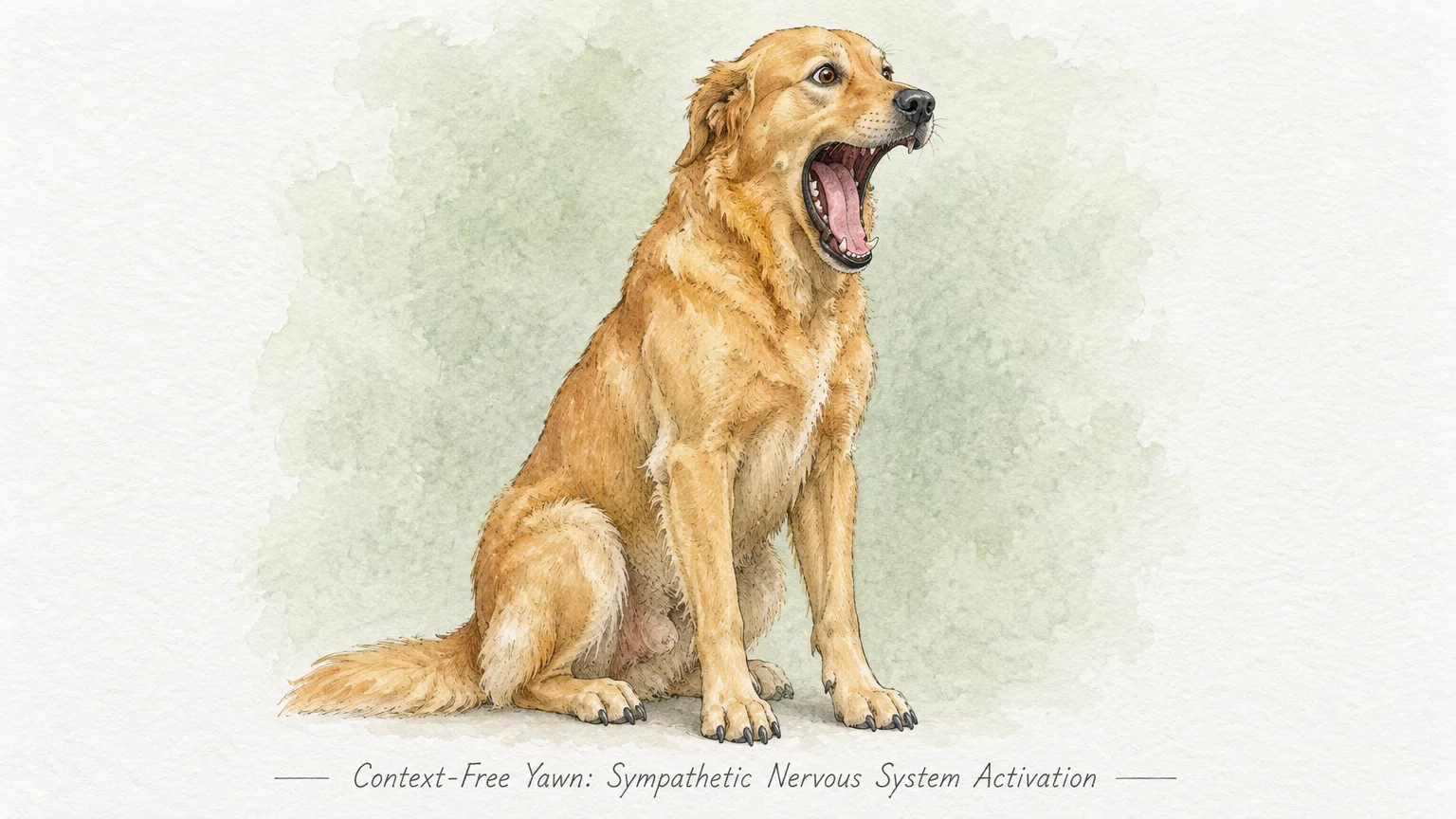
A yawn does not always mean your dog needs a nap. When yawning happens during training sessions, noisy gatherings, or veterinary visits, it functions as a canine stress signal.

Stress yawns are often more prolonged and exaggerated than normal fatigue yawns. They frequently coincide with tight facial muscles and flattened ears.

Treat an out-of-context yawn as a sign that your dog feels overwhelmed. Lower your expectations, reduce environmental stimulation, and take a brief break.
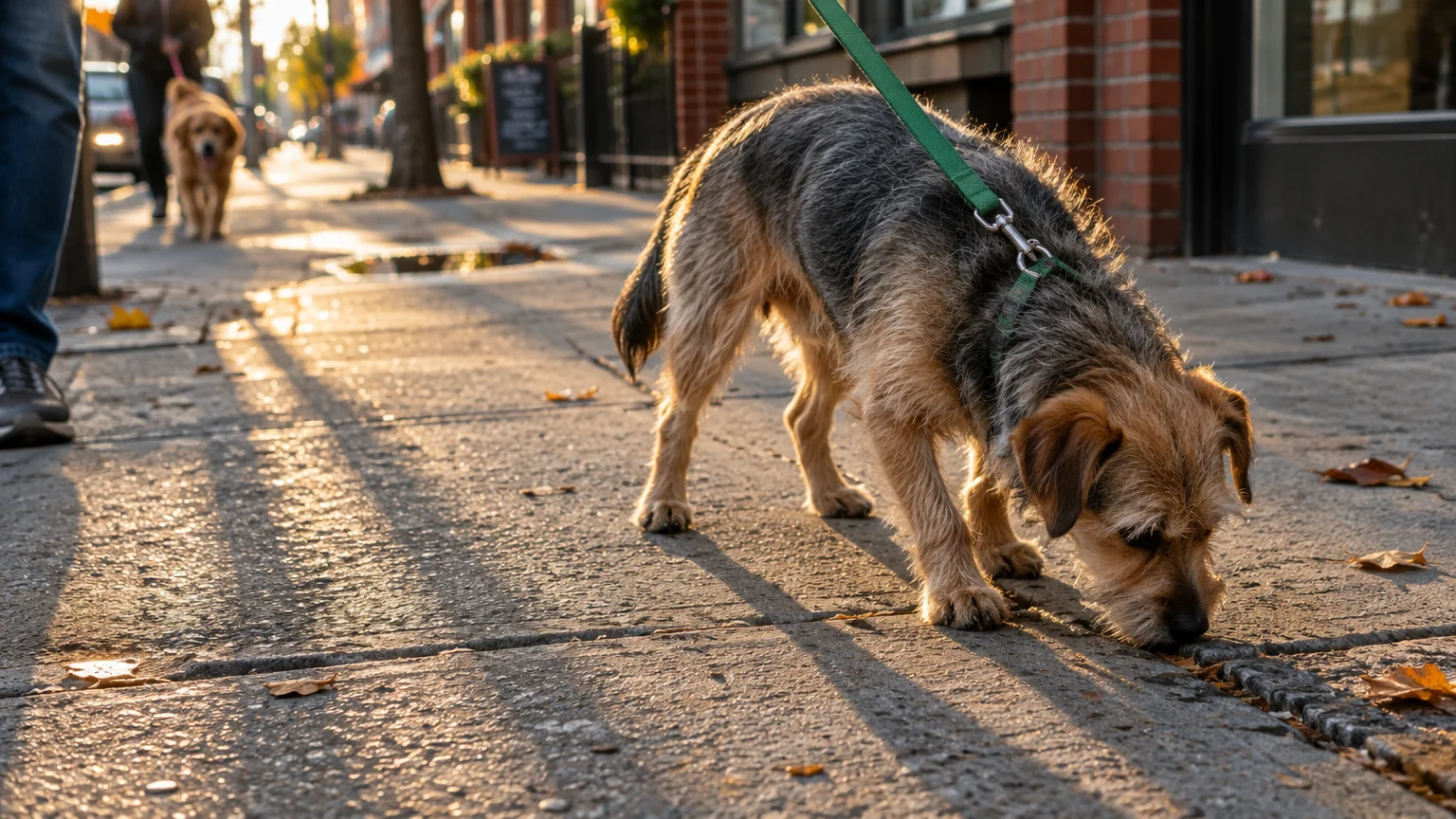
4. Displacement Sniffing and Sudden Scratching

Displacement behaviors appear when an animal feels conflicting emotional motivations, such as the desire to approach versus the urge to flee. A dog facing social conflict might abruptly sniff the grass or scratch vigorously.

This behavior looks normal on the surface, but the timing reveals its true nature. The dog intensely examines an uninteresting patch of ground solely to avoid confronting an approaching trigger.

Do not yank your dog away from displacement sniffing. Allow them to use this harmless self-soothing tactic while you create physical distance from the stressor.
5. Tucked Tail and Lowered Body Posture

When dogs feel frightened, they attempt to make their physical profile as small and non-threatening as possible. They lower their head, curve their spine, and clamp their tail tightly against the groin.

A tucked tail also covers the anal glands, which prevents scent dispersal during vulnerable moments. In moderate stress, the tail may simply drop lower than the dog’s natural carriage line.

Never force a dog in this posture to greet another animal or human. Doing so removes their perceived escape route and can prompt fear-based defensive biting.

6. Excessive Panting Without Heat or Exertion

Dogs naturally pant to regulate body temperature after running or in warm weather. However, heavy panting in a climate-controlled room indicates a surge of stress hormones.

Stress-induced panting, often called “stress panting,” typically features a wide tongue with curled edges. The dog draws shallow, rapid breaths alongside furrowed brows and tense facial musculature.

Check the ambient room temperature and hydration levels first to rule out physical overheating. If the environment is comfortable, identify what emotional trigger just entered the space.

7. Pacing, Restlessness, and Inability to Settle

A relaxed dog sleeps or rests during downtime; a stressed dog patrols the perimeter. Pacing back and forth along fence lines or room boundaries signals heightened vigilance and persistent arousal.

Anxious dogs repeatedly lie down, adjust positions, and stand up within seconds. They struggle to achieve deep, restorative sleep because their brain remains primed for potential danger.

Offer a designated sanctuary space—such as an open crate covered with a blanket—in a quiet room. Consistent safe zones help hyper-vigilant dogs gradually power down their nervous systems.

8. Sudden Appetite Loss and Digestive Upset

Acute stress activates the sympathetic nervous system, shifting blood flow away from the gut toward skeletal muscles. Consequently, a dog experiencing high anxiety often refuses high-value treats that they normally devour.

Prolonged stress disrupts the intestinal microbiome and digestive motility. It commonly manifests as soft stools, sudden diarrhea, or nausea accompanied by excessive lip smacking and drooling.

If your dog regularly ignores food during walks or training, you have exceeded their emotional threshold. Move farther away from triggers until your pet accepts food willingly.

9. Trembling, Involuntary Shaking, and Freezing

A flood of adrenaline produces visible muscle tremors, especially in the hind legs. This physiological response prepares the body for sudden physical action when a threat looms near.

Alternatively, dogs may execute a behavioral freeze, becoming entirely motionless and stiff. A freeze is a critical warning sign that the dog feels deeply threatened and may lash out if pushed.

Do not touch or crowd a dog that has frozen in place. Back away slowly and remove the trigger to prevent an escalation into defensive aggression.

10. The Full-Body “Shake-Off” After Tension

You have likely seen your dog perform a wet-dog shake when stepping out of a bath. However, dogs also execute this full-body shake while completely dry immediately following a tense event.

For instance, dogs frequently shake off after an awkward greeting with an unfamiliar canine or after you trim their nails. It serves as a physiological reset button to discharge residual muscular tension.

When you see a shake-off, celebrate it as a positive sign that your dog is actively decompressing. Give them a moment of quiet before introducing another activity.

Pages: 1 2 3 4 5 6
Pages ( 2 of 6 ): « Previous1 2 34 ... 6Next »

Share this article

Facebook Twitter Pinterest LinkedIn Email

Search

Most Popular

  • Senior woman sitting in an armchair petting a golden dog resting its head on her lap in a sunlit living room. 7 Financial Perks for Retirees Who Foster or Adopt Pets
  • A smiling woman with gray hair sits in an armchair holding a sleeping Cavalier King Charles spaniel on her lap. 12 Small Dog Breeds Perfect for a Retiree's Lap
  • Close-up of a white cat resting indoors, featuring complete heterochromia with one blue eye and one amber eye. 12 Cat Breeds With Unusual Eye Colors
  • A golden retriever peers over a wooden kitchen table set with bowls of sliced carrots, blueberries, green beans, and chicken. 8 Foods That Make Great Dog Treats
  • Fluffy Maine Coon cat with a very large, bushy tail resting on a rustic wooden windowsill by a sunny window. 11 Cat Breeds With Long, Fluffy Tails

Get Daily Animal Facts

Subscribe to our newsletter for your daily dose of cuteness delivered straight to your inbox.

Related Articles

Pit Bull With Dwarfism Has Big Personality And Loves Big Dogs

Dogs with special needs or disabilities face a harder life. One pit bull with dwarfism…

Read More →
flight

Flying With Pets: 7 Rules to Know Before Your Next Trip

1. Buy a secure kennel that is allowed on the plane If you’d like your…

Read More →

Firefighter adopts dog he helped rescue from SUV engine compartment

The little puppy was given the name Grace by firefighter James Tooter Hayes. Sweet! An…

Read More →
friendly know your dog Best Dog Foods

6 Friendly Dog Breeds That Love Socialization

1. Golden Retriever They are one of the most popular dog breeds in the US,…

Read More →

Heartwarming Story Of A Dog Who Stayed At The Door Until Man Returns From The Hospital

Leia is a sweet dog who went to live with her owner’s parents for a…

Read More →

One-eyed Pit Bull Finally Finds A Family After Spending Three Years In A Shelter

Scarlet is a pit bull that suffered from many health conditions, leaving her at the…

Read More →

Dog Rescued From The Streets Of Bali By A Woman On Vacation With A Big Heart

A woman was out on a scooter on vacation in Bali when she saw the…

Read More →
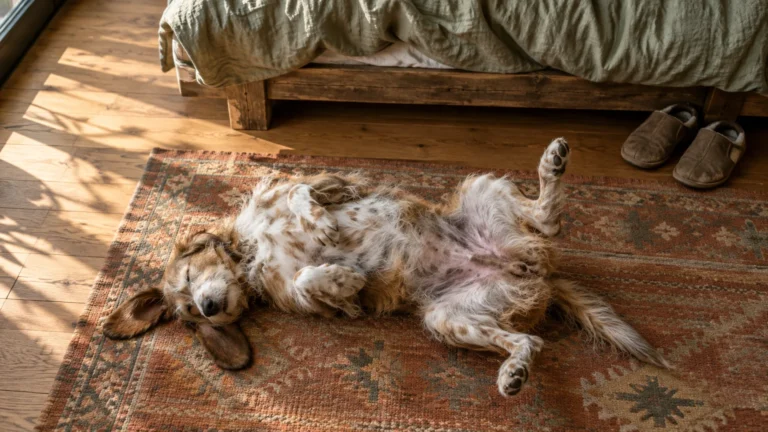
A golden dog lies upside down on a living room rug with paws in the air, next to a blue ball and chew toys.

7 Hilarious Signs Your Dog is Loving Life, According to a Trainer

Discover 7 hilarious and scientifically backed signs your dog is loving life, from living-room zoomies…

Read More →

Your Heart Will Melt Watching This Little Boy Play With His 180-pound Dog

The bond between a boy and his dog can be so strong. Landon and this…

Read More →

Cute Animal Planet

Featuring Cute Animals from All Around the World

Inedit Agency S.R.L.
Bucharest, Romania

contact@cuteanimalplanet.com

Explore

  • Contact Us
  • About Us
  • Editorial Policy
  • Advertiser Disclosure
  • FAQ
  • Subscribe
  • Unsubscribe
  • Our Newsletters
  • Privacy Policy
  • Disclaimer
  • Request to Know
  • Request to Delete
  • CA Privacy Policy

Categories

  • Animals
  • Birds
  • Cats
  • Cute Animals
  • Dogs
  • Elephants
  • Foxes
  • Funny stories
  • Goat
  • Lions
  • Llamas
  • Monkeys
  • Raccoons
  • Squirrels
  • Tortoise

© 2026 Cute Animal Planet. All rights reserved.