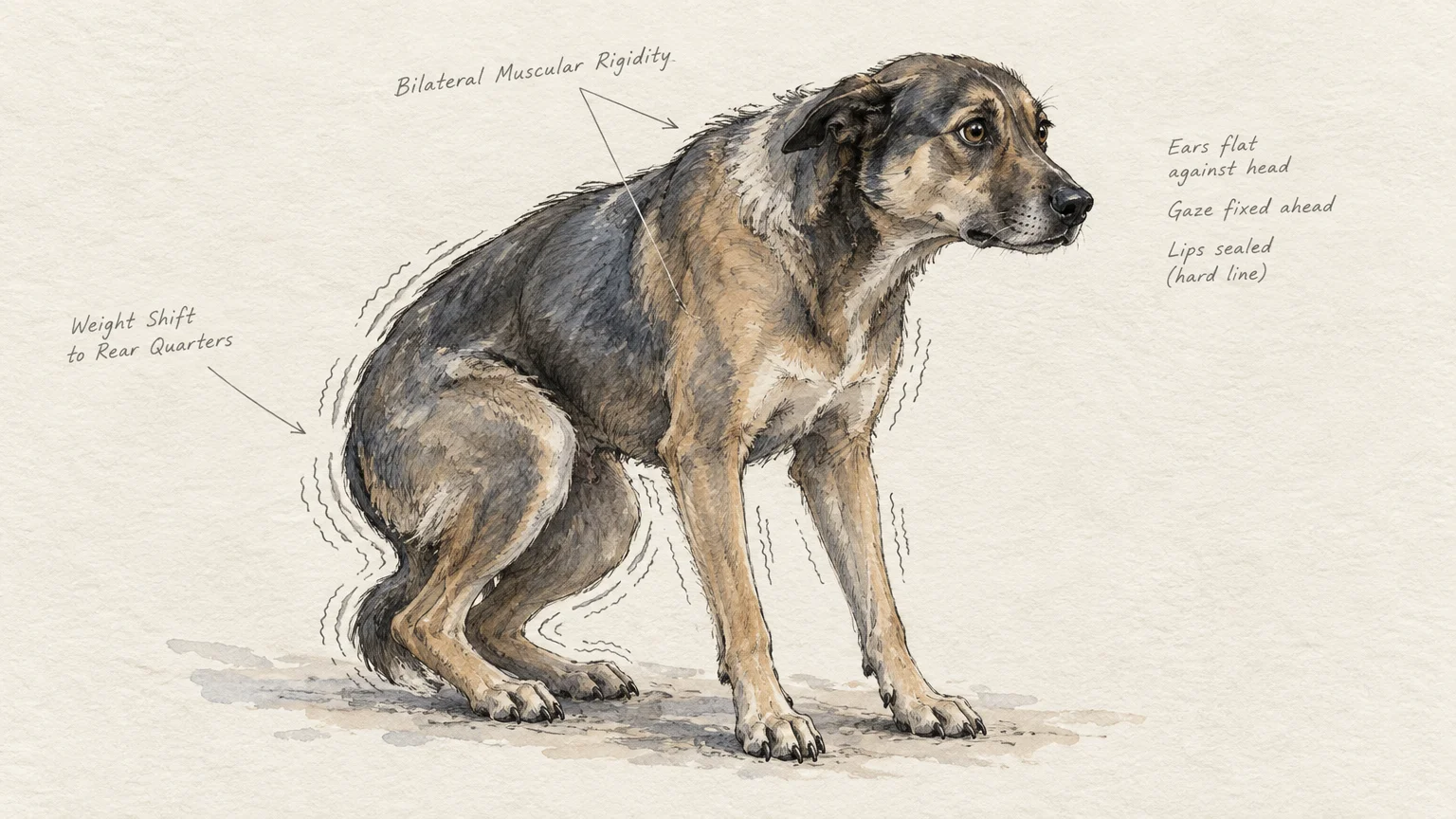
9. Trembling, Involuntary Shaking, and Freezing
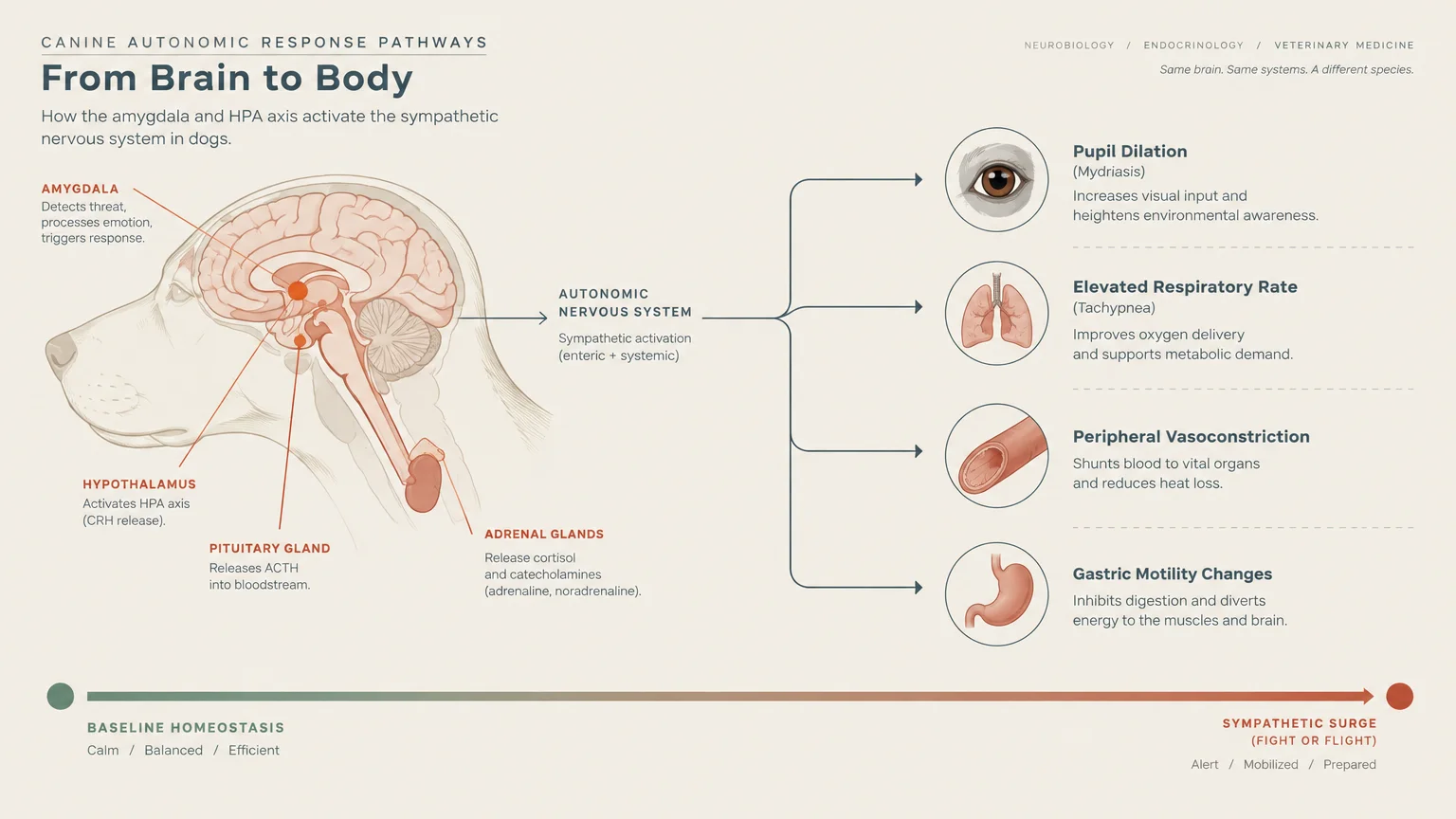
A flood of adrenaline produces visible muscle tremors, especially in the hind legs. This physiological response prepares the body for sudden physical action when a threat looms near.
Alternatively, dogs may execute a behavioral freeze, becoming entirely motionless and stiff. A freeze is a critical warning sign that the dog feels deeply threatened and may lash out if pushed.
Do not touch or crowd a dog that has frozen in place. Back away slowly and remove the trigger to prevent an escalation into defensive aggression.
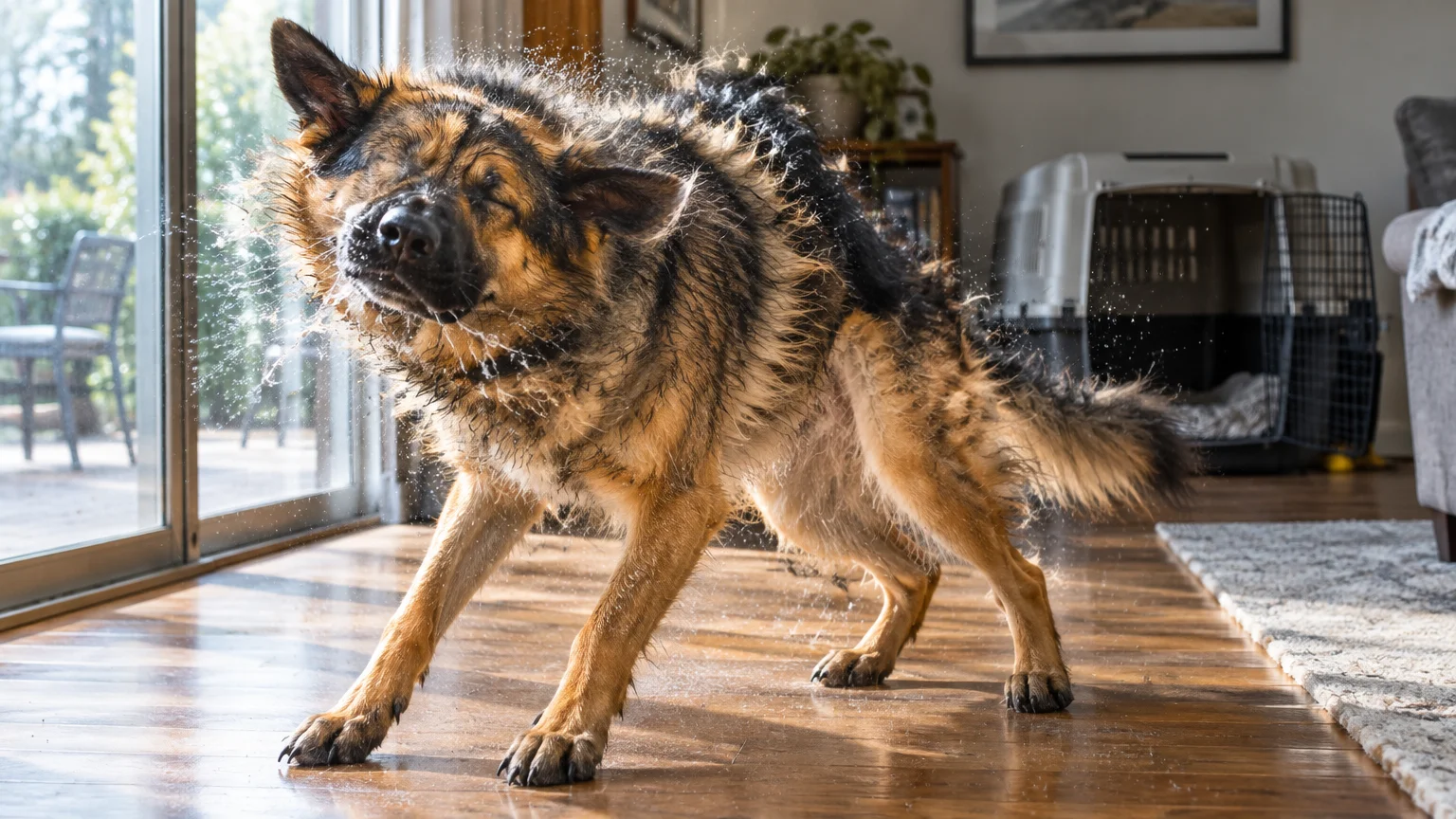
10. The Full-Body “Shake-Off” After Tension
You have likely seen your dog perform a wet-dog shake when stepping out of a bath. However, dogs also execute this full-body shake while completely dry immediately following a tense event.
For instance, dogs frequently shake off after an awkward greeting with an unfamiliar canine or after you trim their nails. It serves as a physiological reset button to discharge residual muscular tension.
When you see a shake-off, celebrate it as a positive sign that your dog is actively decompressing. Give them a moment of quiet before introducing another activity.
The Bigger Picture: Understanding Canine Anxiety Science
Stress in companion canines is far more widespread than most guardians assume. Recent large-scale scientific surveys reveal that modern home environments present numerous sensory and social hurdles for domestic dogs.
In a landmark study published in Scientific Reports, researchers at the University of Helsinki evaluated 13,715 pet dogs across 264 breeds. They discovered that 72.5% displayed at least one anxiety-related behavior.
Noise sensitivity stood out as the leading trigger, impacting 32% of dogs, while general fearfulness affected 29%. These figures demonstrate that canine anxiety is a common physiological challenge rather than an isolated behavioral flaw.
Further reinforcing these findings, a 2026 Texas A&M study analyzing 43,517 companion dogs from the Dog Aging Project found that 84% to 91% exhibit fear or anxiety in everyday scenarios. Unfamiliar dogs triggered fear in 47.4% of dogs.
Grooming sparked distress in 33.0% of dogs, while unfamiliar noises provoked 25.5%. These data points highlight why identifying subtle signs of a stressed dog is an essential skill for every responsible owner.
The pet industry reflects this growing awareness. According to the American Pet Products Association (APPA) 2024 Dog and Cat Report, dog owner usage of calming products surged 168% between 2018 and 2024.
By 2024, 59% of dog owners reported relying on calming aids such as wraps, supplements, and diffusers. Investing in behavioral education remains the most potent tool for calming a stressed dog long term.