5. Tucked Tail and Lowered Body Posture
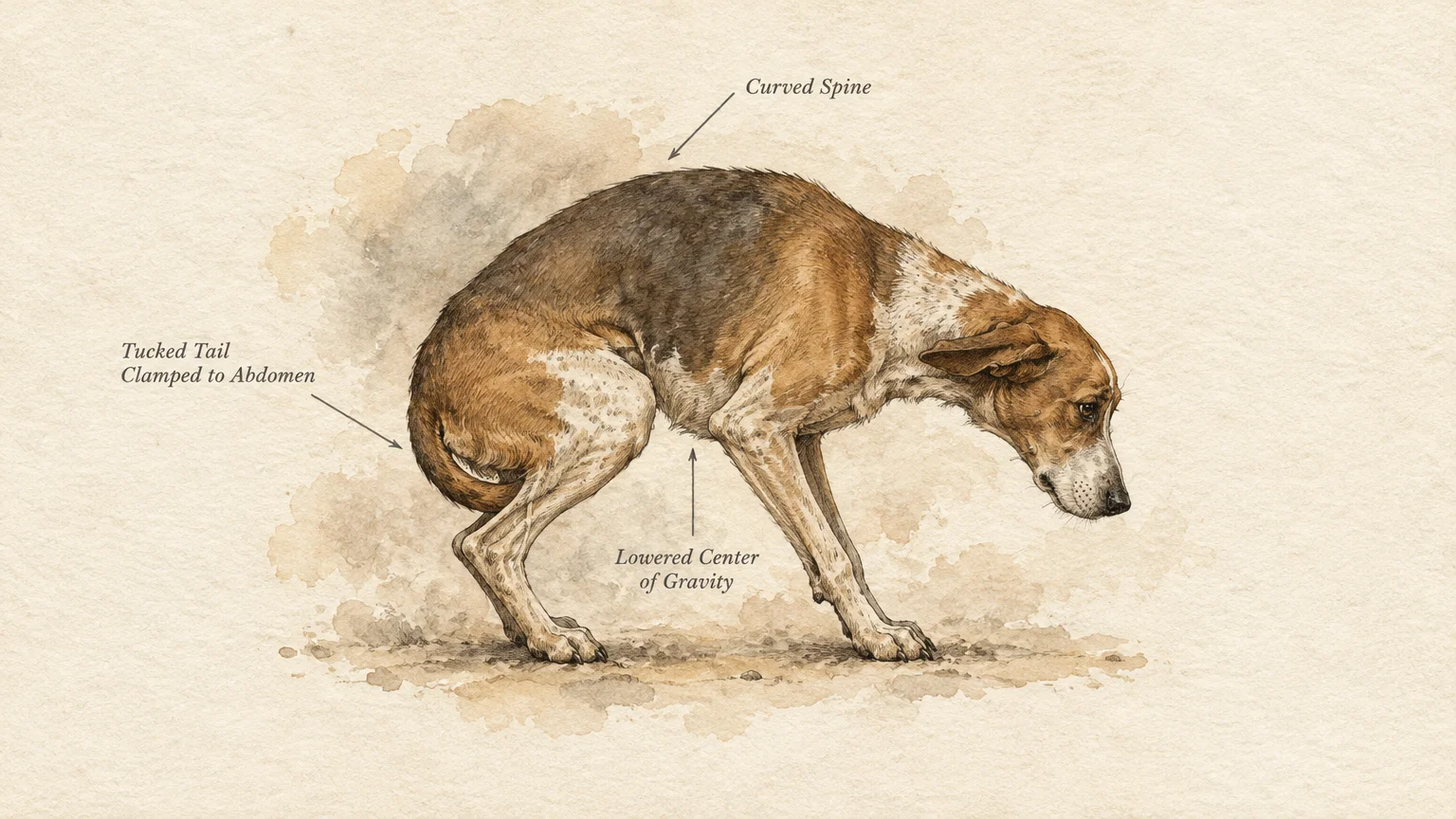
When dogs feel frightened, they attempt to make their physical profile as small and non-threatening as possible. They lower their head, curve their spine, and clamp their tail tightly against the groin.
A tucked tail also covers the anal glands, which prevents scent dispersal during vulnerable moments. In moderate stress, the tail may simply drop lower than the dog’s natural carriage line.
Never force a dog in this posture to greet another animal or human. Doing so removes their perceived escape route and can prompt fear-based defensive biting.
6. Excessive Panting Without Heat or Exertion
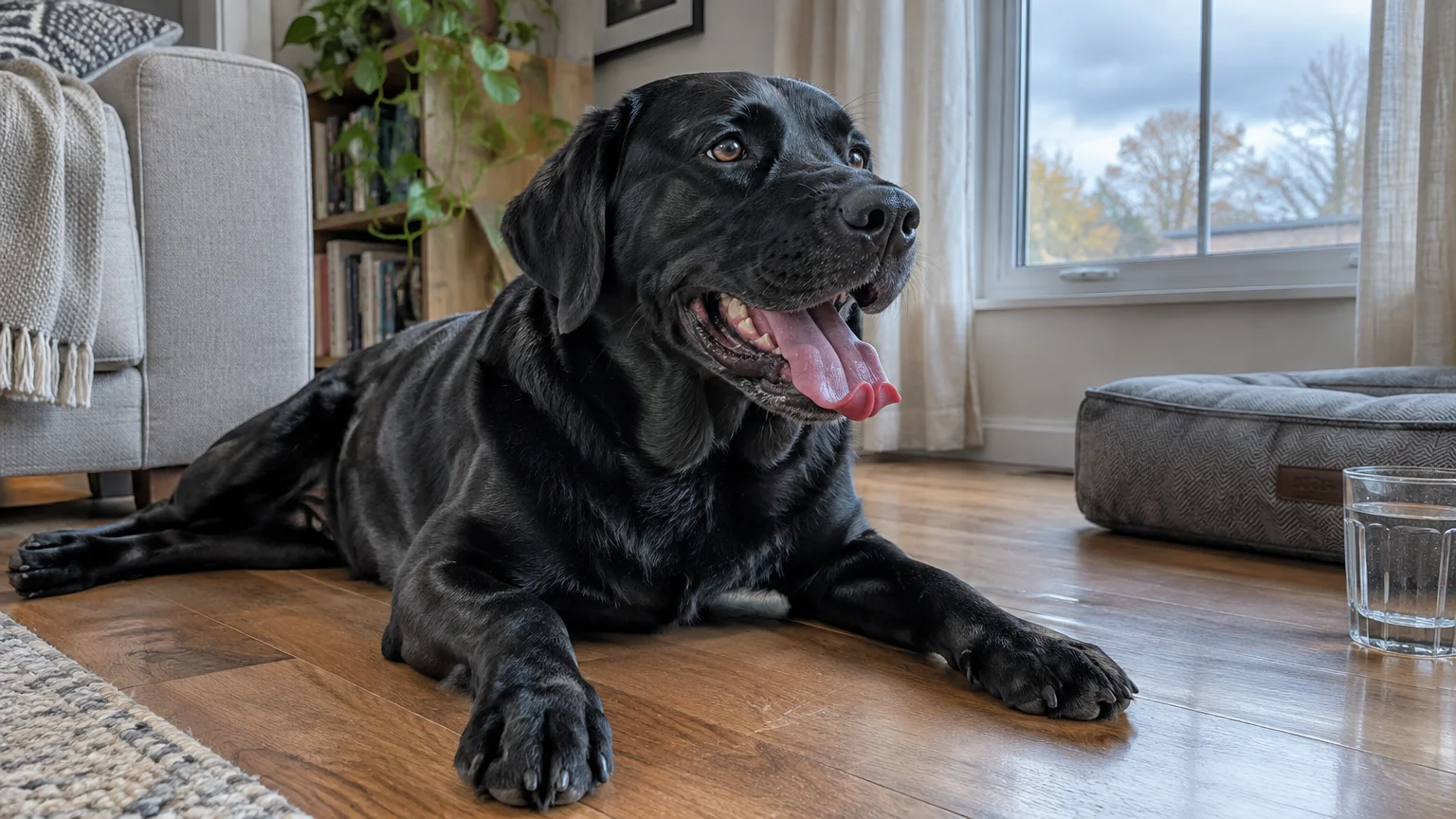
Dogs naturally pant to regulate body temperature after running or in warm weather. However, heavy panting in a climate-controlled room indicates a surge of stress hormones.
Stress-induced panting, often called “stress panting,” typically features a wide tongue with curled edges. The dog draws shallow, rapid breaths alongside furrowed brows and tense facial musculature.
Check the ambient room temperature and hydration levels first to rule out physical overheating. If the environment is comfortable, identify what emotional trigger just entered the space.
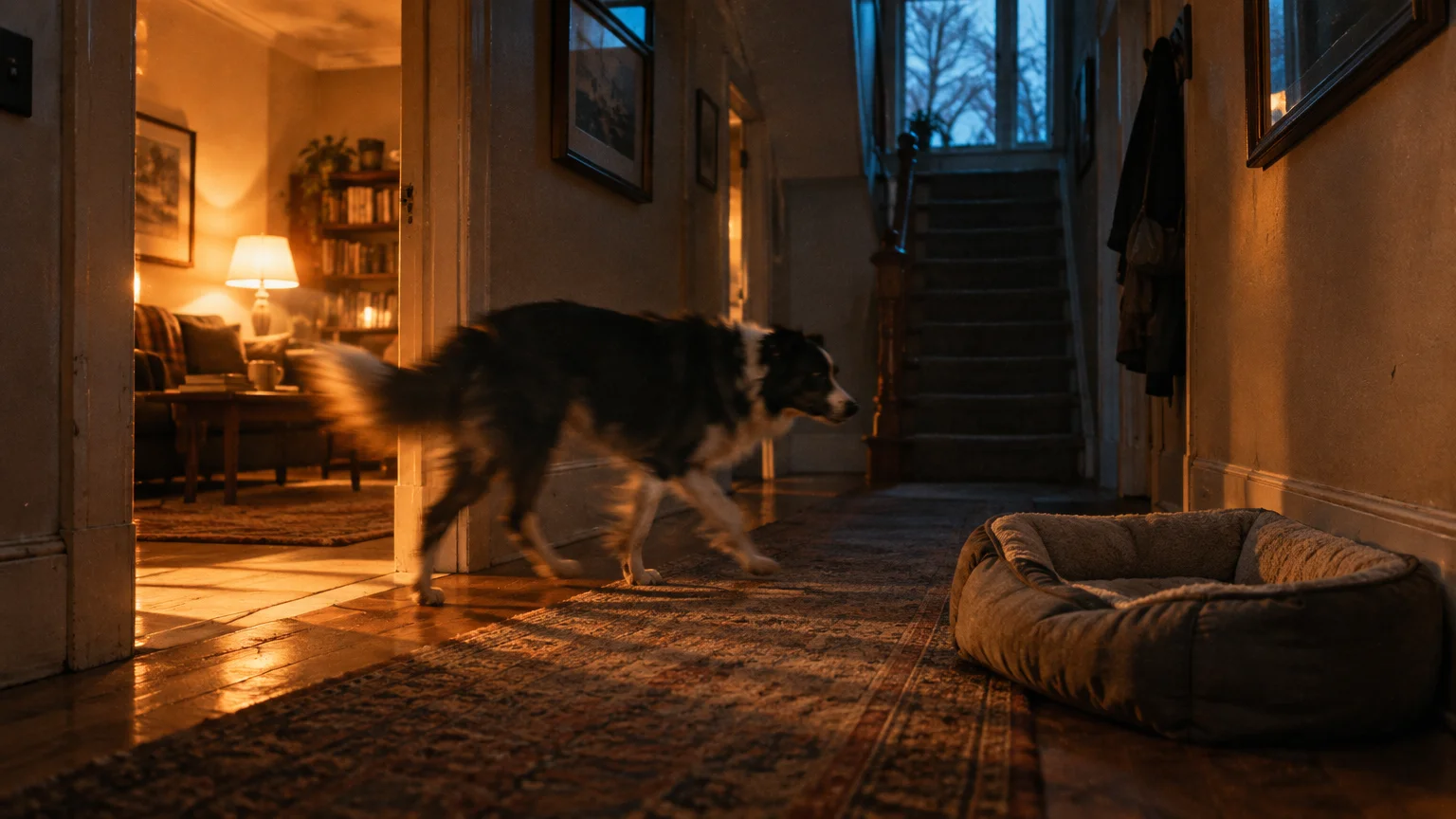
7. Pacing, Restlessness, and Inability to Settle
A relaxed dog sleeps or rests during downtime; a stressed dog patrols the perimeter. Pacing back and forth along fence lines or room boundaries signals heightened vigilance and persistent arousal.
Anxious dogs repeatedly lie down, adjust positions, and stand up within seconds. They struggle to achieve deep, restorative sleep because their brain remains primed for potential danger.
Offer a designated sanctuary space—such as an open crate covered with a blanket—in a quiet room. Consistent safe zones help hyper-vigilant dogs gradually power down their nervous systems.
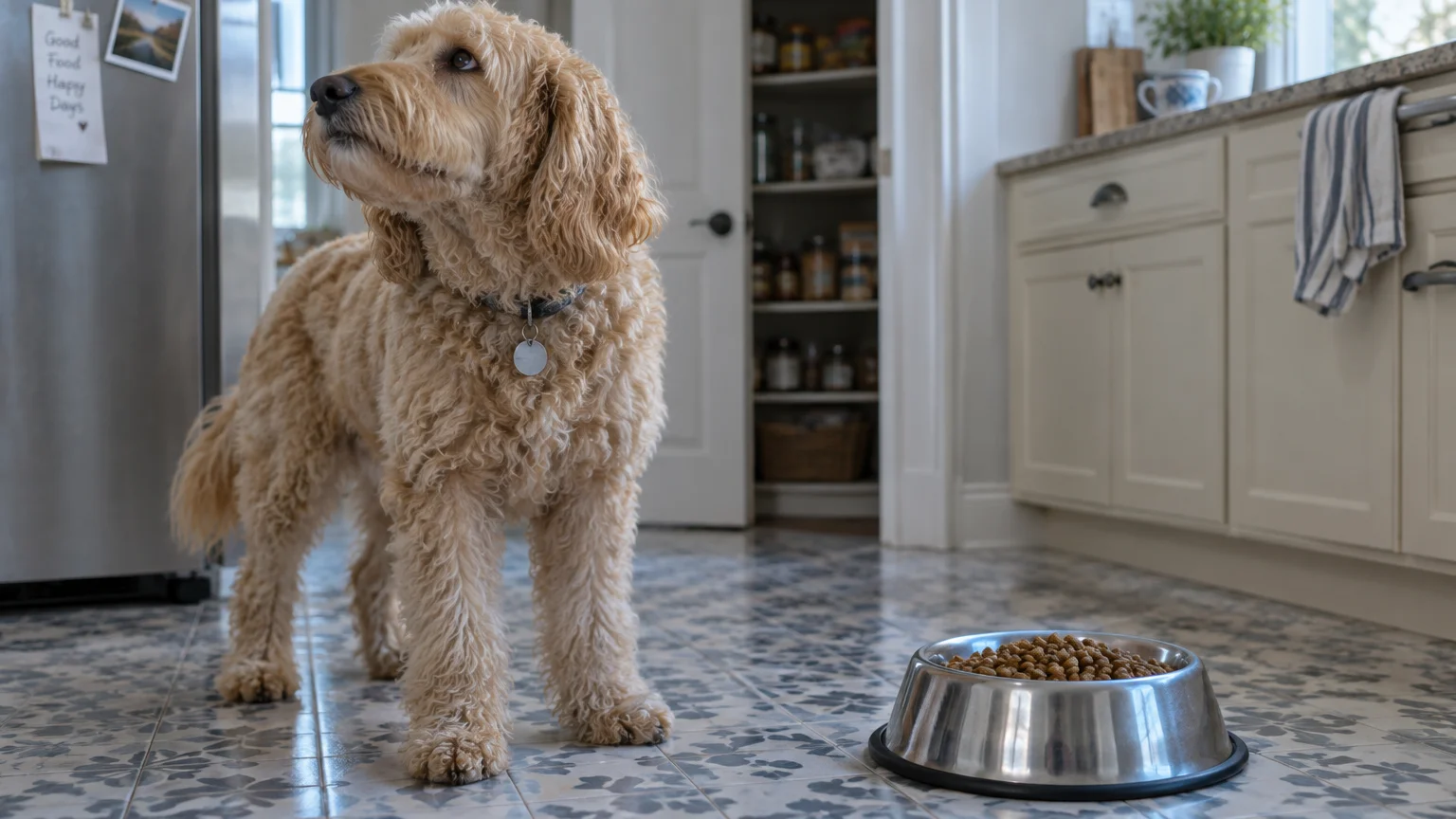
8. Sudden Appetite Loss and Digestive Upset
Acute stress activates the sympathetic nervous system, shifting blood flow away from the gut toward skeletal muscles. Consequently, a dog experiencing high anxiety often refuses high-value treats that they normally devour.
Prolonged stress disrupts the intestinal microbiome and digestive motility. It commonly manifests as soft stools, sudden diarrhea, or nausea accompanied by excessive lip smacking and drooling.
If your dog regularly ignores food during walks or training, you have exceeded their emotional threshold. Move farther away from triggers until your pet accepts food willingly.