Core Traits That Define Outstanding Therapy Companion Dogs
Therapy work demands far more than basic obedience commands like sit and stay. Outstanding calm therapy companion dogs share specific behavioral traits that allow them to thrive in chaotic, unpredictable environments.
When you evaluate a potential therapy candidate, look for a dog that genuinely enjoys interacting with unfamiliar people; tolerance alone is not enough for long-term success.
Essential therapy dog qualities include:
- Social Confidence: A desire to approach strangers with friendly, relaxed body language rather than hesitation or fear.
- Sound and Environmental Resilience: The ability to remain unfazed by sudden noises, dropped medical equipment, rolling wheelchairs, or unexpected shouts.
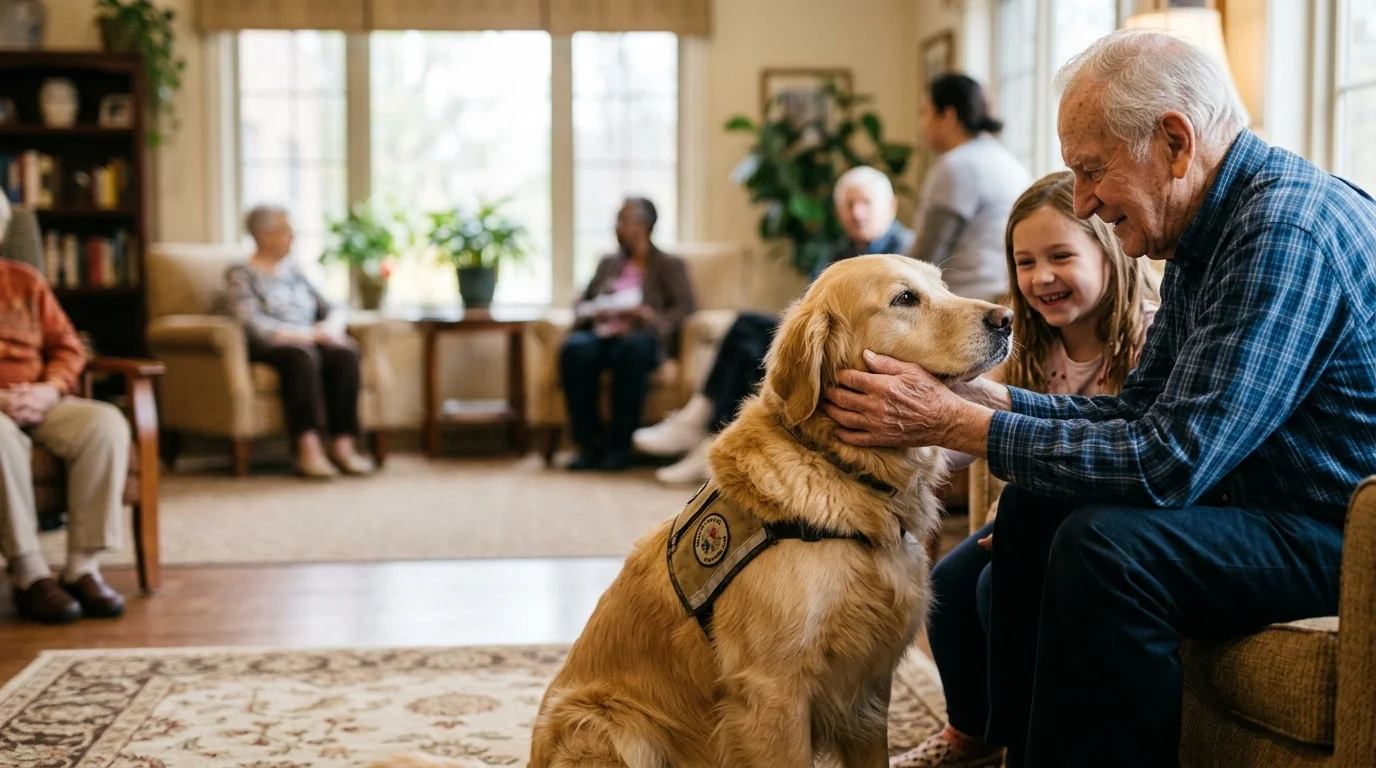
- Emotional Sensitivity: An intuitive capacity to match the energy of the person they visit, offering quiet stillness to an anxious patient or gentle engagement to a child.
- Low Reactivity: A calm demeanor when encountering other animals, strange odors, or unexpected movements in crowded hallways.
- Gentle Physical Interaction: A soft mouth and careful paws, ensuring they never scratch delicate skin or push against frail individuals.
Age also plays a critical role in readiness. Major national evaluation bodies—including Pet Partners and the Alliance of Therapy Dogs—require dogs to be at least 1 year old before undergoing official certification testing.
This age minimum ensures the animal has reached basic emotional maturity and completed fundamental behavioral socialization.