Cute Animal Planet

Featuring Cute Animals from All Around the World

  • Home
  • Cute Animals
  • Dogs
  • Cats
  • Birds

10 Dog Behaviors That Actually Mean They’re Happy

August 6, 2026 · Dogs
Warm watercolor illustration of a happy golden dog in a playful bow on a cozy rug, looking up with a gentle smile.

Decoding your canine companion’s emotional state often comes down to subtle physical cues rather than grand gestures. While a tail wag seems obvious, the nuance of a soft body posture, gentle facial expressions, and playful bows offers a much clearer window into your pup’s emotional well-being. Recognizing these happy dog behavior signs empowers you to strengthen your bond and ensure your dog leads a truly fulfilled life. Understanding how to tell if your dog is content involves looking at their whole body from nose to tail. When you know what to watch for, you can easily read your pet’s happiness, comfort, and deep sense of security every single day.
Close-up photo of a scruffy terrier leaning affectionately against its owner's leg on a sunny backyard patio.
A scruffy dog resting its head on its owner’s lap is a heartwarming sign of true happiness.

Top 10 Dog Behaviors That Signal Genuine Happiness

Dogs communicate constantly through physical movement and emotional expression. Learning to interpret these canine behavioral cues helps you spot true contentment versus temporary excitement or stress.

1. The Whole-Body “Wiggle Wag”

Many people assume any wagging tail indicates joy, but real happiness involves the entire body. When a dog feels genuine delight, their hips sway, their shoulders relax, and their rear end wiggles rhythmically along with their tail. Animal behavior experts at VCA Animal Hospitals note that a relaxed, fluid movement across the torso signals emotional comfort. If your dog approaches you with a loose, side-to-side body sweep—often called a “wiggle butt”—you are seeing one of the clearest signs a happy dog can display.

2. The Classic Play Bow

When a dog lowers their chest to the ground while keeping their rear end high in the air, they are performing a play bow. This biomechanical signal communicates pure playfulness and friendly intentions. Dogs use this posture to invite play, lower tension, and tell you that any fast movements or playful barks that follow are strictly in good fun. A frequent play bow during daily interactions demonstrates high emotional wellbeing and a strong desire to connect with you.

3. Soft Almond Eyes and Gentle Blinking

Your dog’s eyes reveal a tremendous amount about their stress levels. A content, relaxed dog displays soft, almond-shaped eyes with normal pupil size and frequent, gentle blinking. You will not see the whites of their eyes (often called “whale eye”), nor will they hold an intense, unblinking stare. Soft eyes indicate that your dog feels safe in their environment and perceives no immediate threats or pressure.

4. The Loose, Open “Doggy Smile”

While dogs do not grin in the exact same way humans do, a happy dog often holds their mouth slightly open with a relaxed jaw. Their tongue may loll gently over their lower teeth, and the corners of their mouth curve subtly upward. Facial muscles remain smooth and relaxed rather than pulled back tight. This open-mouthed expression usually appears when your dog rests comfortably, finishes a fun walk, or receives affection from you.

5. Vulnerable Belly Exposure with Loose Limbs

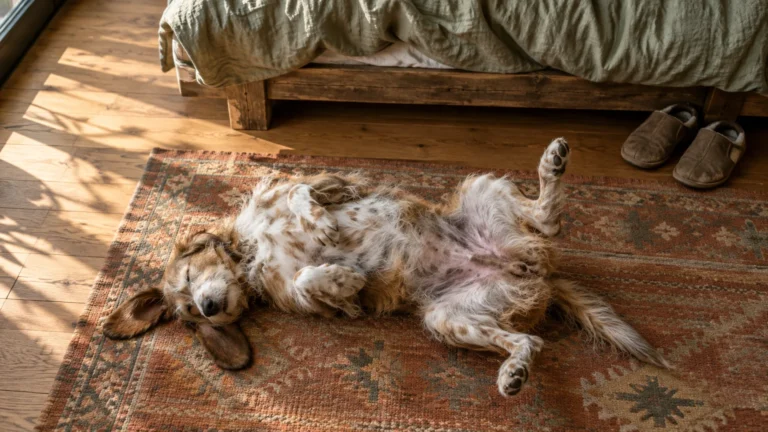
When your dog flops onto their back and exposes their belly with floppy paws and a loose posture, they are expressing complete trust and comfort. Exposing the vulnerable abdomen requires a high level of security in their surroundings. However, context matters immensely; a happy belly display is accompanied by loose, floppy legs and a soft face, whereas a stressed dog rolling over will hold their limbs rigid and tuck their tail tight against their stomach.

6. Leaning Physical Weight Against You

If your dog walks up to you and gently presses their body against your legs or rests their heavy head on your lap, they are seeking physical proximity out of affection and trust. Known as the “canine lean,” this behavior acts as a physical sign of attachment. Dogs lean on their trusted companions to share warmth, seek reassurance, or simply feel connected to their human family members.

7. Spontaneous “Zoomies” (FRAPs)

Frenzied Random Activity Periods, commonly known as the “zoomies,” involve sudden bursts of high-speed running, tight turns, and play bows around your home or yard. While zoomies look chaotic, they are a normal release of pent-up energy and pure emotional excitement. Dogs typically experience zoomies after a bath, during a fun game, or when you return home after work. Experiencing frequent, short bursts of joyful energy is one of the most undeniable happy dog behavior signs.

8. Sleeping Stretched Out or Paws Up

A dog’s sleeping positions offer excellent dog wellbeing indicators. Dogs sleeping in defensive or vigilant environments typically curl tightly into a ball to protect their vital organs and conserve body heat. Conversely, a dog that sleeps stretched out on their side or flat on their back with four paws pointing toward the ceiling feels totally safe. Resting in these exposed postures shows that your pet feels completely secure in your household.

9. Bringing You Toys Without Guarding

When your dog greets you at the door holding a favorite squeaky toy or shoe, they are demonstrating eager excitement and interactive joy. A content dog presents their toys to show off a prized possession or invite a game of tug. They carry the item with a soft mouth, a loose body, and a wagging tail, showing no signs of resource guarding, growling, or anxious hiding.

10. Deep, Enthusiastic Environmental Exploration

A happy, confident dog interacts actively with their environment. During walks, they sniff trees, explore new scents, and investigate their surroundings with a relaxed tail position and steady gait. Educational resources from the American Kennel Club emphasize that sniffing lowers a dog’s heart rate and reduces stress levels. Giving your pet time to engage in thorough scent work on walks supports mental stimulation and emotional health.

A minimalist infographic comparing happy and stressed dog body language cues side-by-side with clear labels.
This labeled diagram compares the body language cues of a happy dog and a stressed dog.

Happy vs. Stressed: How to Read the Full Body Language Picture

Understanding dog body language happiness requires looking at the whole picture rather than focusing on a single physical cue. Comparing happy body language against signs of stress helps you accurately assess your dog’s daily state of mind.

Body Region / Behavior Happy & Content Dog Stressed or Anxious Dog
Eyes & Face Soft gaze, frequent blinking, relaxed facial muscles Wide eyes (“whale eye”), hard unblinking stare, furrowed brow
Mouth & Jaw Slightly open mouth, loose jaw, relaxed tongue Tightly closed jaw, lip licking, yawning, panting without heat
Overall Body Posture Fluid, loose movements; weight evenly distributed Stiff muscle tone, cowering, weight shifted backward or frozen
Tail Position & Motion Mid-level, wide sweeping wag; moves with the hips Tucked tightly between legs or high, rigid, fast vibration
Sleeping Position Stretched out on side, belly exposed, paws loose Curled in tight ball, easily startled, hyper-vigilant rest

A happy dog isn’t defined by constant high energy; true canine contentment is rooted in emotional safety, relaxed muscle tone, and a deep, quiet trust in their environment.

A black labrador retriever happily sniffing yellow wildflowers on a sun-dappled forest path, shot on warm 35mm film.
Letting your dog sniff wildflowers on forest walks is a simple way to boost their daily happiness.

Practical Ways to Boost Your Dog’s Daily Happiness

Maintaining high dog wellbeing indicators involves meeting your pet’s physical, mental, and emotional needs every day. Small changes to your daily routine can yield significant improvements in your dog’s mood and overall behavioral health.

  • Incorporate Daily “Sniffaris”: Allow your dog to lead the way on walks and spend ample time sniffing environment scents rather than rushing the pace. Scent work provides crucial mental enrichment that tires out a dog as effectively as physical exercise.
  • Use Positive Reinforcement: Build your dog’s confidence through reward-based training. Praising desirable behaviors with treats, affection, and toys creates an atmosphere of clarity and emotional safety.
  • Provide Dedicated Rest Zones: Ensure your dog has access to a quiet, comfortable bed away from household foot traffic where they can sleep uninterrupted.
  • Rotate Interactive Puzzle Toys: Challenge your pup’s brain with lick mats, treat-dispensing balls, and snuffle mats to prevent boredom and reduce destructive behaviors.
  • Maintain a Predictable Schedule: Dogs thrive on routine. Keeping feeding, walking, and bedtime schedules consistent lowers anxiety and helps your dog feel secure.
Watercolor diagram contrasting a stiff, high tail meaning tension with a loose, sweeping tail meaning joy.
Compare a stiff, alert tail with a loose, sweeping wag to understand your dog’s true mood.

Things to Watch Out For: Misinterpreting Dog Body Language

Misinterpreting physical signals is easy if you take individual behaviors out of context. Recognizing common pitfalls ensures you respond appropriately to what your dog is actually feeling.

First, never assume a wagging tail always signals happiness. A high, stiff, rapidly vibrating tail held like a flagpole often indicates intense arousal, frustration, or impending aggression. Always evaluate the rest of the body; if the torso is rigid and the mouth is tight, back away and give the dog space.

Second, avoid confusing overarousal or hyper-vigilance with true joy. A dog that jumps excessively, mouth-contacts your hands aggressively, or paces constantly is likely experiencing stress or sensory overload rather than happiness. True contentment features a underlying sense of calm and self-regulation.

Third, respect submissive belly rolls. If a dog rolls onto their back, tucks their tail, licks their lips, and avoids eye contact, they are asking for space, not asking for belly rubs. Reaching down to pet a submissively rolling dog can increase their discomfort.

An owner gently comfort-touching their slightly anxious greyhound mix on a cozy sofa in a sun-dappled living room.
A woman comforts her alert brindle dog on the sofa, monitoring behaviors that might require professional help.

When Professional Help Is Needed

If you notice sudden shifts in your dog’s mood, playfulness, or resting patterns, rule out underlying medical issues before assuming it is purely behavioral. Sudden lethargy, irritability, or loss of interest in favorite toys often stems from physical pain, dental disease, or internal discomfort. Consult your veterinarian promptly whenever your dog’s baseline behavior changes unexpectedly.

If your veterinarian confirms your dog is physically healthy but your pet continues to show signs of chronic anxiety, fearfulness, or compulsive stress behaviors, seek guidance from a certified professional dog trainer or a board-certified veterinary behaviorist. Comprehensive behavioral guidelines provided by the ASPCA offer additional resources for identifying and managing complex behavioral concerns safely.

Frequently Asked Questions About Dog Happiness

How can I tell if my dog is happy or just bored?

A happy dog moves fluidly, rests calmly, and engages eagerly with toys, walks, and family members. A bored dog often exhibits destructive chewing, excessive barking, relentless pacing, or attention-seeking behaviors because they lack adequate mental and physical stimulation.

Does a wagging tail always mean my dog is content?

No. Tail wags communicate emotional intensity and intent, not just happiness. A loose, sweeping wag that involves the whole rear end indicates joy, whereas a stiff, rapid, elevated tail wag can signal alertness, fear, or territorial aggression.

Why does my dog follow me everywhere—is that a sign of happiness?

Following you around often reflects strong bonding, curiosity, and affection. However, if your dog shows distress, pacing, or whines whenever you leave a room, that behavior may point toward separation anxiety rather than calm attachment.

Do dogs smile when they are happy?

Dogs do not smile in the human sense, but they express contentment through a relaxed facial posture. An open mouth, soft jaw, gentle blinking, and slightly pulled-back lips create a soft facial expression often recognized as a canine smile.

Observing your dog’s everyday cues with an attentive eye makes learning how to tell if your dog is content an intuitive process. By honoring their body language, meeting their physical and emotional needs, and offering consistent love, you create an environment where your canine companion can truly thrive.

This article provides general information only. Every reader’s situation is different—what works for others may not be the right fit for you. For personalized guidance on health, legal, or financial matters, consult a qualified professional.


Last updated: May 2026. Rules, prices, and details change—verify current information with official sources before acting on it.

Share this article

Facebook Twitter Pinterest LinkedIn Email

Search

Most Popular

  • A Golden Retriever joyfully rolls on its back in a sunny grass field, with bits of dirt stuck to its fur. The Reason Dogs Love Rolling in Smelly Things
  • Illustration of a curled-up cat on a blanket with abstract golden soundwaves radiating from its chest. Why Cats Purr Even When They're Not Happy
  • Warm watercolor illustration of a happy golden dog in a playful bow on a cozy rug, looking up with a gentle smile. 10 Dog Behaviors That Actually Mean They're Happy
  • The Real Reason Cats Knock Things Off Tables
  • Why Some Dogs Are Scared of Thunderstorms and Others Aren't

Get Daily Animal Facts

Subscribe to our newsletter for your daily dose of cuteness delivered straight to your inbox.

Related Articles

Dog Charged With Caring For Animals At Rescue Facility Adopts Orphan Calf

Lincoln the dog lives at Black Sheep Farm. The farm helps to rescue abandoned or…

Read More →

Woman Adopts Severely Deformed Dog Who Joins Family Ecstatically Thanking Them

Angela is an animal rescuer who encountered a very sad and troubling animal. This dog…

Read More →

Two Best Friends Pull Together To Adopt Puppy Sisters Who Had Been Abandoned

Puppies that had been abandoned got the coolest adoption. There were two sister puppies in…

Read More →

Dog’s Human Sister Arrives Home After 6 Months Away At College, Their Reaction Is The Cutest Ever!

When these two rescue dog’s human sister, Victoria, went to college, they waited in bed…

Read More →
dogs you've probably never heard of

How to Spot Dogs with Worms Problems

Parasites are not just deeply uncomfortable; they can be extremely dangerous for dogs. However, one…

Read More →

Boxers Are Some Of The Cutest And Most Hilarious Animals Out There

Boxers will certainly keep you entertained. These dogs will win your heart with their hilarious…

Read More →

Dog Finds Injured Parrot In Need Of A Friend And Decides To Adopt Him

Hero is a dog who was playing outside one day when he spotted something in…

Read More →

Before and After Photos Of A Dog Who Has Been Adopted Are So Sweet

Adopting rescue dogs has a huge impact on their lives. While shelters rescue these poor…

Read More →

Dog That Prefers To Sleep Sprawled Out On Its Back Is Hilarious

Paningning is a white Shih Tzu that enjoys sleeping in a peculiar pose. This dog…

Read More →

Cute Animal Planet

Featuring Cute Animals from All Around the World

Inedit Agency S.R.L.
Bucharest, Romania

contact@cuteanimalplanet.com

Explore

  • About Us
  • Privacy Policy
  • Contact Us
  • Unsubscribe
  • Subscribe
  • CA Privacy Policy
  • Request to Know
  • Request to Delete
  • Our Newsletters

Categories

  • Animals
  • Birds
  • Cats
  • Cute Animals
  • Dogs
  • Elephants
  • Foxes
  • Funny stories
  • Goat
  • Lions
  • Llamas
  • Monkeys
  • Raccoons
  • Squirrels
  • Tortoise

© 2026 Cute Animal Planet. All rights reserved.