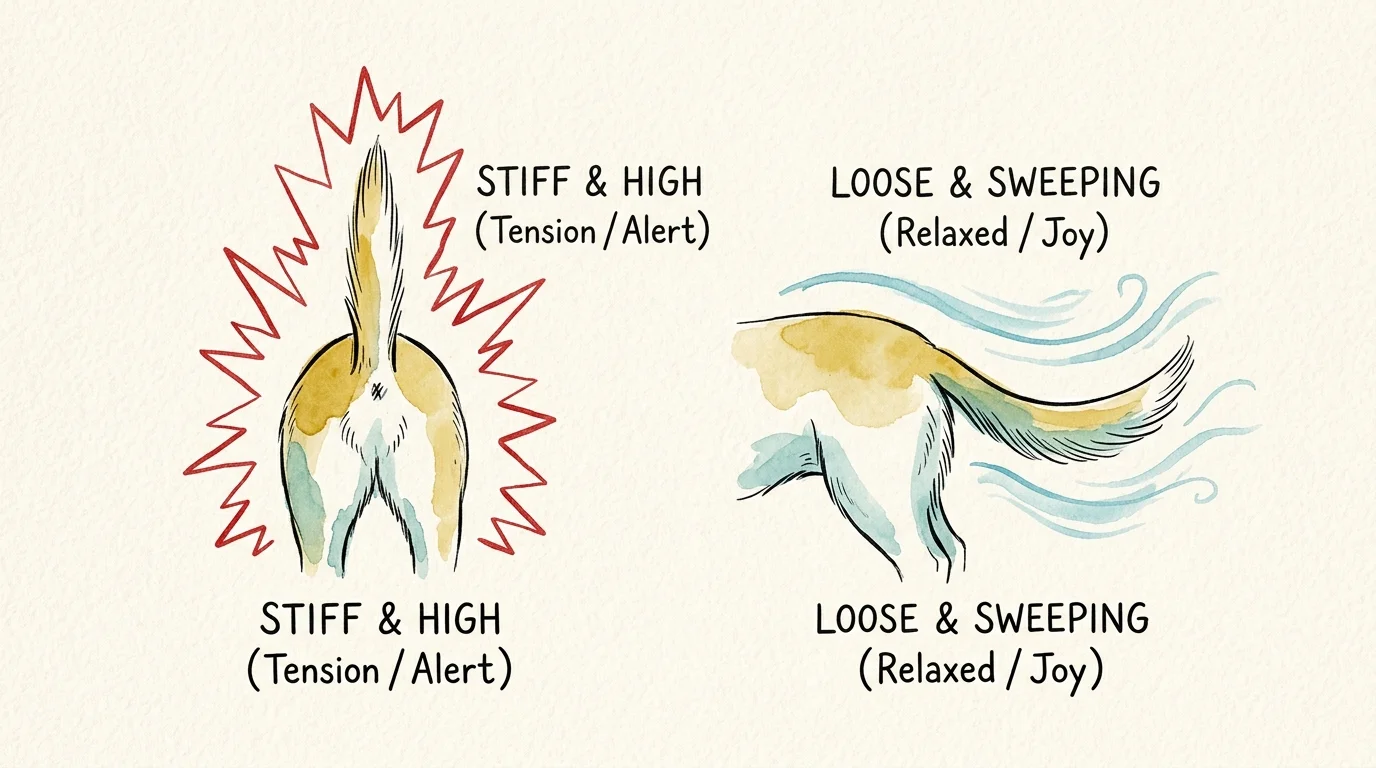
Things to Watch Out For: Misinterpreting Dog Body Language
Misinterpreting physical signals is easy if you take individual behaviors out of context. Recognizing common pitfalls ensures you respond appropriately to what your dog is actually feeling.
First, never assume a wagging tail always signals happiness. A high, stiff, rapidly vibrating tail held like a flagpole often indicates intense arousal, frustration, or impending aggression.
Always evaluate the rest of the body; if the torso is rigid and the mouth is tight, back away and give the dog space.
Second, avoid confusing overarousal or hyper-vigilance with true joy. A dog that jumps excessively, mouth-contacts your hands aggressively, or paces constantly is likely experiencing stress or sensory overload rather than happiness.
True contentment features a underlying sense of calm and self-regulation.
Third, respect submissive belly rolls. If a dog rolls onto their back, tucks their tail, licks their lips, and avoids eye contact, they are asking for space, not asking for belly rubs.
Reaching down to pet a submissively rolling dog can increase their discomfort.