Happy vs. Stressed: How to Read the Full Body Language Picture
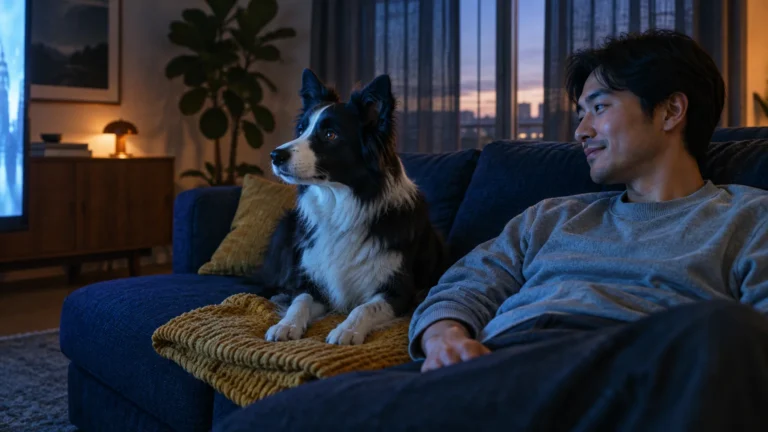
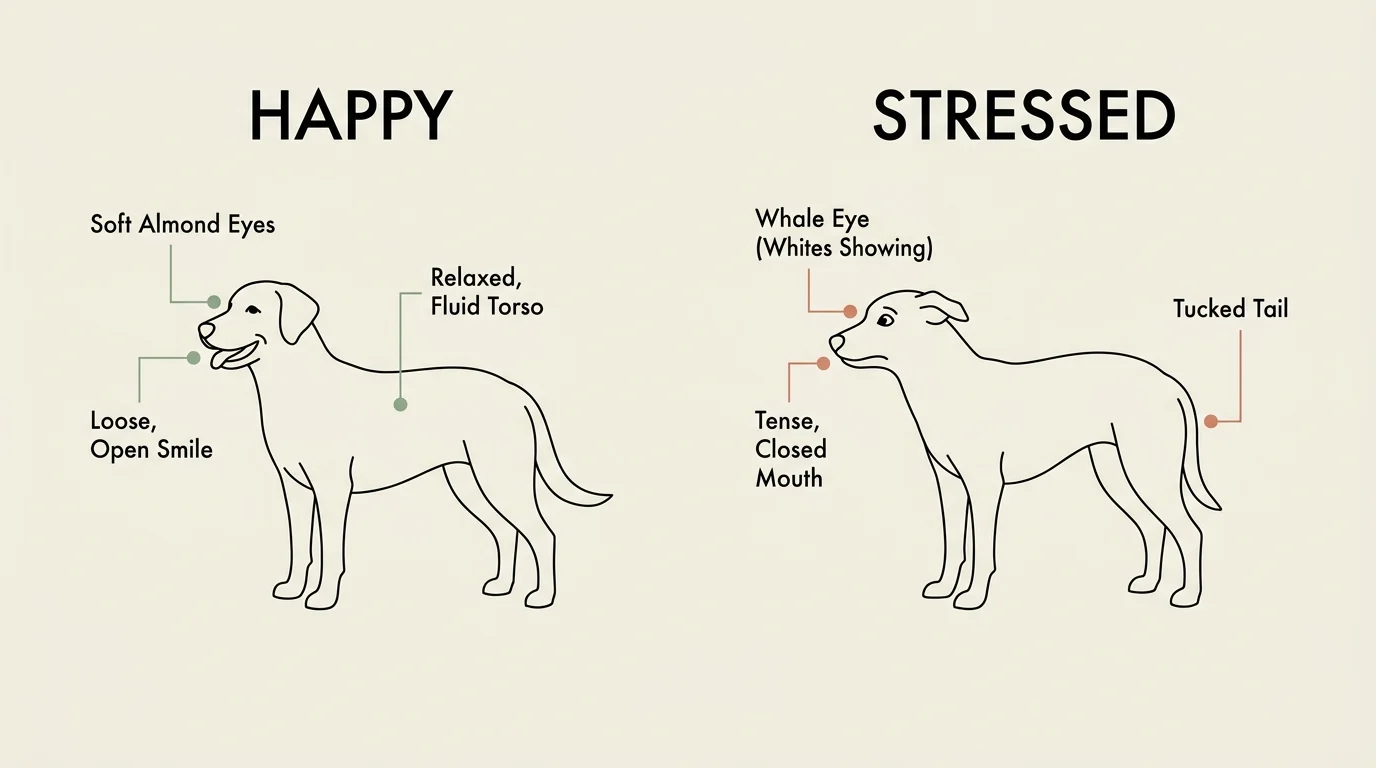
Understanding dog body language happiness requires looking at the whole picture rather than focusing on a single physical cue. Comparing happy body language against signs of stress helps you accurately assess your dog’s daily state of mind.
| Body Region / Behavior | Happy & Content Dog | Stressed or Anxious Dog |
|---|---|---|
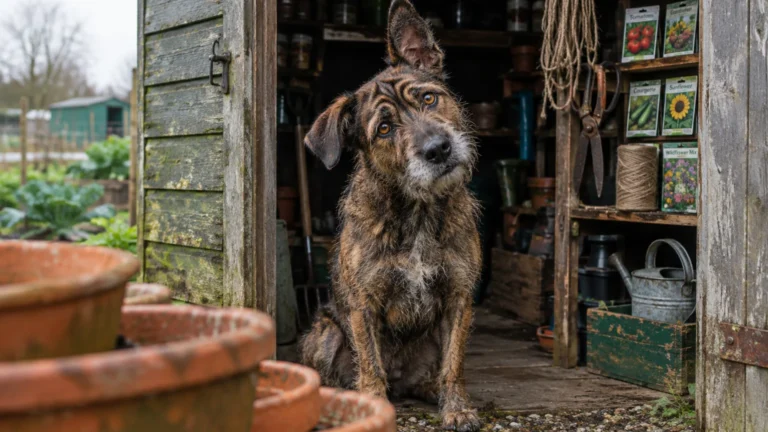
| Eyes & Face | Soft gaze, frequent blinking, relaxed facial muscles | Wide eyes (“whale eye”), hard unblinking stare, furrowed brow |
| Mouth & Jaw | Slightly open mouth, loose jaw, relaxed tongue | Tightly closed jaw, lip licking, yawning, panting without heat |
| Overall Body Posture | Fluid, loose movements; weight evenly distributed | Stiff muscle tone, cowering, weight shifted backward or frozen |
| Tail Position & Motion | Mid-level, wide sweeping wag; moves with the hips | Tucked tightly between legs or high, rigid, fast vibration |
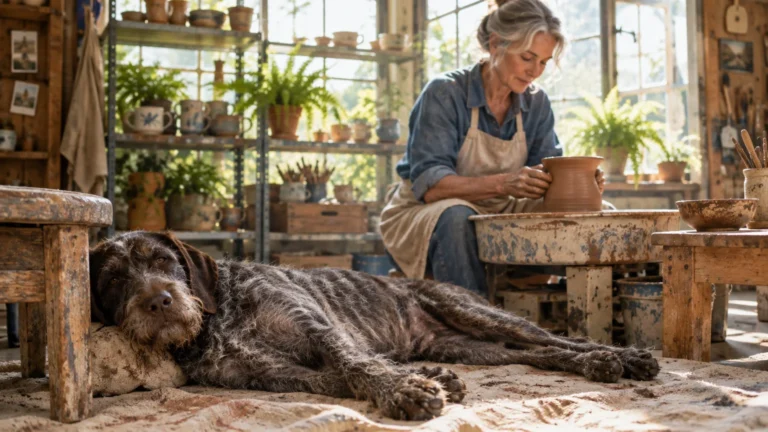
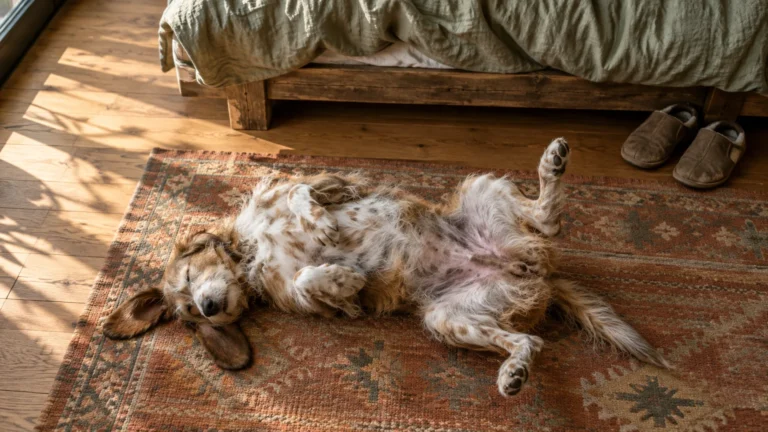
| Sleeping Position | Stretched out on side, belly exposed, paws loose | Curled in tight ball, easily startled, hyper-vigilant rest |
A happy dog isn’t defined by constant high energy; true canine contentment is rooted in emotional safety, relaxed muscle tone, and a deep, quiet trust in their environment.