Beyond the Lean: How to Spot Other Subtle Canine Anxiety Signs
Leaning rarely occurs in isolation. It usually arrives alongside a cluster of micro-behaviors that signal rising stress levels long before a dog barks, growls, or bolts away.
Catching these early signals helps you intervene before your dog experiences overwhelming fear.
Landmark behavioral research from the University of Helsinki, published in Scientific Reports, evaluated 13,715 companion dogs and found that 72.5% displayed specific anxiety-related behaviors. The researchers noted that noise sensitivity affected 32% of dogs, while fear of strangers and fear of other dogs affected 29% and 26% respectively.
When these fear triggers trigger an emotional response, dogs consistently display several predictable physical markers:
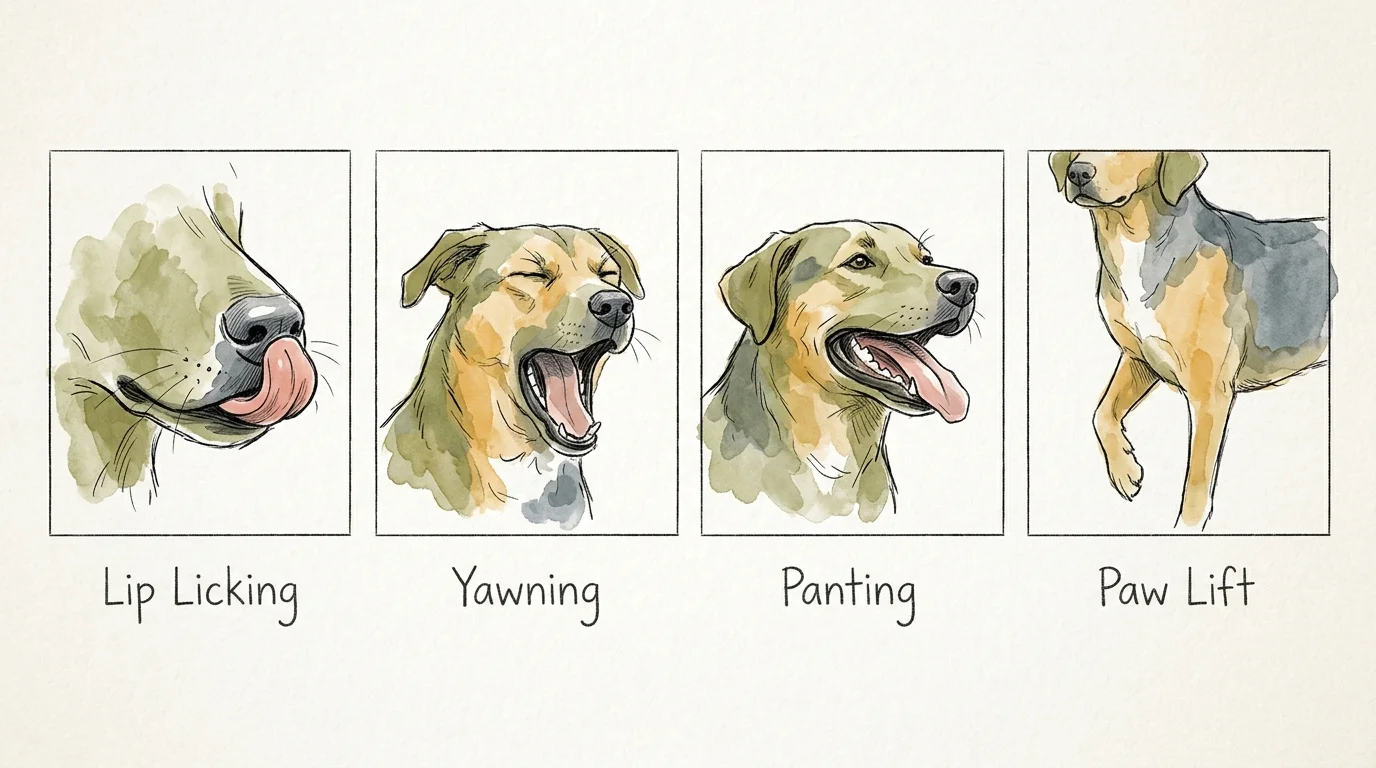
- Lip Licking and Yawning: Performing quick, repetitive flickers of the tongue across the nose or yawning deeply when not tired indicates internal stress processing.
- Hyper-Vigilance and Scanning: Rapidly moving the head, tracking fast movements, or refusing to break eye contact with a doorway shows hyper-awareness of potential threats.
- Whale Eye: Showing the white crescents of the sclera around the iris indicates high tension and intense fear.
- Panting and Excessive Drooling: Rapid, shallow breathing that occurs outside of warm weather or physical exertion signals active fight-or-flight nervous arousal.
- Weight Shifting and Tucked Tail: Clenching the tail tightly against the abdomen while shifting weight back onto the hind legs prepares the dog for sudden flight.