The Biology of Co-Regulation: How Your Presence Lowers Canine Cortisol
Co-regulation describes the physiological process where two social mammals align their nervous systems through physical proximity, shared breathing, and touch. When your anxious dog leans against you, they actively tap into your regulated physiological state to calm their own system down.
Studies examining human-animal touch, such as research published in Taylor & Francis, show that pet owners and their dogs engage in an average of roughly 42 minutes of physical touch per day. This mutual contact initiates a cascade of neurochemical changes.
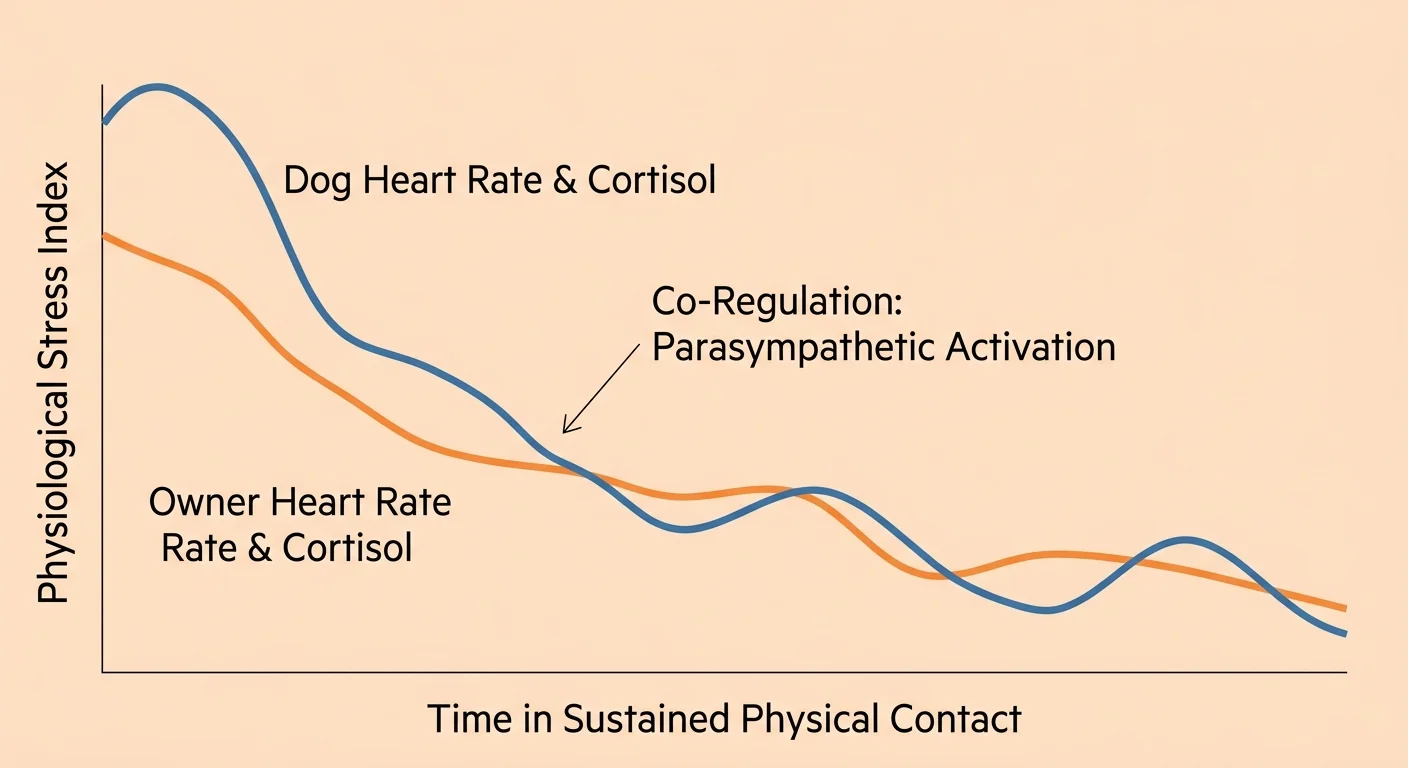
Tactile stimulation triggers the release of oxytocin—often called the bonding hormone—while inhibiting the production of cortisol and adrenaline. Within minutes of sustained physical contact, a dog’s elevated heart rate begins to drop, aligning more closely with the rhythm of their calm owner.
Dogs possess an extraordinary ability to sense human heart rate variability, muscle tension, and micro-odors emitted through stress-related sweat. If you remain grounded and breathe deeply when your dog leans against your legs, your body acts as a biological pacemaker.
Your stable heart rate and relaxed muscles signal to your dog’s brain that the immediate environment is safe, prompting their parasympathetic nervous system to take over and restore physical balance.