The Multi-Sensory Assault: What Dogs Feel Before Thunder Strikes
Humans evaluate storms primarily through sight and sound. You see dark clouds, watch flashes of lightning, and hear rolling booms.
Your dog, however, experiences a thunderstorm through an extraordinary, multi-sensory perception array that alerts them to approaching weather long before you notice a single cloud.
According to clinical insights from the Merck Veterinary Manual, atmospheric alterations and static electricity build-up spark autonomic nervous system arousal well ahead of audible thunder strikes.
Several distinct atmospheric stimuli assault a sensitive dog’s nervous system simultaneously:
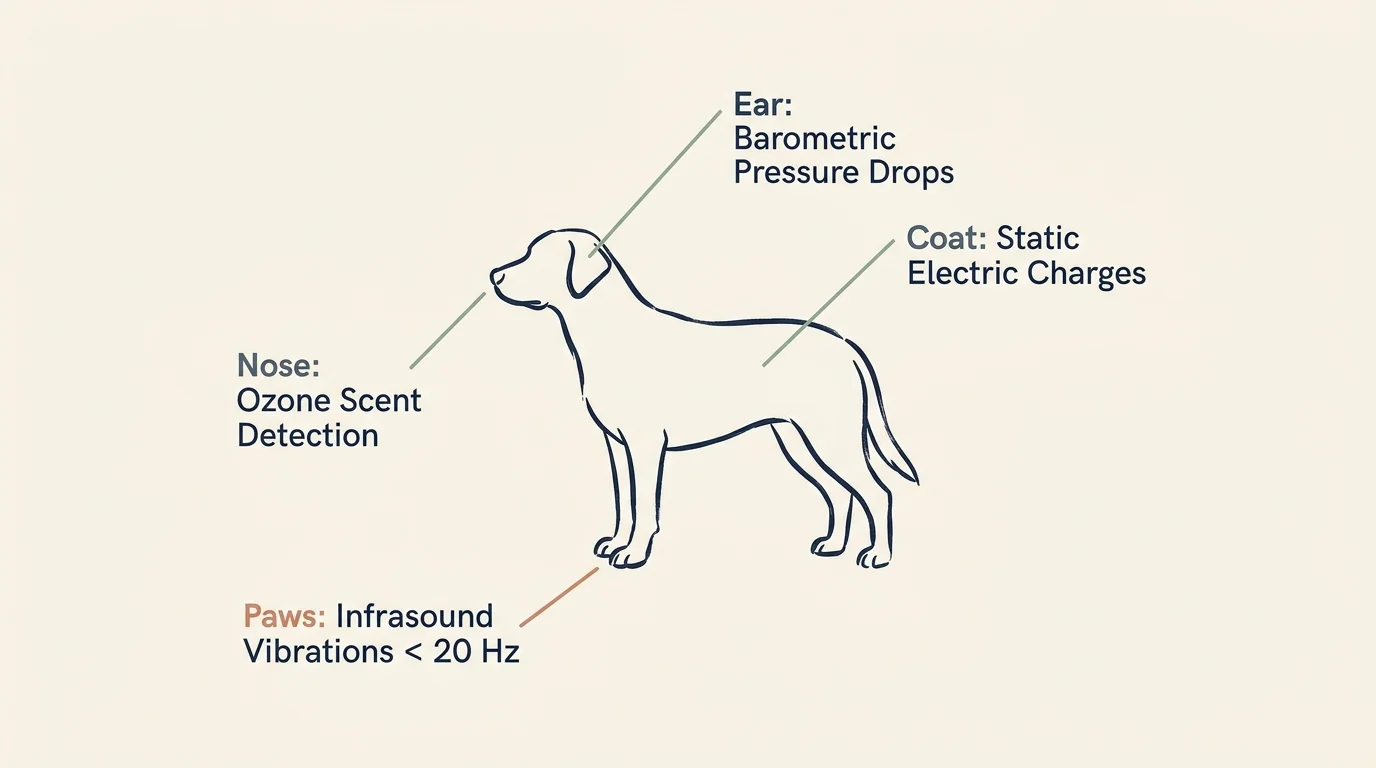
- Barometric Pressure Drops: As a low-pressure system rolls in, atmospheric pressure plummets rapidly. Canines possess specialized fluid-filled structures within their inner ears that register these subtle pressure shifts. For sensitive dogs, rapid barometric drops create uncomfortable pressure feelings in their ears and head, triggering immediate apprehension.
- Atmospheric Static Electricity: Thunderstorms generate massive electrical charges in the air. Dogs—particularly large breeds with thick, double coats—accumulate static electricity across their fur. This static charge produces uncomfortable tingling sensations across their skin and causes painful mini-shocks whenever their nose or paws touch grounded metallic objects.
- Infrasound and Low-Frequency Vibration: Long before human ears pick up the rumble of distant thunder, storms produce low-frequency sound waves below 20 Hz, known as infrasound. Dogs hear frequencies up to 45,000 Hz, but they also feel low-frequency infrasound vibrations traveling through the ground and structure of your home.
- Ozone Scent and Environmental Ionization: Lightning discharges split nitrogen and oxygen molecules, creating a sharp, metallic ozone smell. With an olfactory sense up to 100,000 times more acute than yours, your dog smells atmospheric chemistry changes miles away, associating that unique aroma with impending sensory overload.