Biological and Genetic Drivers of Canine Noise Sensitivity
Why does one dog panic while another slumbers through a severe tempest? Genetics and biological wiring account for a massive portion of this variance.
According to research cited by the American Veterinary Medical Association (AVMA), noise and storm sensitivities represent complex behavioral disorders influenced by underlying genetic predispositions, breed traits, and neural processing differences.
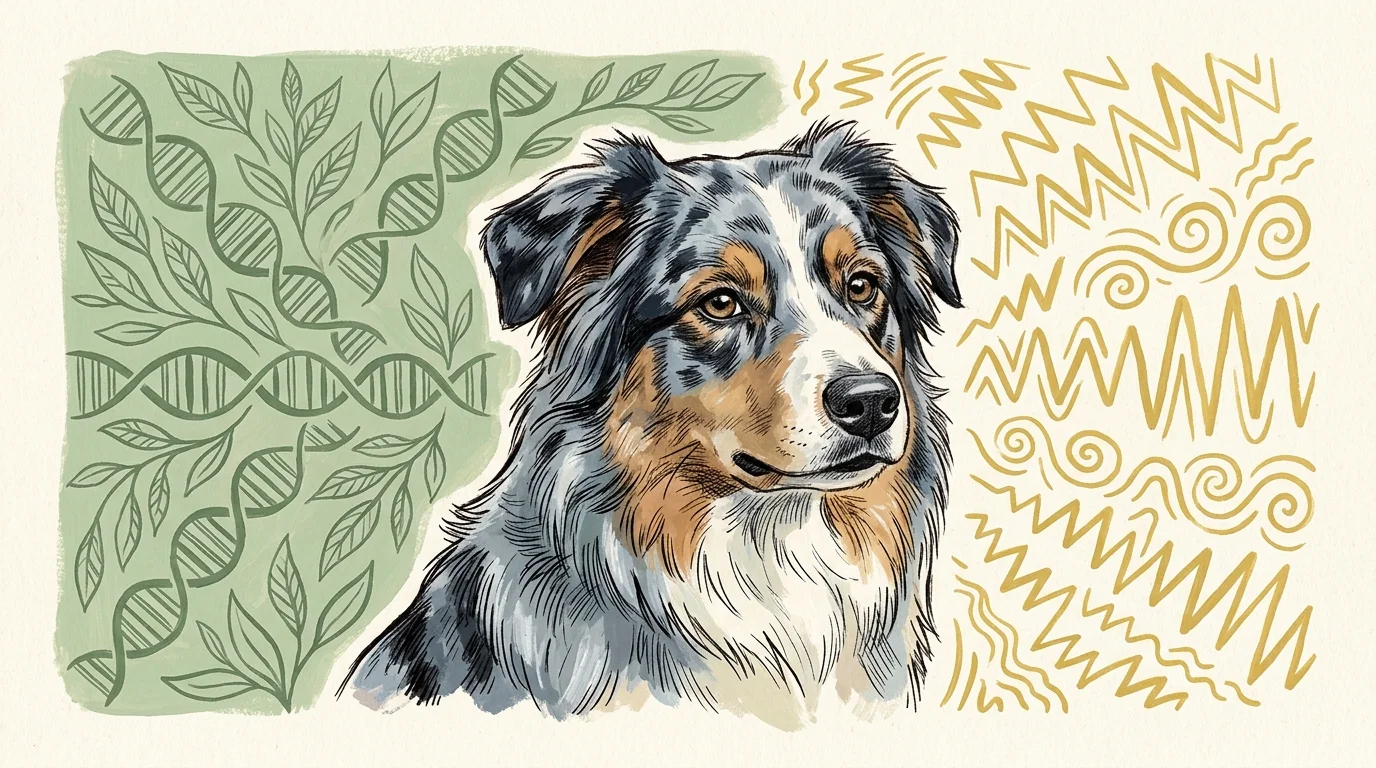
Herding breeds—including Border Collies, Australian Shepherds, and German Shepherds—show statistically higher rates of storm and noise phobias. Decades of selective breeding prioritized extreme sensitivity to environmental movement, subtle visual cues, and high-pitched sounds.
While these traits make herding dogs exceptional working animals, they also leave their nervous systems hyper-reactive to sudden atmospheric shifts.
Furthermore, an individual dog’s Hypothalamic-Pituitary-Adrenal (HPA) axis dictates their internal chemical cascade during stress. When a storm approaches, a storm-phobic dog’s brain triggers an massive surge of adrenaline and cortisol.
This fight-or-flight cascade floods their system, making logical processing impossible and driving extreme escape behaviors. Dogs with lower baseline anxiety or less reactive HPA pathways absorb the same sensory inputs without triggering an overwhelming hormonal surge.
Age plays another critical biological role. Dog noise anxiety causes often lie dormant during puppyhood and manifest clearly between one and three years of age as dogs reach social and neurological maturity.
Conversely, senior dogs may develop late-onset storm phobia due to cognitive dysfunction or sensory impairments that make sudden environmental shifts feel deeply disorienting.