Developmental Conditioning and Social Learning
Genetics set the baseline, but early life experiences shape how a dog interprets environmental threats. The critical socialization window—occurring between 3 and 16 weeks of age—permanently influences neural development.
Puppies raised in environments with gentle, positive exposure to loud noises, wind, rain, and novel sensory inputs build natural psychological resilience.
Conversely, a single traumatic event during a critical developmental phase can anchor a permanent fear response. A lightning strike hitting a tree right outside your home, a sudden transformer explosion, or getting caught outdoors in heavy hail can cause single-event fear conditioning.
The brain’s amygdala instantly links atmospheric shifts with life-threatening danger, forging a lifelong phobic circuit.
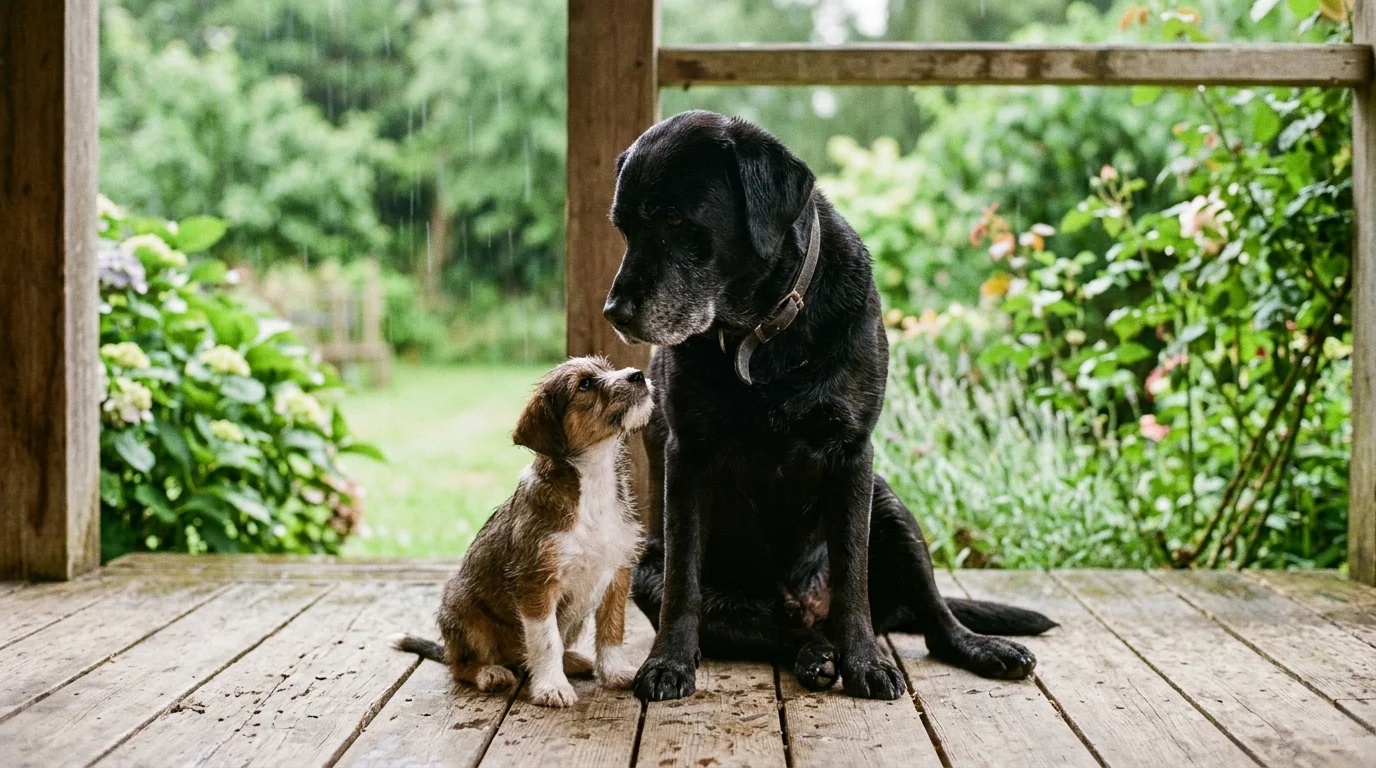
Dogs also rely heavily on social learning from their pack members and human caregivers. Puppies observe their mother’s reactions carefully; if a mother dog displays trembling and panic during summer squalls, her pups adopt similar fear patterns.
Human reactions matter too. While comforting a frightened dog does not “reinforce” fear in a behavioral sense, frantic human energy, chaotic movement, or tense emotional outbursts validate your dog’s belief that a genuine emergency exists.