Where Outside Advice Pays Off
While mild storm distress responds well to home environmental management, severe thunderstorm phobia requires professional diagnostic and therapeutic support. Seeking specialized guidance prevents long-term behavioral deterioration and protects your dog from severe self-injury.
Consult a qualified professional under the following scenarios:
- Destructive Escape Attempts: If your dog chews through drywall, breaks crate doors, smashes windows, or injures their claws and teeth attempting to escape during weather events.
- Escalating Fear Responses: When your dog’s anxiety spreads from thunder to mild rain, wind, wind turbine noises, or general household sounds.
- Physical Harm or Collapse: If your dog experiences extreme hyperventilation, pale gums, vomiting, or collapse due to severe physiological panic.
- Incomplete Response to Environmental Controls: When pressure garments, safe spaces, pheromones, and over-the-counter supplements yield no measurable reduction in stress levels.
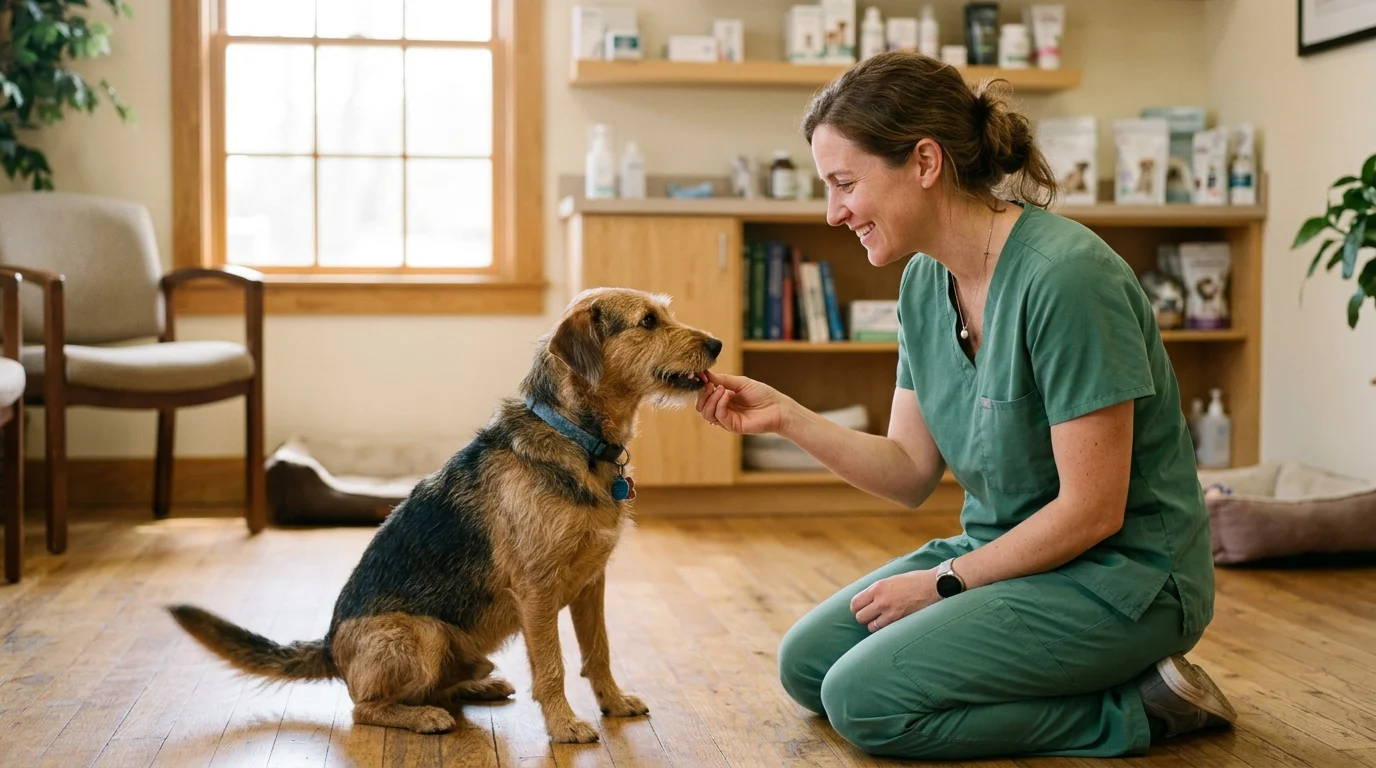
Your primary veterinarian can evaluate your dog for underlying pain or medical issues that heighten stress and prescribe fast-acting, situational anxiolytic medications.
For complex cases, board-certified veterinary behaviorists (Diplomates of the American College of Veterinary Behaviorists) design comprehensive behavioral modification and desensitization programs tailored specifically to your dog’s unique profile.