Acute Stress vs. Chronic Anxiety in Dogs
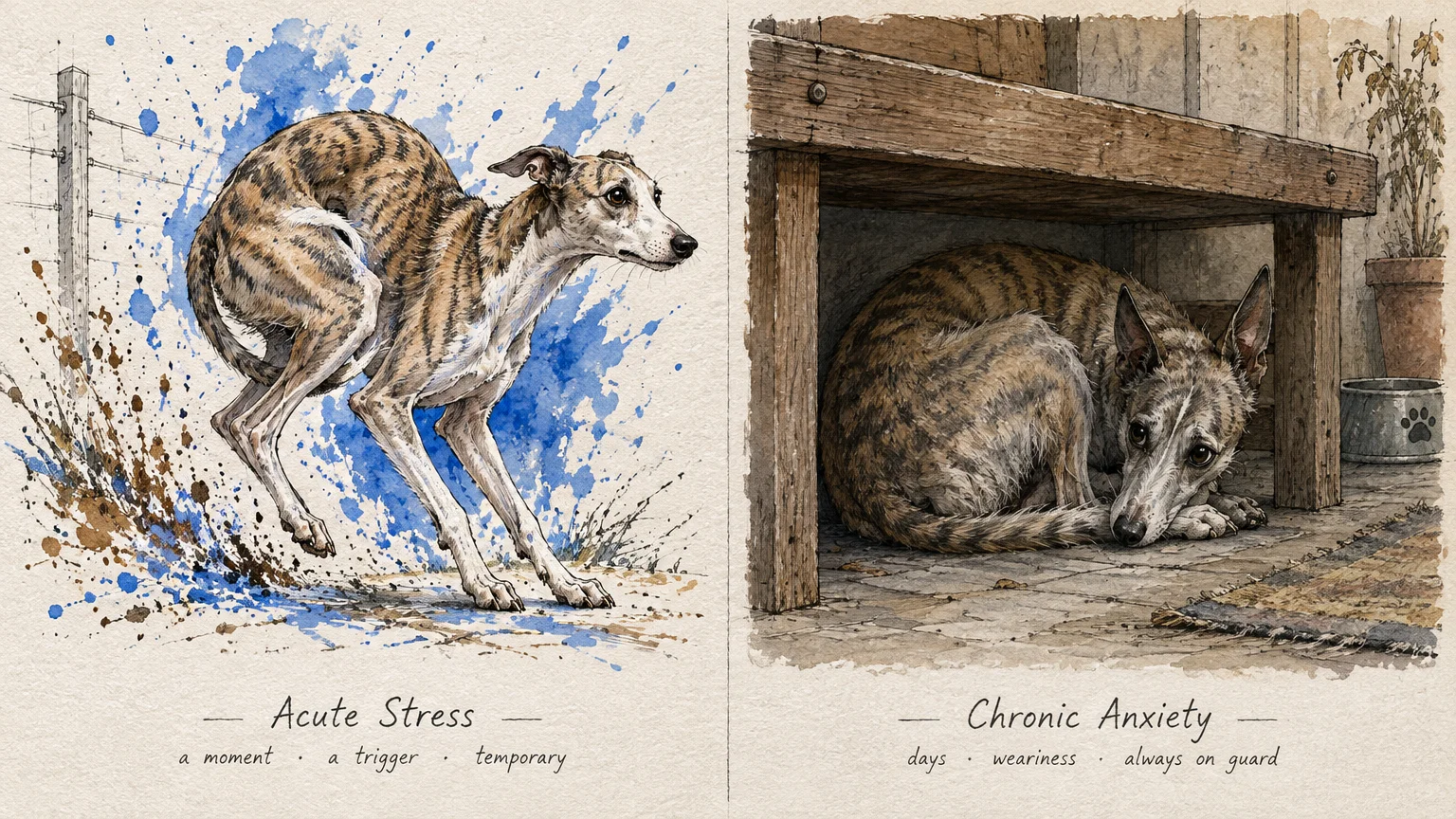
Short-term stress is a natural, adaptive survival response designed to protect an animal from immediate danger. In contrast, chronic anxiety persists long after triggers vanish, degrading physical health and emotional stability.
Evaluating whether your dog experiences transient tension or systemic anxiety guides your management strategy. The following comparison illustrates how these conditions manifest across physical and behavioral markers.
| Feature | Acute Situational Stress | Chronic Behavioral Anxiety |
|---|---|---|
| Primary Trigger | Identifiable event (fireworks, veterinary visit, sudden noise) | Generalized anticipation, separation, or environmental change |
| Duration | Minutes to several hours after the trigger departs | Days, weeks, or constant baseline vigilance |
| Key Physical Signs | Dilated pupils, rapid panting, trembling, tucked tail | Frequent digestive upset, skin lesions, insomnia, dull coat |
| Behavioral Pattern | Avoidance, displacement sniffing, sudden freezing | Persistent pacing, hyper-reactivity, destructive chewing |
| Recovery Time | Immediate to 48 hours with adequate quiet | Requires long-term counterconditioning and clinical support |
Distinguishing between these two states ensures you do not overlook deep-seated behavioral conditions. Chronic stress elevates circulating cortisol, weakens the immune system, and compromises your companion’s quality of life.